

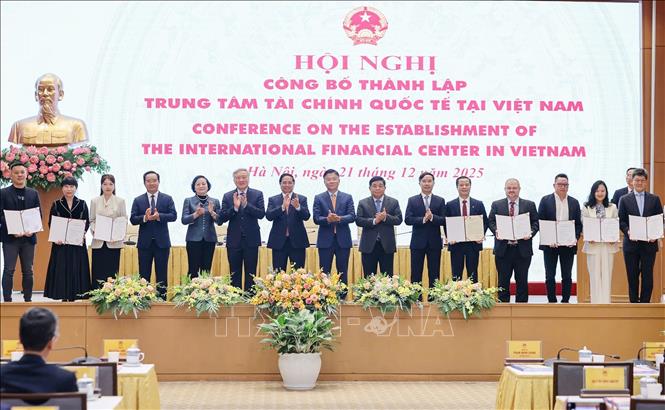
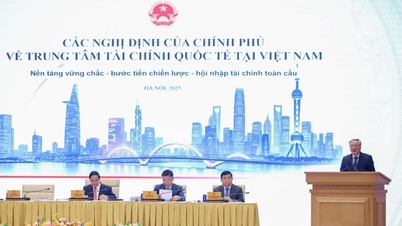
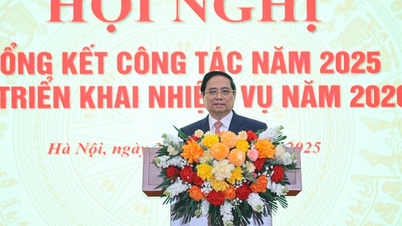
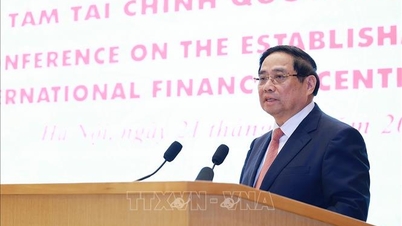
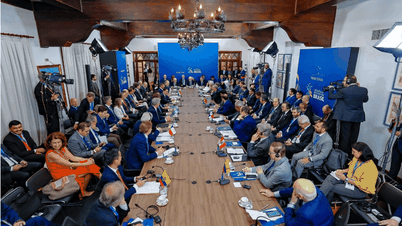
Speaking at the Conference announcing the establishment of the International Finance Center in Vietnam, Prime Minister Pham Minh Chinh emphasized that the establishment of the International Finance Center is a necessity stemming from practical realities, an objective requirement, a strategic choice, an effective solution, and a convergence of the need to restructure global investment flows and Vietnam's aspiration to rise in the era of national development. "Bringing IFC into operation marks the beginning of a process of innovation in terms of quantity, quality, and efficiency for the development of the financial market, with far-reaching impacts on all sectors, fields, and entities of the country," the Prime Minister stressed.
A strategic turning point for the economy.
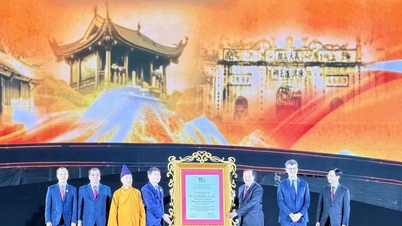
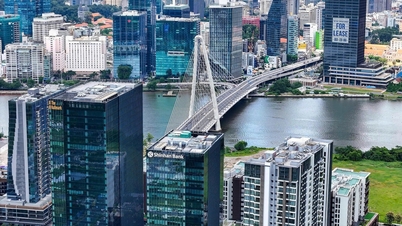
December 21, 2025 is considered a significant milestone marking a new step in Vietnam's economic and financial development orientation, as the Government announced the establishment of the International Finance Corporation (IFC) in Vietnam, operating simultaneously in two major cities: Ho Chi Minh City and Da Nang. This decision was made in accordance with Resolution No. 222/2025/QH15 of the National Assembly on the International Finance Center in Vietnam. The Government has also issued decrees guiding the implementation of this Resolution.
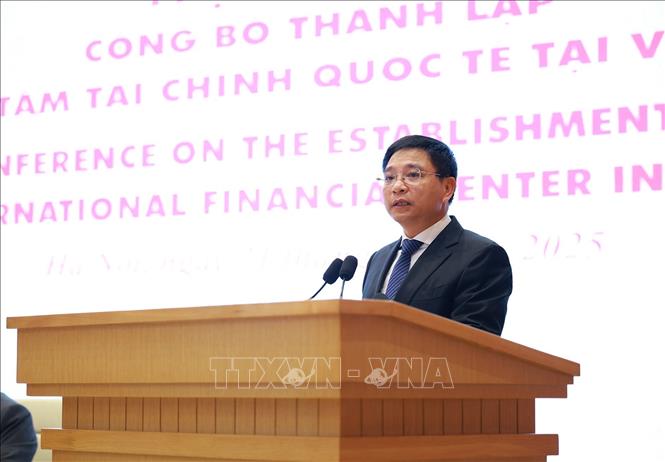
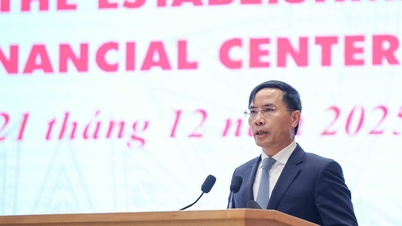
"This is a particularly significant event, marking a new stage in the national economic and financial development strategy, demonstrating the strong determination of the Party, State, and Government of Vietnam in the process of deep integration with the global economy," Minister of Finance Nguyen Van Thang emphasized.
The international financial center is expected to become a new driving force in attracting foreign investment, developing a more diversified domestic financial market, and promoting innovation in financial and technological products in Vietnam; at the same time, contributing to making Vietnam an attractive destination on the global financial map.
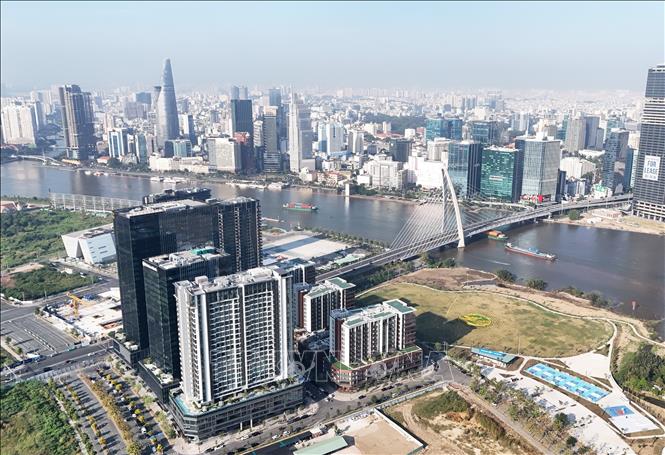
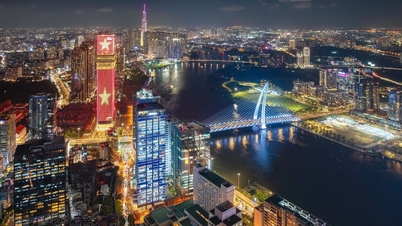
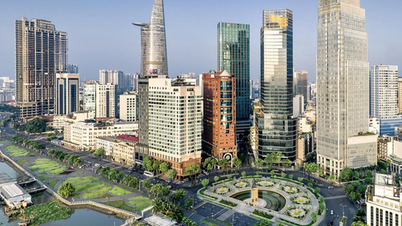
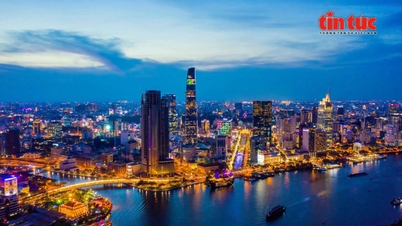
One of the highlights of this model is the "1 center, 2 locations" approach; in which Ho Chi Minh City is envisioned as a comprehensive financial center with a rich financial services ecosystem including banking, capital markets, asset management, fintech, and green finance; while Da Nang is expected to tap into the potential of digital finance, green finance, and innovation.
Unlike traditional IFC models that focus on a single city, this strategy leverages the unique advantages of each region while creating synergy between the two economic and financial powerhouses.
Commenting on this strategic move, Phil Wright, CEO of HSBC Vietnam, stated that the establishment of IFC is not simply about expanding services, but also an opportunity to "unleash a new wave of innovation with clarity, consistency, and collaboration," helping Vietnam not only attract capital but also become a regional and global financial hub.
According to Deputy Minister of Finance Nguyen Thi Bich Ngoc, in recent meetings, Vietnam does not aim to become a "tax haven" to attract international financial institutions, but rather focuses on creating a transparent, stable, and competitive environment that meets international standards to build trust among foreign investors.
According to Dr. Phan Duc Hieu, Standing Member of the National Assembly's Economic and Financial Committee, the establishment of IFC in Vietnam is one of the noteworthy policy decisions; a special feature is that the Vietnam International Finance Center will operate in two locations: Ho Chi Minh City and Da Nang. The biggest goal is to build a modern, highly competitive investment and business environment in the region and the world, equivalent to popular financial centers in Asia and globally. The mechanism at the Center will cover many areas, including foreign exchange, banking, capital markets, taxation, import and export, residency, travel, and international jurisdiction.
Challenges on the path to perfection
Not only attracting domestic attention, Vietnam's plan to establish an International Financial Center (IFC) has also received support from many international partners. Mr. Do Van Su, Director of the Foreign Investment Department, Ministry of Finance, shared that Vietnam has a favorable geographical location, political stability, and deep integration into the international economy. Vietnam is also highly regarded by international organizations for its potential to develop financial centers. Major IFCs such as Hong Kong (China), Frankfurt, and New York are ready to cooperate with Vietnam to make it one of the "links" in the global financial market.
Assessing Vietnam's advantages in building the IFC, Michael Chin, Independent Board Member of Vingroup, said that Vietnam's strengths include a real economy, deep supply chains, competitive costs, and a young, dynamic workforce.
Despite many positive factors, economic experts also warn of significant challenges ahead, such as: competition with established financial centers in the region like Singapore and Hong Kong (China); the need for a high-quality workforce, requiring significant investment in training and attracting international experts; and the need to improve the legal framework and operating regulations, particularly those related to risk management, transparency, and financial supervision.
Nguyen Ba Hung, Chief Economist of the ADB in Vietnam, commented: "Developing an International Finance Corporation (IFC) is a long journey, possibly spanning decades. The important thing is that Vietnam must remain steadfast in its chosen path, gradually improving its institutions and building market confidence."
This perspective suggests that the establishment of IFC is not a short-term goal, but a long-term strategy, linked to the process of perfecting Vietnam's market economy institutions and its deep integration into the international community.
Long-term vision and expectations
To ensure the effective and substantial operation of IFC in Vietnam, the Prime Minister has requested relevant ministries, agencies, and the People's Committees of Ho Chi Minh City and Da Nang to innovate their management thinking: shifting entirely from "administrative management" to "creative and service-oriented"; all investor issues at the Center must be handled through a special, "one-stop shop" process, and reported directly to the Prime Minister if beyond their authority.
In addition, accelerate the progress of transportation projects connecting airports, seaports, urban railways, and free trade zones. Require supervisory agencies to play their role, operate independently and transparently, comply with international commitments on anti-money laundering, avoid causing inconvenience, and encourage the flow of clean capital associated with modern technology and management skills into Vietnam.
To ensure effective operation, the National Assembly passed the Law on Specialized Courts at the International Finance Centre, allowing for the expansion of the scope to include the appointment of foreign judges, aiming to enhance the independence and confidence of international investors in the judicial system at the IFC. This is considered an important legal foundation for the establishment of a specialized court in Ho Chi Minh City, allowing foreigners to serve as judges to handle complex investment and business cases, applying international standards, and effective from January 1, 2026.
The establishment of an international financial center is expected to create a strong ripple effect: attracting foreign investment into financial, technology, infrastructure, and service projects; developing the domestic capital market, enabling businesses to raise capital more effectively; promoting fintech and digital finance, especially in the context of the rapid development of blockchain and electronic payments; and increasing high-quality job opportunities for the domestic and international financial workforce.
According to assessments, for IFC Vietnam to be truly effective, it requires not only a long-term strategy but also seamless coordination between the government, regulatory agencies, and the international business community.
Chairman of the Ho Chi Minh City People's Committee, Nguyen Van Duoc, stated, "Ho Chi Minh City has expanded its cooperative relationships with major IFCs such as New York, Frankfurt, Singapore, Dubai, and Astana... With this approach, the Vietnam International Finance Center will not only be a purely financial space but also a symbol of new development thinking, of the spirit of daring to experiment, daring to innovate, and daring to break through on the path to realizing the aspiration for prosperity, self-reliance, and deep integration of the country in the new era."
According to the Chairman of the Da Nang City People's Committee, Pham Duc An, the city will organize controlled pilot models, focusing on areas that Da Nang is receiving a lot of attention in, such as Fintech, green finance, and blockchain. It will provide digital financial models linked to real assets, connecting the Financial Center's operations with the city's socio-economic development programs. Particular emphasis will be placed on green transformation, innovation, and sustainability. Da Nang recognizes that the Center's credibility depends heavily on compliance with standards for anti-money laundering, risk management, and financial transparency.
The establishment of an International Financial Centre in Vietnam is a bold step, demonstrating a vision for integration and sustainable development in the era of global finance. With efforts to improve the legal framework, the interest of international partners, and a clear development orientation, Vietnam is building the foundation for a modern, transparent, and investor-attracting financial center.
Although much work remains to be done, the official announcement of the establishment of IFC in Vietnam is truly a milestone, opening new doors for the country's economic and financial sector in the near future…
Source: https://baotintuc.vn/kinh-te/thanh-lap-trung-tam-tai-chinh-quoc-te-buoc-dot-pha-trong-hanh-trinh-hoi-nhap-toan-cau-20251221125543254.htm

![[Photo] Prime Minister Pham Minh Chinh presides over a meeting on private sector economic development.](/_next/image?url=https%3A%2F%2Fvphoto.vietnam.vn%2Fthumb%2F1200x675%2Fvietnam%2Fresource%2FIMAGE%2F2025%2F12%2F20%2F1766237501876_thiet-ke-chua-co-ten-40-png.webp&w=3840&q=75)





































































Comment (0)