

To ensure the quality of teaching at educational institutions, relevant agencies set specific operating conditions for schools nationwide.
According to the 2019 Education Law, schools are permitted to operate educational activities when they have land, facilities, and equipment that meet the requirements of educational activities; and the school's construction site ensures a safe and conducive educational environment for students, teachers, and staff.
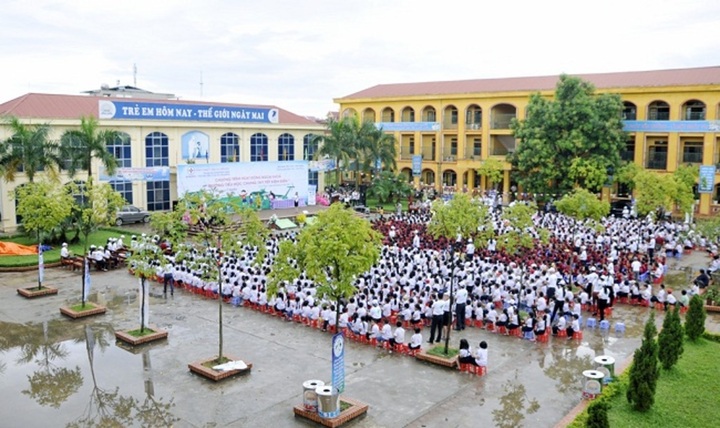
Schools need to meet all the necessary operating conditions. (Illustrative image)
There are prescribed educational programs and teaching and learning materials appropriate to each educational level and training qualification; there is a qualified teaching staff and management personnel, sufficient in number and balanced in structure to ensure the implementation of the educational program and the organization of educational activities;
At the same time, the school must meet the required financial resources to ensure the maintenance and development of educational activities; and have regulations on the organization and operation of the school.
Within the prescribed period, if the school meets the above-mentioned conditions, it will be granted permission to operate educational activities by the competent state agency. Upon expiration of the prescribed period, if it does not meet the above-mentioned conditions, the establishment decision or the decision granting permission to establish will be revoked.
Conditions for establishing a school
Based on the provisions of Article 49 of the 2019 Education Law, a school can be established when there is a school establishment plan that is consistent with the socio-economic development plan and the educational institution network plan as prescribed by the Planning Law.
The school establishment plan clearly defines the objectives, tasks, curriculum and educational content; land, facilities, equipment, proposed school construction site, organizational structure, resources and finances; and strategic direction for the school's construction and development.
There are three types of schools: private schools, public schools, and independent schools. Of these, public schools are those funded by the State, which ensures their operation and acts as the owner's representative;
Private schools are schools where local communities, including organizations and individuals in villages, hamlets, and towns, invest in building facilities and ensuring operational conditions. This type of private school only applies to preschool education institutions.
Similarly, private schools are schools invested in and operated by domestic or foreign investors.
According to regulations, schools are only permitted to convert from a private school to a non-profit private school, provided they adhere to the following principles:
- Comply with the regulations of the charter and rules governing the organization and operation of each type of school at each educational level and training program;
- Ensuring the rights of teachers, lecturers, education administrators, workers, and students;
- Avoid wasting land, capital, and assets.
Source: https://vtcnews.vn/thanh-lap-truong-hoc-can-dieu-kien-gi-ar940547.html

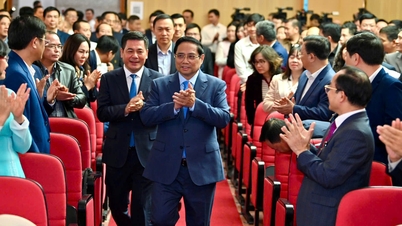
![[Photo] Prime Minister Pham Minh Chinh attends the Conference on the Implementation of Tasks for 2026 of the Industry and Trade Sector](/_next/image?url=https%3A%2F%2Fvphoto.vietnam.vn%2Fthumb%2F1200x675%2Fvietnam%2Fresource%2FIMAGE%2F2025%2F12%2F19%2F1766159500458_ndo_br_shared31-jpg.webp&w=3840&q=75)











































































Comment (0)