

Intel announced that CEO Pat Gelsinger resigned and stepped down from the board of directors effective December 1st, ending a nearly four-year effort to restore the former chip giant's glory.
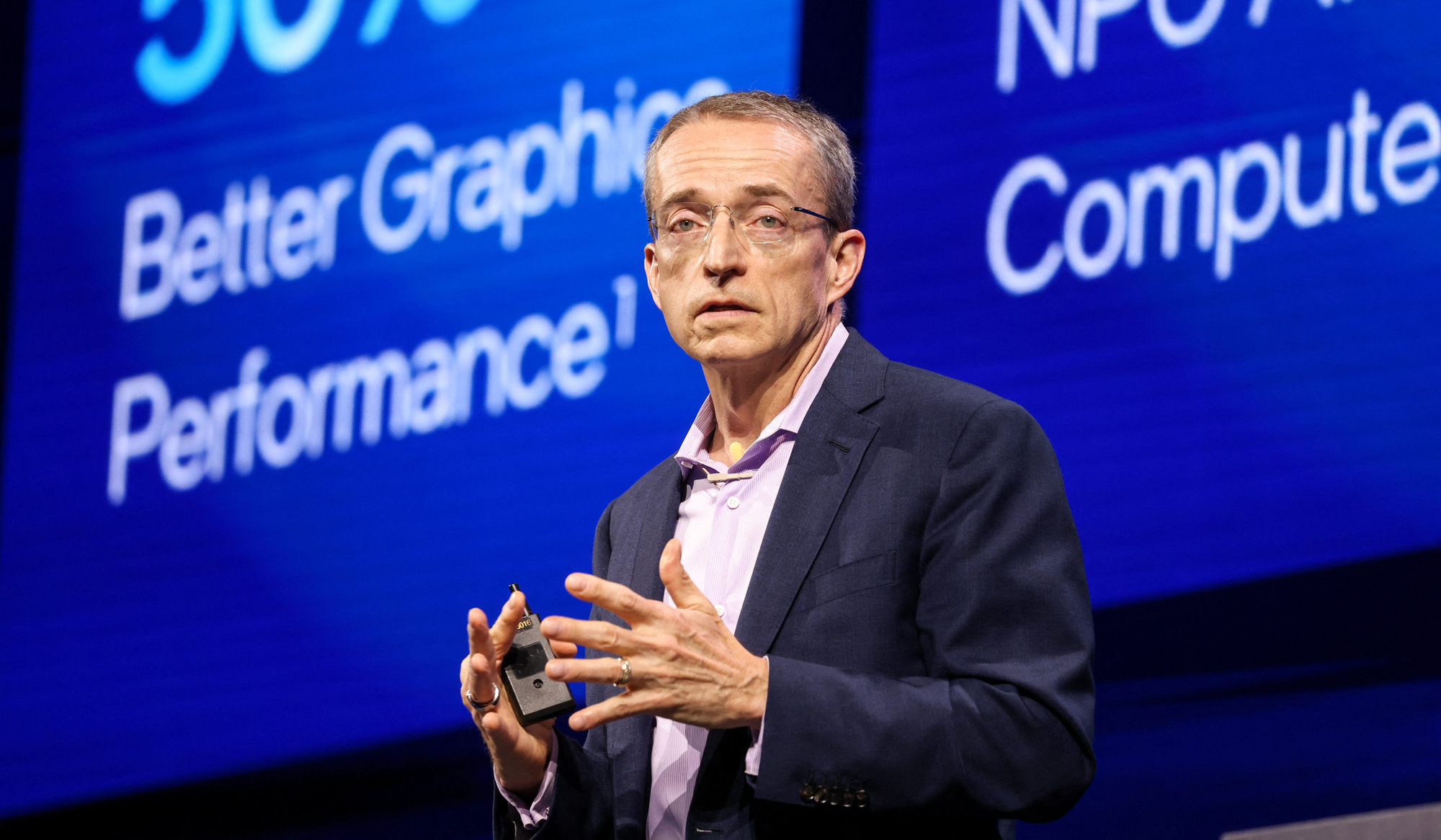
Former Intel CEO Pat Gelsinger - Photo: AFP
Contrary to expectations when he first took office, Gelsinger not only failed to maintain Intel's position in the semiconductor industry but also caused the company to fall further behind its competitors.
A humiliating ending.
According to Bloomberg, in the face of declining business, Intel's board of directors met last week and gave the 63-year-old CEO two options: resign or be fired.
Mr. Gelsinger joined Intel in 1979, at the age of 18. At 32, he became the youngest vice president in the company's history. He held many key positions, contributing significantly to making Intel the world's most valuable chip company.
In 2021, he became CEO with the task of guiding Intel through restructuring pressures from investors. He outlined an extremely ambitious long-term plan: to transform Intel into the world's second-largest chip manufacturer, directly competing with industry giants TSMC (Taiwan) and Samsung Electronics (South Korea).
This plan is considered bold as it pushes Intel away from its traditional strength of designing microprocessors for personal computers or servers. Previously, Intel had never outsourced manufacturing to third-party companies. To implement this plan, Intel has launched numerous chip manufacturing plant projects around the world with a total investment value reaching tens of billions of dollars.
Despite its ambitions, Intel's performance under Gelsinger steadily declined. In early 2022, personal computer chip revenue fell by 25%, while the data center chip market was taken over by AMD. By 2023, Intel's revenue had dropped by one-third compared to when Gelsinger took office.
The company was forced to cut $10 billion in operating costs by 2025 by laying off more than 15,000 employees and postponing several projects, including a €30 billion ($31.5 billion) plant in Germany.
In October, Intel reported a $16.6 billion loss in the second quarter, its largest loss in history. Analysts forecast the company will lose $3.68 billion in 2024, its first net loss since 1986.
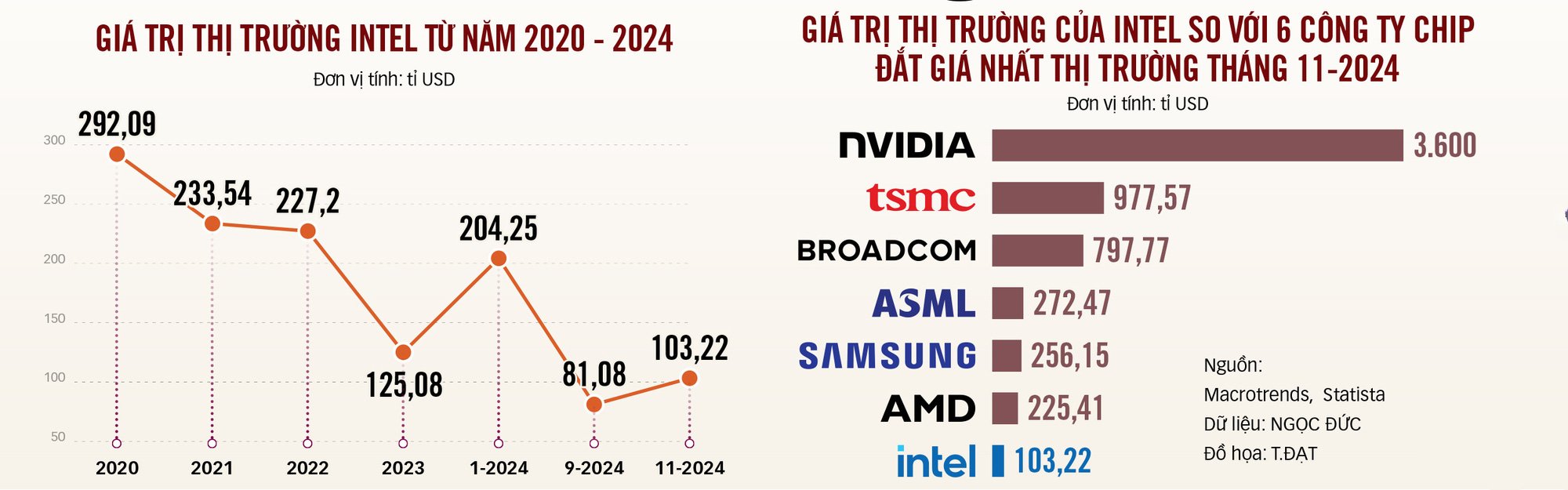
In less than four years under Gelsinger's leadership, Intel's market value has nearly halved, hovering around $100 billion. Meanwhile, Nvidia, a company that had been overshadowed by Intel for decades, has surged in value to $3.35 trillion.
Missed the AI "train"
Despite its ambitions, Intel's efforts to become a chip manufacturing partner have been unsuccessful so far. Large contracts are insufficient to offset the costs of building new factories, while its production lines are inferior to those of its competitors. Even with its own factory producing its own designed chips, Intel still has to outsource the manufacturing of some of its newer chip lines to TSMC.
David Yoffie, a former Intel board member, argued that company leaders wanted to replace Gelsinger because his growth strategy took too long to become profitable. Furthermore, by focusing on chip manufacturing, Intel under his leadership missed opportunities in the field of artificial intelligence (AI).
Techcrunch argues that Intel misjudged the AI craze and reacted slowly to the technology's explosion. The former Intel CEO was overly optimistic about the competitiveness of his own AI chips, even though they were in fact far inferior to Nvidia's products.
Not only did Intel lose customers, but it also faced pressure as many investors shifted their funds to Nvidia during the AI boom, depriving it of crucial capital. Furthermore, missing out on the previous mobile phone chip boom left Intel further behind in the rapidly developing semiconductor industry.
Opportunity or challenge for Intel?
Pat Gelsinger's departure presents Intel with an opportunity to adjust its strategy, while also posing a significant challenge in finding a successor with the necessary skills and vision. According to Bloomberg, Intel currently lacks candidates who meet these criteria, making it highly likely that Gelsinger's replacement will come from outside the company.
Many analysts predict that after Gelsinger's departure, Intel may consider separating its product development (chips, data centers, AI, etc.) and outsourcing divisions into two independent companies. This would give both areas more autonomy and enable them to operate more efficiently.
Analysts at Citi Bank even predicted that Intel might sell its entire outsourcing business to raise capital, focusing instead on product design – a field considered to be more profitable.
Another scenario is Intel selling itself to a major technology company. Qualcomm has previously expressed interest in acquiring Intel, but the scale and complexity of the deal significantly reduced their interest.
Source: https://tuoitre.vn/that-bai-cay-dang-cua-intel-20241204081526893.htm































































































Comment (0)