

The latest statistics from the provincial specialized unit show that the province currently has 208 seafood processing facilities, mainly processing oysters and mussels. Of these, 45 are enterprise-scale facilities, while the rest are individual business households, cooperatives, or cooperative groups. While enterprise-scale facilities generally apply modern science and technology and equipment to production, such as conveyor systems, automatic weighing and packaging, modern steaming and drying systems, and deep and rapid cooling systems, some are located in industrial clusters, the individual business households, cooperatives, and cooperative groups use relatively rudimentary production technology and are mainly located in residential areas, on land owned by the facility owners.

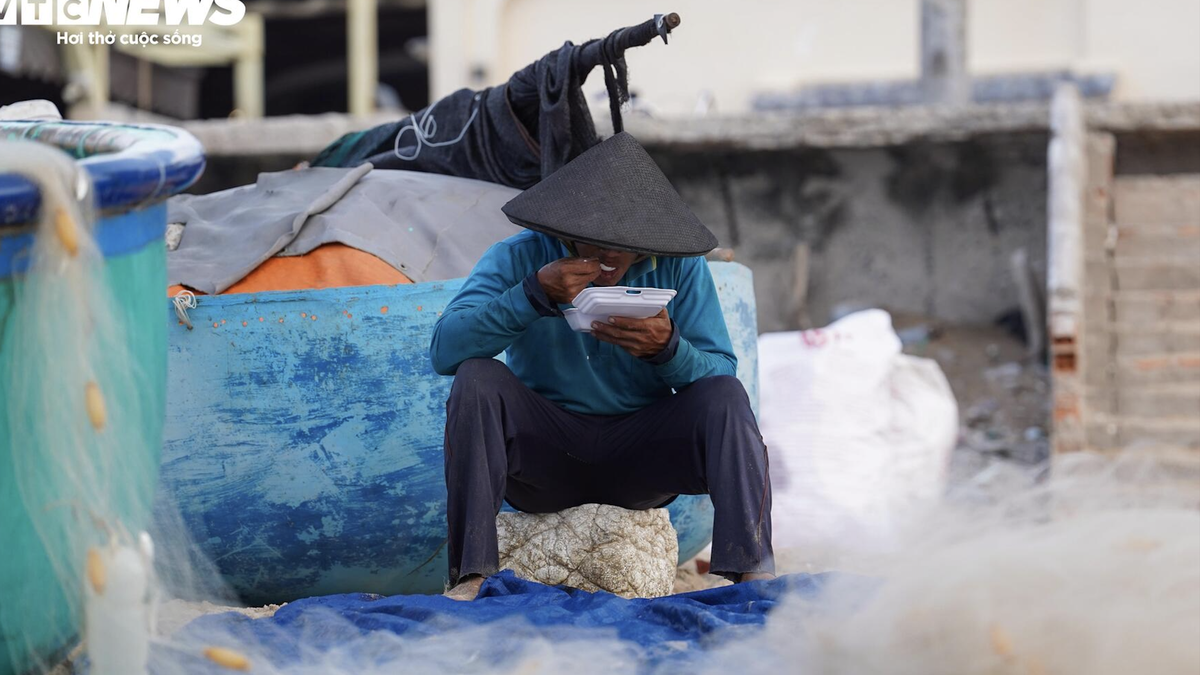
Reports from several recent inter-agency inspections reveal that many seafood processing facilities are currently lacking numerous essential elements, specifically: business licenses, food safety certificates, wastewater and waste treatment systems, waste collection and treatment services, environmental protection commitments, separate processing, packaging, and storage areas, or enclosed storage for packaging materials and restrooms. Furthermore, workers at these seafood processing facilities have not received safety training and are not regularly provided with or allowed to use protective work clothing.
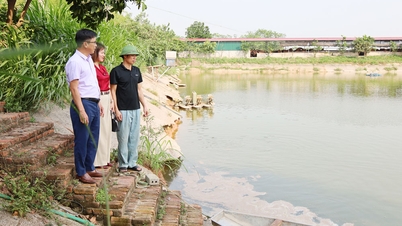
Mr. Nguyen Thanh Long, Acting Head of the Environmental Control Department, Environmental Protection Sub-Department, Department of Agriculture and Environment, stated: A fundamental problem in current seafood processing facilities, including oyster and clam processing facilities, is that the waste, including oyster and clam washing water and oyster shells, discharged during production is almost never treated or collected, but directly released into the natural environment. Meanwhile, this type of waste is particularly foul-smelling, difficult to decompose in the environment, and contains many substances harmful to human health… The closer seafood processing facilities are to residential areas, the more pollution they cause, due to the failure to maintain a safe distance from residential areas, and the lack of safety measures regarding sources of toxic substances, environmental pollution, and other harmful factors.
In light of this situation, relevant agencies and coastal localities are currently reviewing and assessing the current status of seafood processing facilities, including the number of establishments and the production volume; disseminating and applying food safety and environmental protection standards to these facilities; and strictly penalizing some establishments that intentionally violate regulations, forcing them to rectify existing shortcomings. In the long term, specialized units are advising on the complete transformation of small-scale seafood processing facilities in households into a centralized production model that meets legal regulations.
Mr. Doan Duy Vinh, Head of the Environmental Protection Sub-Department, Department of Agriculture and Environment, affirmed: The most important thing is that seafood processing facilities must be self-aware and proactive in protecting the environment, minimizing the creation and discharge of waste into the common environment. In the short term, facilities are required to have appropriate sedimentation and filtration systems for wastewater to essentially treat wastewater before discharging it into the environment; they must collect and transport non-recyclable oyster shells to authorized solid waste treatment units; and they must clean, deodorize, and avoid storing reusable oyster shells. In the long term, seafood processing facilities must relocate to industrial clusters with designated land and invest in wastewater treatment systems for this type of production.
According to information from the Provincial Environmental Protection Department, the unit has been working with several cement manufacturing companies that have waste co-processing systems to generate heat and additives for production, with the aim of purchasing and burning the oyster shell waste. Thus, a very large amount of unusable oyster shells throughout the province will be thoroughly processed, resolving the current environmental bottleneck and bringing many benefits to the people.
Source: https://baoquangninh.vn/that-chat-quan-ly-hoat-dong-so-che-che-bien-thuy-san-3408400.html

































































































Comment (0)