

Secrets of a Happy Nation
According to the 2023 World Happiness Report, Finland – the "land of a thousand lakes" – which experiences over 200 days of gloomy, sunless weather each year, with temperatures sometimes dropping to -20 degrees Celsius, is the happiest country in the world!
The concept of a happy nation was introduced by the King of Bhutan in 1972, based on Buddhist philosophy of happiness and four criteria: economic self-sufficiency, a clean environment, preservation of cultural values, and a good, popular government, with the famous declaration: "Bhutan doesn't need Gross National Product (GDP), we need Gross National Happiness!" To this day, several social organizations still rank Bhutan as the happiest country in the world according to these criteria.
Later, the United Nations developed a set of criteria for happy nations, combining economic development criteria (gross national income, per capita income, etc.), innovation, and criteria related to health, life expectancy, social security, the environment, and the satisfaction and trust of citizens in the government. The United Nations officially publishes an annual report ranking happy nations since 2012, and according to these criteria, Finland has been ranked highest for six consecutive years.
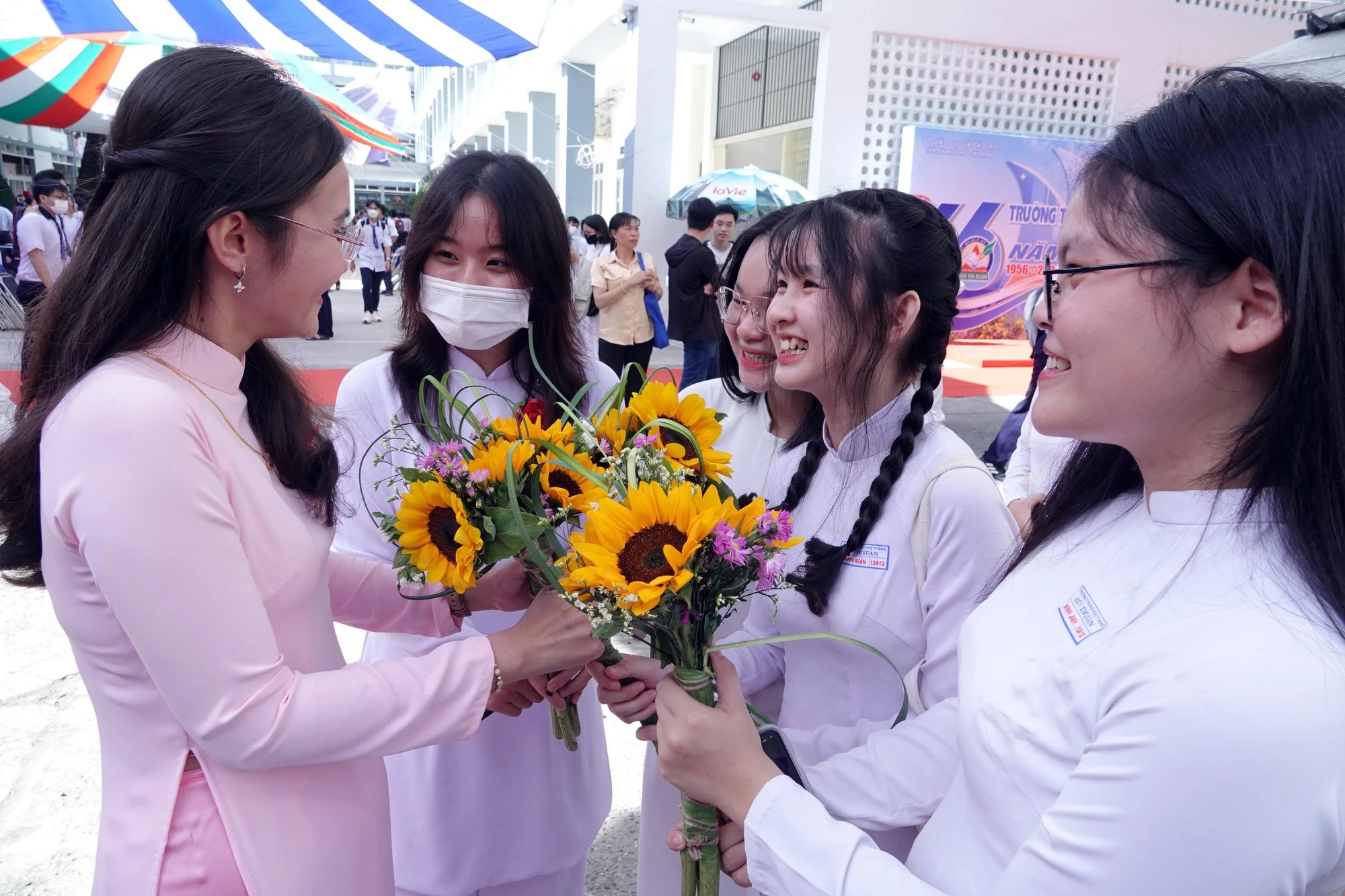
Proper education for a happy learning environment aims to make students feel the joy of learning, stimulating their curiosity, passion for learning, dreams, and creativity.
So what made this miracle possible?
Until the 1970s, Finland relied primarily on a timber-based economy, facing the risk of resource depletion and a severely degraded education system. Recognizing the need to shift towards a sustainable economy and build a happy nation, Finland reformed its education system towards a happiness-oriented approach.
The concept of happy education was first put forward by the English philosopher Herbert Spencer in the mid-19th century: "The purpose of education is to make children happy human beings, and in the process of learning, children should also be happy."
However, implementing education based on this philosophy is not simple. Many analyses have focused on the success of the Finnish model of happy education, which integrates happiness into education and makes education a foundation for happiness. The elements that contribute to happy education in Finland include:
- Respect and value the differences and individual needs of each person in society. Empower schools to develop and organize educational activities that harmoniously integrate nature, the environment, and school culture… creating happy schools.
- The Finnish education system operates not on comparisons or rankings between individuals and schools, but on equality, community building, and shared success. While in the US, success and happiness are considered individual goals, even competitive ones, in Finland, success is a team goal.
- Teaching and learning activities, as well as experiential learning, are all geared towards bringing joy and happiness to both students and teachers through integrated interdisciplinary teaching themes, expanding knowledge, and enhancing life skills focused on Truth, Goodness, and Beauty.
- Reduce the workload of studying and exams. Throughout the entire high school education, there will only be one standardized test for students after completing 12th grade.
There are many other interesting and unique aspects of Finnish happiness education that can be found online. Many countries are studying and learning from this educational model.
For example, Japan began promoting educational reforms in secondary schools as early as 2002 based on the philosophy of happy education: reducing curriculum content by 30%, eliminating academic ranking, and creating opportunities for children to play more than study… However, after a few years of implementation, Japan, which had consistently ranked among the top countries in the Programme for International Student Assessment (PISA), dropped to sixth place. This prompted Japanese education leaders to review and adjust the reform program. Several other countries have also implemented happy education but have not achieved the expected success.
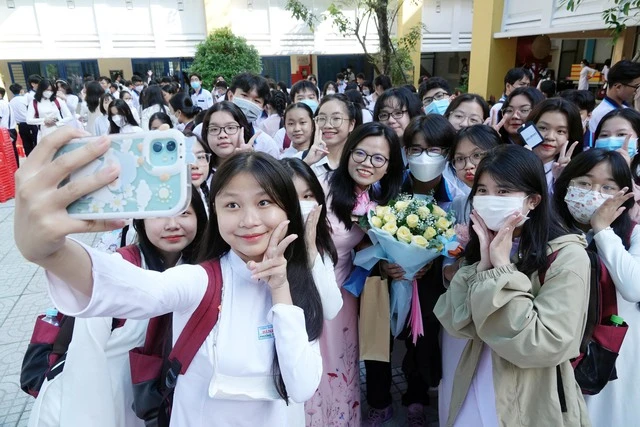
Happy schools start with happy teachers.
Many people misunderstand happy education as reducing academic and exam pressure instead of helping children enjoy and find happiness in learning. True happy education is about making children feel the joy of learning, stimulating their curiosity, passion for learning, dreams, and creativity. Finnish education is very aware of this: They reduce the burden by streamlining knowledge, eliminating unnecessary exams, and focusing on one truly rigorous exam (the high school graduation exam with 6 subjects, used for assessment and ranking as a basis for admission to vocational schools or universities).
Universities in Finland have adopted a model of entrepreneurship and innovation, which has helped Finland become a leading innovative nation in the world (consistently ranking in the top 10 for many years). Importantly, Finland has also achieved something crucial to ensuring the success of happy education: teaching is the most respected profession in society, and teachers are selected, trained, nurtured, and compensated fairly.
The happiest job
Throughout history, teaching has always been considered one of the noblest professions. Furthermore, it's considered one of the happiest professions because every day teachers come to class filled with joy and happiness in sharing knowledge, connecting with students through love and affection, and fostering shared beliefs and dreams. The teaching profession also has many important celebrations throughout the year (opening ceremonies, graduations, Teacher's Day) and many pleasant surprises from students flying high and far across the globe.
The world is becoming increasingly volatile, uncertain, and unpredictable, with the scale and intensity of natural disasters, epidemics, economic, political, military, and religious conflicts, along with scientific and technological revolutions and artificial intelligence (AI) that challenge modern education and demand that teachers make great efforts to possess the necessary courage, dedication, and vision to educate and guide the younger generation in this new era. Happiness is not just about letting go and accepting the present, but must be based on continuous learning, aspiration, and the determination to overcome adversity, fight against falsehood, cruelty, and evil, and strive towards Truth, Goodness, and Beauty, creating positive things for this life.
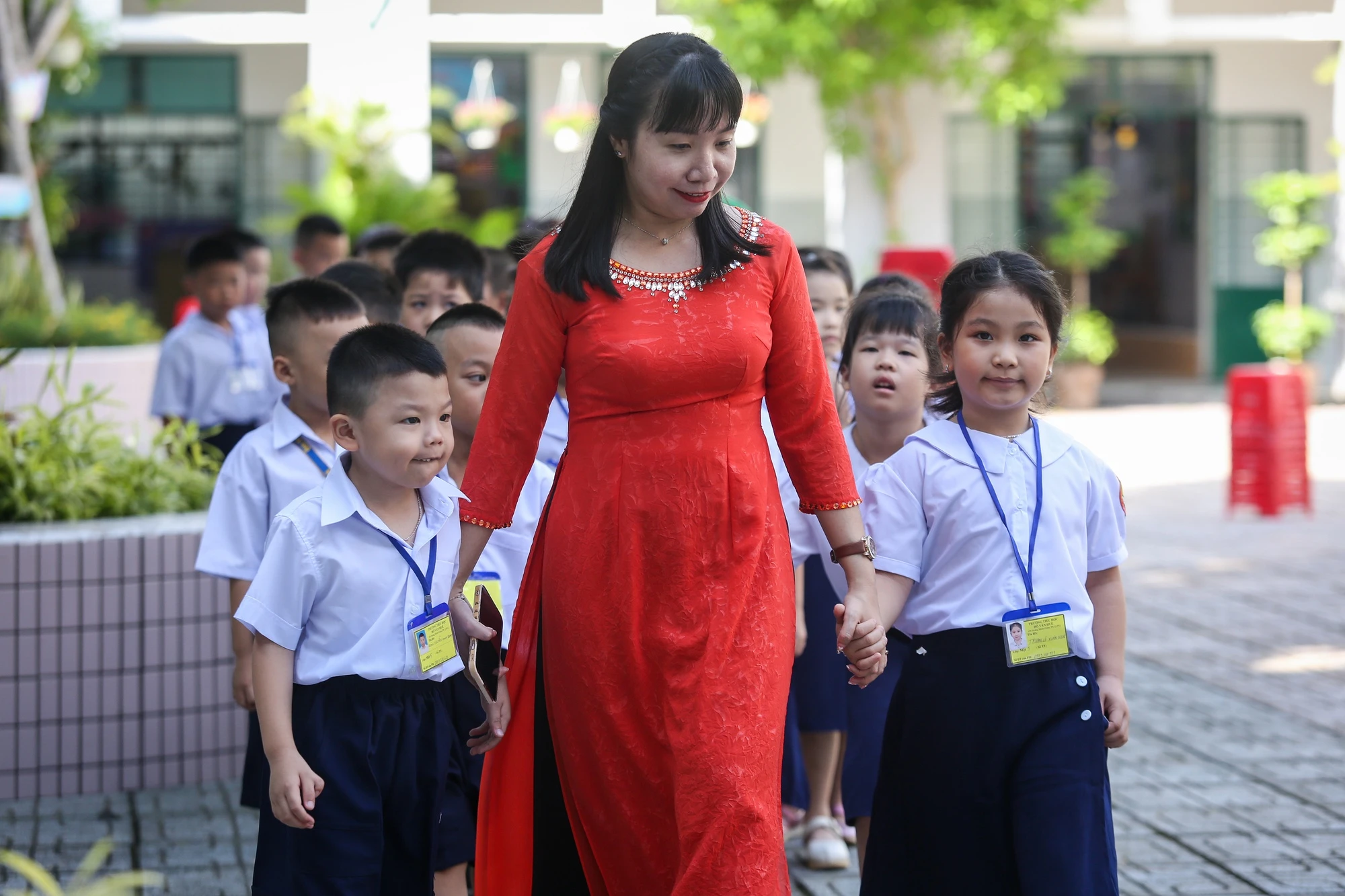
If approximately 1 million teachers and 18 million students at all levels were happy teaching and learning in the nearly 31,000 happy schools currently in existence, it would spread immense positive energy throughout society, creating a happy nation.
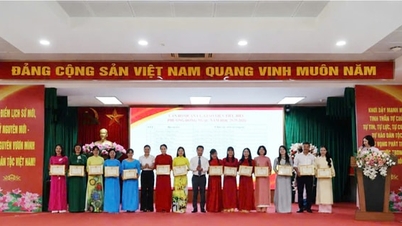
Today, everywhere people joyfully celebrate Vietnamese Teachers' Day with congratulations and beautiful flower arrangements… Meanwhile, some countries like Japan, which do not have a Teachers' Day, show their appreciation and respect for teachers throughout the year, from community activities such as giving up seats and prioritizing service… to many other benefits.
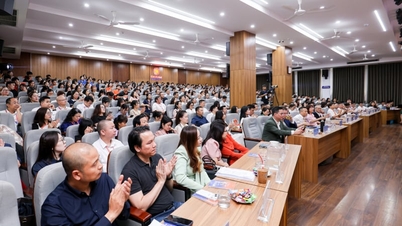
Recently, the education sector has organized numerous training courses and workshops on the crucial role of principals and teachers in building happy schools – places that sow the seeds of happiness for the younger generations who will build a happy nation in the future. If approximately 1 million teachers and 18 million students at all levels are happy teaching and learning in the nearly 31,000 happy schools currently in existence, it will spread immense positive energy throughout society, creating a happy nation.
Recommendations regarding policies and regulations for teachers.
Along with the spiritual joy of working and dedicating themselves to the noble cause of educating future generations, teachers also need continued attention and support from the State and society to enable them to make a living from their profession and truly be happy.
The government needs to have reasonable policies regarding teachers' salaries, allowances, and working hours.
- After July 1, 2023, according to the new salary scale, teachers with university degrees and about 10 years of experience, currently earning salary levels 3-4, receive a monthly salary of approximately 6-7 million VND... With this income, many teachers have to teach extra classes or take on additional jobs that are not in line with their teaching profession in order to make ends meet, which is still fraught with difficulties. If the government is not yet able to increase salaries for all teachers, it is necessary to consider increasing allowances for teachers in remote areas and for excellent teachers who have achieved success in nurturing and training gifted students...
- There needs to be flexibility in the retirement system for teachers. Excellent and healthy teachers should be given the opportunity to continue contributing to the public sector…
- There are preferential policies and regulations for teachers in areas such as healthcare, transportation, and credit (it is highly advisable to learn from other countries, especially Japan, on this matter).
- Encourage and facilitate businesses and social organizations to show interest in and support teachers: offering discounts on goods and services, participating in social and community educational activities. For example, many businesses have offered discounts on services and goods for teachers on November 20th, the start of the school year, etc. Some businesses also regularly provide incentives for teachers such as discounts, installment purchases of computers, motorbikes, and apartments with low interest rates…
- Schools and parent associations need to coordinate and carry out specific, practical, and timely activities for teachers facing difficulties or retiring, not just visiting them on November 20th.
- Connecting alumni networks with teachers allows for regular sharing of information, knowledge, and joy, not just during in-person meetings.
Source link



























![[Photo] Reception to welcome General Secretary and President To Lam and his wife on their State visit to the Philippines](https://vphoto.vietnam.vn/thumb/1200x675/vietnam/resource/IMAGE/2026/06/01/1780295488620_vna-potal-chieu-dai-chao-mung-tong-bi-thu-chu-tich-nuoc-to-lam-va-phu-nhan-tham-cap-nha-nuoc-toi-philippines-8798060-7855-jpg.webp)





























































Comment (0)