

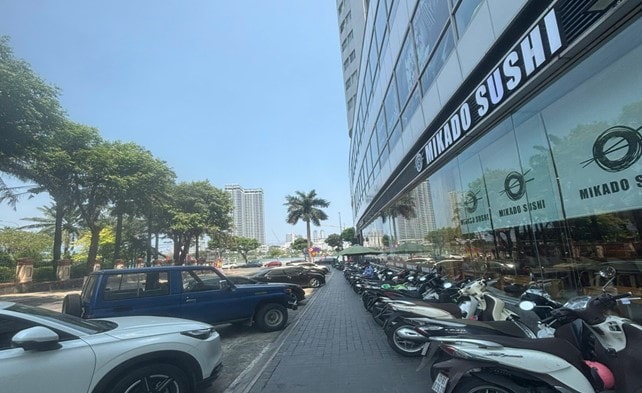
This transformation not only improves urban aesthetics but also contributes to shaping the image of an orderly, civilized, and livable city. However, the more important factor lies in the change in awareness and behavior towards public spaces.
When public spaces are "fragmented"
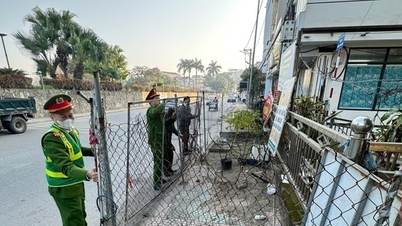
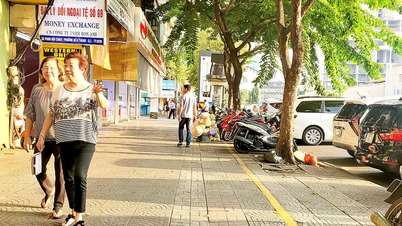
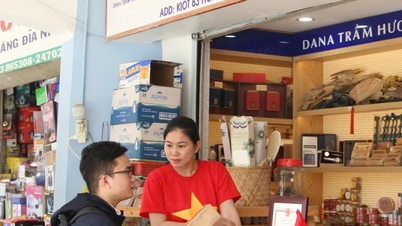
The persistent problem of sidewalk encroachment stems not only from the lack of awareness among some residents but also from inadequacies in urban planning and management methods. Due to limited space and the pressure of making a living, many vendors tend to expand their operations by adding more signs, tables, chairs, display racks, etc.
These small, scattered extensions, when accumulated, have significantly reduced the space available for pedestrians. Furthermore, sidewalks are being used for various other purposes such as parking, planting trees, and storing materials, while the road itself is occupied by prolonged car parking.
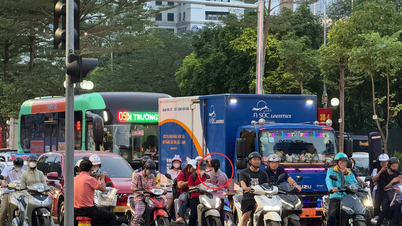
This overlapping of functions narrows the traffic space, forcing pedestrians to move onto the road, posing numerous safety risks.
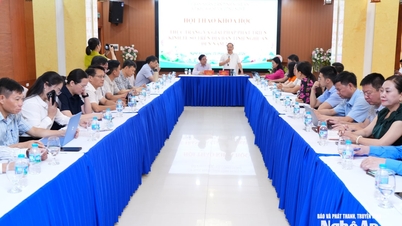
This was also reflected in the feedback from voter Tran Long Hai Son (Hai Chau ward), who suggested that the city needs more effective solutions in managing urban order and consider expanding parking fees on streets to limit the encroachment of road space.
From an economic perspective, extending onto the sidewalk helps businesses increase their reach to customers. However, when this practice becomes widespread, it creates an unfair form of competition: whoever occupies more space gains an advantage. The consequence is fragmented public space, disrupted urban order, and pedestrians becoming the direct victims.
In this context, the city's measures to restore order to sidewalks are not only aimed at addressing violations but also at re-establishing principles for the use of public space.
Previously, the City People's Council issued Resolution No. 331/2020/NQ-HĐND on collecting fees for the temporary use of road space for parking cars, currently applied on some central routes such as Tran Phu and Bach Dang, with a plan for expansion in the future. This is an important step to limit the encroachment on traffic space and improve urban management efficiency.
One notable point is the changing role of sidewalk billboards. Previously, attracting customers relied heavily on location and direct attention from passersby, but consumer behavior has now shifted significantly. People increasingly prioritize seeking information through digital platforms. Food groups, delivery services, and short videos on social media have become far more effective advertising channels than billboards erected on sidewalks.
This shows that competitive advantage no longer lies in occupying space, but rather in improving the quality of products and services and building a brand image in the digital environment. Therefore, cleaning sidewalks is both a requirement of urban management and aligns with market trends. Clean and tidy streets not only improve the quality of life but also contribute to building the image of a livable city, especially as Da Nang aims to assert its position on the international tourism map.
A synchronized and sustainable approach is needed.
While there have been positive changes, effective sidewalk management is unlikely to be sustainable if it only relies on short-term campaigns. In reality, without regular monitoring mechanisms, encroachment is very likely to recur. Therefore, a comprehensive approach involving multiple solutions is necessary. First and foremost is maintaining consistent management discipline, combining inspections, enforcement, and warnings with sufficiently strong penalties to ensure deterrence.
In addition, sidewalk space needs to be reorganized according to each area: central streets should give absolute priority to pedestrians, while other areas may allow controlled business activities with clear regulations on scope and time of use.
Another important issue is parking infrastructure. The city needs to encourage the development of underground and multi-story parking lots in the central area and near tourist attractions; require commercial projects, apartment buildings, etc., to integrate sufficient parking space according to standards; and develop a roadmap for expanding the application of parking fees to eligible routes in the central area in accordance with Resolution No. 331/2020/NQ-HĐND of the City People's Council.
Simultaneously, a progressive fee collection policy will be implemented to limit the occupation of road space.
Revenue from parking fees should be reinvested in transportation infrastructure and public spaces. Simultaneously, support should be provided to businesses to adapt to the new context, where business operations are no longer heavily reliant on sidewalks. Training in digital business skills, social media use, mapping platforms, delivery services, etc., will help businesses expand their customer base without necessarily occupying public space.
Simultaneously, technology should be applied in urban management, from monitoring sidewalk order to receiving feedback from citizens, to improve management efficiency. Finally, public awareness campaigns need to be more in-depth, helping citizens and businesses understand the benefits of using public spaces appropriately.
Ultimately, sidewalk management is not just the responsibility of the authorities, but also a measure of community awareness and urban governance capacity. A civilized city is not only judged by large-scale projects or growth indicators, but also by very specific things such as clear sidewalks, respect for pedestrians, and the proper use of public spaces.
Source: https://baodanang.vn/thay-doi-cach-ung-xu-voi-khong-gian-cong-cong-3332147.html
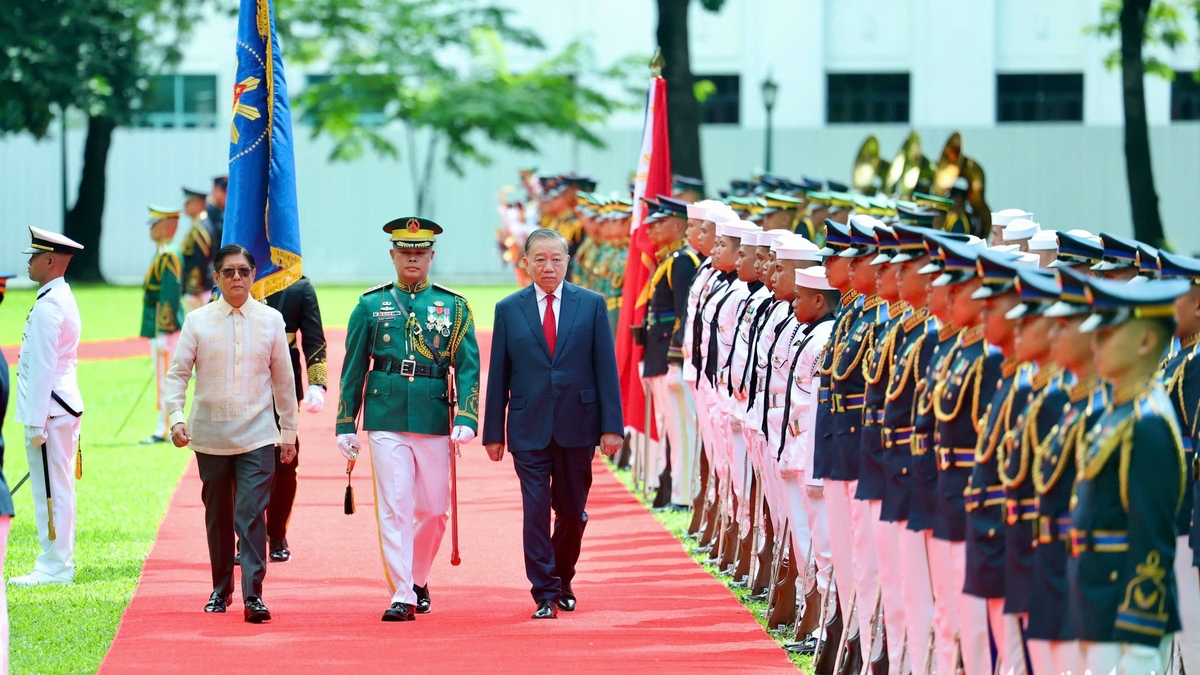

![[Photo] General Secretary and President To Lam and the President of the Philippines hold talks.](https://vphoto.vietnam.vn/thumb/1200x675/vietnam/resource/IMAGE/2026/06/01/1780286997787_anh-man-hinh-2026-06-01-luc-11-09-43.png)








































































Comment (0)