

Over the years, the implementation of rural water and sanitation (WTS) loan programs through preferential loans from the Vietnam Bank for Social Policies (VBSP) has helped many rural households in the province to invest in the construction, renovation, and upgrading of water and sanitation facilities. This has contributed to improving the environment, protecting health, and enhancing the quality of life for rural residents.
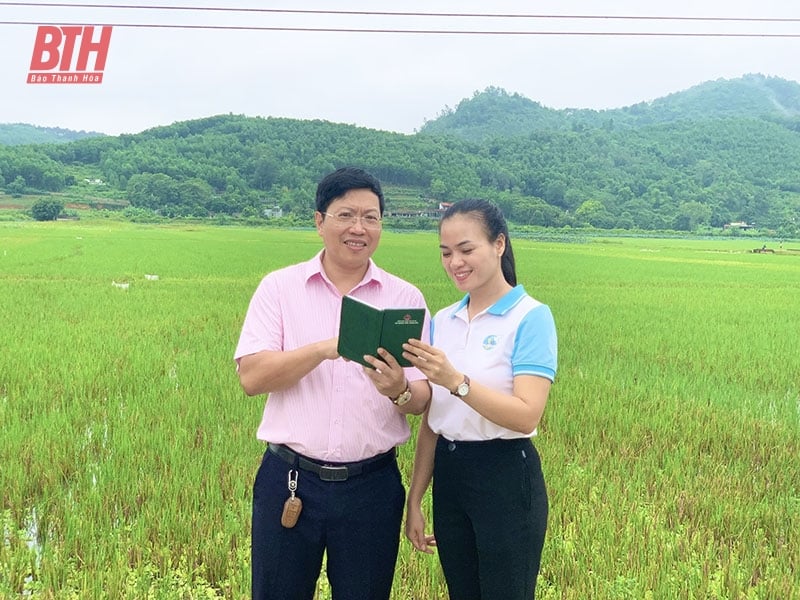
The family of Mr. Vu The Son, from Phu Tho village, Ha Lai commune (Ha Trung district), recently built their own house with money saved over many years. After building the new house, the family didn't have enough money to build a toilet and a clean water system. Thanks to a 20 million VND loan from the Sanitation and Environmental Protection Program of the Social Policy Bank of Ha Trung district, the family was able to build a toilet and connect to the piped water system for daily use.
Previously, the family of Ms. Nguyen Thi Lanh in Tuong Van commune (Nong Cong district) used well water for daily life. However, the well water was contaminated with alum, often covered with a yellow film, making it unsuitable for drinking. With a loan of 20 million VND from the Nong Cong branch of the Social Policy Bank under the program for water supply and sanitation, her family invested in building a drilled well and filtration system to ensure hygiene. Currently, each month, her family pays approximately 160,000 VND in interest and saves money through the village's savings and loan group to ensure full repayment to the bank.
The above are two of tens of thousands of households in the province that have accessed preferential credit under the National Sanitation and Environmental Protection Program. To make it easier for people to access policy funds, the Thanh Hoa branch of the Vietnam Bank for Social Policies has coordinated with relevant departments and localities, especially entrusted socio -political organizations and savings and loan groups, to promptly disseminate information on changes in loan limits, eligible beneficiaries, terms, and purposes of loan use for households participating in the National Sanitation and Environmental Protection Program.
The implementation process was carried out meticulously, from reviewing people's borrowing needs and planning capital sources to disbursing loans. Simultaneously, the bank invested in technological infrastructure, implemented digital transformation, and reformed administrative procedures, creating favorable conditions for people to access policy-based capital. Notably, since September 2024, the capital from the Water Supply and Sanitation Program has continued to be effective, with the loan limit increased to 25 million VND per project, from the previous 10 million VND per project. This increased loan limit has provided rural households with additional resources to invest in building new, upgrading, renovating, and repairing water supply and sanitation facilities to meet standards. This has helped improve people's living standards while contributing to fulfilling the environmental criteria in the New Rural Development program in localities.
According to regulations, eligible borrowers are households residing in rural areas that do not have water supply or sanitation facilities, or whose existing facilities are damaged and require new construction, upgrading, renovation, or repair. Increasing the loan amount for the Water Supply and Sanitation Program is considered a practical and timely policy that meets the needs of the people. Immediately after the decision came into effect, the Thanh Hoa branch of the Vietnam Bank for Social Policies (VBSP) promptly disbursed funds to facilitate access to loans with preferential interest rates for the people, especially those in rural areas. As of early November 2024, the outstanding loan balance of the Water Supply and Sanitation Program in the province reached nearly 2,500 billion VND with 125,500 customers still having outstanding loans, and over 98,000 water supply and sanitation projects have been constructed. The program not only facilitates households in investing in the construction or renovation and upgrading of clean water supply and sanitation facilities to improve the quality of life, especially for the poor, ethnic minorities, and people in remote areas, but also makes a significant contribution to the socio -economic development of localities, especially in fulfilling the criteria of the New Rural Development Program.
Rural sanitation and hygiene are indispensable needs in the daily lives of every family and are crucial factors in protecting human health. This is also an important criterion in the National Target Program for Building New Rural Areas. Therefore, in the coming time, the Thanh Hoa branch of the Vietnam Bank for Social Policies will continue to actively coordinate with localities and socio-political organizations to further strengthen the dissemination of policies, create favorable conditions for rural residents to access loans under the sanitation and hygiene program, and ensure quick, timely, and proper disbursement according to operational procedures.
Text and photos: Luong Khanh
Source: https://baothanhhoa.vn/them-nguon-luc-dau-tu-xay-dung-cac-cong-trinh-nuoc-sach-va-ve-sinh-dat-chuan-230175.htm








































































Comment (0)