The market is becoming increasingly fragmented.
Data from the Vietnam Association of Real Estate Brokers (VARS) shows that in 2025, the market will see approximately 128,000 new products launched; this is the highest level in the 2019-2025 period and is approaching the peak of supply. However, the market is still not completely "quenched" due to the continued imbalance in the supply structure, with a serious shortage of affordable housing. The majority of new supply comes from the high-end apartment segment and high-value low-rise properties, with about 25% of apartments priced above 100 million VND/m², mainly concentrated in a few large developers.
Despite the rapid increase in supply, real estate prices continue to set new highs. Many projects launched in early 2025 were well-received thanks to pent-up housing demand, coupled with positive macroeconomic expectations, infrastructure investment, and persistently low interest rates. Some projects experienced sell-out, and even instances of price gouging occurred.
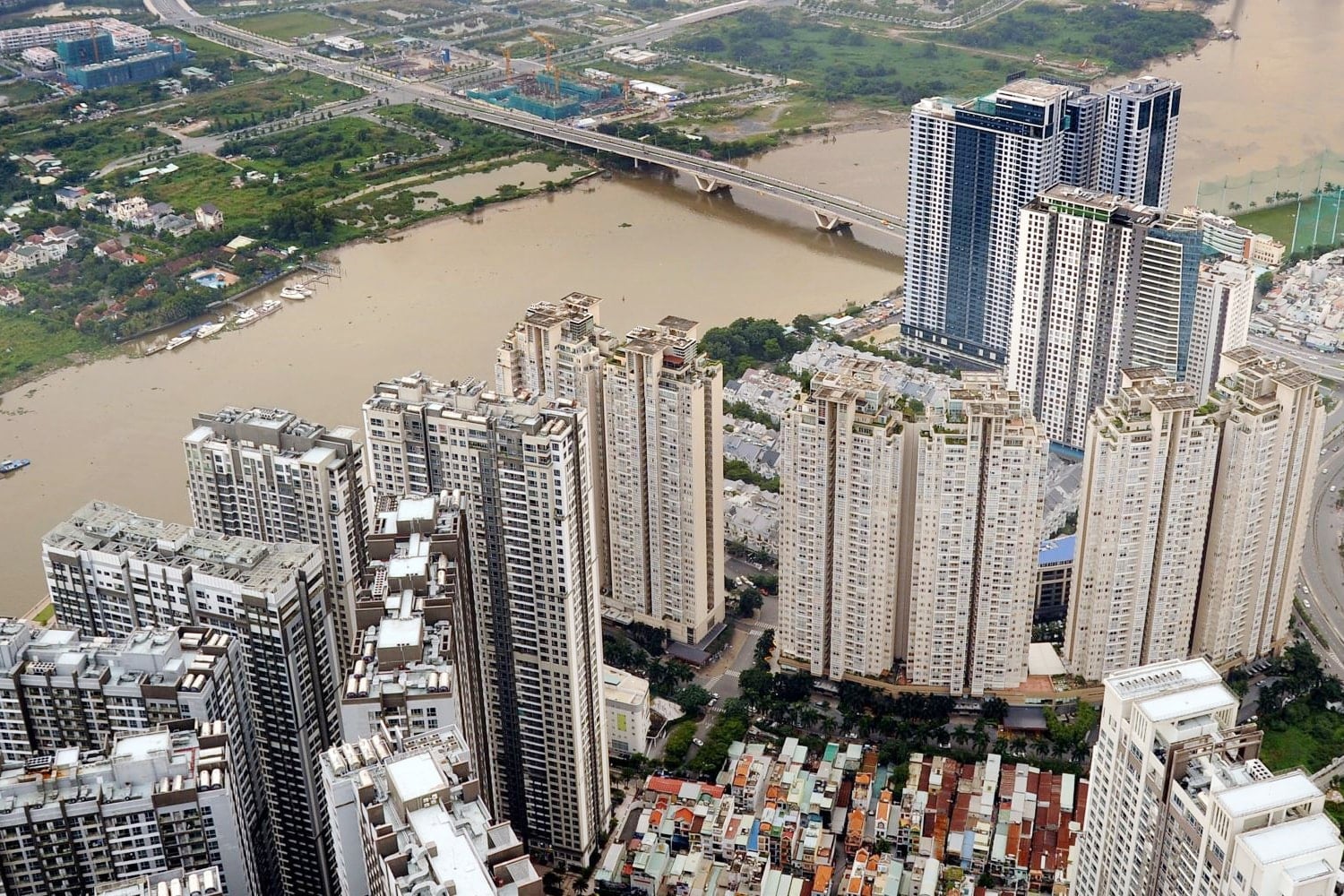
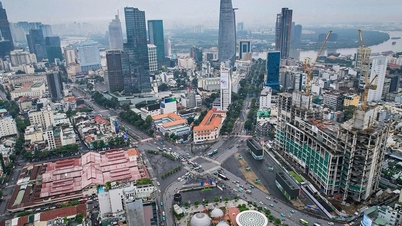
The real estate market is entering a phase of genuine selection and competition. Photo: An Hieu
However, from the end of 2025, the market began to change significantly. As supply increased across the board, buyers had more choices, and liquidity was no longer evenly distributed. Against the backdrop of rising interest rates, financial pressure gradually emerged, especially for investors using high leverage, expecting short-term gains, and participating in the market during periods of rapid price increases.
According to VARS, market differentiation is linked to fundamental changes in development space. Increased investment in transportation infrastructure such as expressways, ring roads, and inter-regional arteries has expanded urban areas, shortened travel times, and facilitated the relocation of projects to suburban and satellite cities – areas with ample land and more suitable price levels. In 2025 alone, the country will commence and inaugurate 564 transportation projects with a total investment of over 5.14 trillion VND, of which private capital accounts for nearly 75%.
Alongside infrastructure development, removing legal obstacles has become a crucial driving force in improving supply. Approximately 1,000 projects have had their difficulties resolved and resumed implementation; many new large-scale projects have also been approved and are progressing rapidly to avoid the risk of land reclamation under the new regulations.
With a widespread increase in supply, the market enters a phase of genuine competition. Real estate prices, especially in large cities, have risen significantly relative to average income, narrowing the pool of participants. Buyers seeking a place to live are forced to have a solid financial foundation and a long-term vision; investors also find it difficult to achieve quick profits as before. Short-term speculative strategies based on unverified information and the herd mentality are increasingly risky, especially as market data becomes more transparent.
In this new context, investors need to shift to a selective mindset, prioritizing real value, exploitation potential, liquidity, and risk management. Investors who use high leverage and lack long-term strategies will gradually be eliminated from the market. For businesses, reputation, financial capacity, transparent legal framework, and commitment to deadlines become core competitive advantages, forming the foundation for sustainable development in the medium and long term.
The role of government agencies is "key".
In the long term, VARS believes that real estate prices are unlikely to fall significantly, although they will no longer experience "hot" increases. The demand for housing remains high, the economy continues to grow, infrastructure investment continues to expand, while project development costs, especially financial obligations related to land according to the new land price list, are increasing, creating a new price level for the market.
However, demand will be highly selective; projects with selling prices far exceeding their true value, poorly connected locations, incomplete legal documentation, or those unsuitable for actual living needs risk having their transactions "frozen," even if the overall price level continues to trend upwards.
Overall, real estate in the central area is projected to maintain high prices and stable year-on-year growth due to the near-complete lack of new supply, increasingly scarce land, and a focus on the luxury segment. However, this stability is only sustainable if the suburban market operates healthily, because if liquidity in suburban areas declines sharply, investors may be forced to sell off central properties to manage cash flow.
Despite positive signs, the market still faces many challenges that need to be addressed. VARS emphasizes the crucial role of state management agencies, highlighting the need to improve the capacity of local-level management officials. Although the three laws on land, housing, and real estate business have been enacted and adjusted to suit practical realities, implementation in many localities remains slow due to a lack of specialized and experienced personnel, causing businesses to wait and increasing costs.
The issue of land price tables and adjustment coefficients is a major bottleneck. The new land price tables have led to very high land prices, while many localities are still waiting for the adjustment coefficients to be issued. VARS believes that it is necessary to promptly issue adjustment coefficients at a reasonable level, below 1 for newly developed areas, in order to encourage businesses to develop projects.
In addition, land clearance still faces many obstacles due to a lack of decisiveness in some localities; more specific and unified guidelines are needed to accelerate the process.
Regarding interest rates, there have been signs of rapid increases in a short period, putting pressure on both real estate development companies and homebuyers. “Real estate credit control needs to be implemented cautiously and selectively to limit risks to the system without shocking the market and development capital flows. Because if interest rates are too high, not only the real estate market but the economy as a whole risks negative impacts,” VARS emphasized.
Source: https://daibieunhandan.vn/thi-truong-bat-dong-san-chon-loc-va-canh-tranh-thuc-chat-10404884.html


![[Photo] Secretary of the National Assembly Party Committee, Chairman of the National Assembly presides over the meeting of the Standing Committee and Executive Committee of the National Assembly Party Committee.](https://vphoto.vietnam.vn/thumb/1200x675/vietnam/resource/IMAGE/2026/06/03/1780480353201_ndo_br_bnd-2585-jpg.webp)




![[Photo] General Secretary and President To Lam presides over a meeting with the Central Organizing Committee.](https://vphoto.vietnam.vn/thumb/1200x675/vietnam/resource/IMAGE/2026/06/03/1780482764658_a1-bnd-4741-3342-jpg.webp)



















































![[Video] Sunset at Lap An Lagoon – Where the sun sets over the fishing nets](https://vphoto.vietnam.vn/thumb/1200x675/vietnam/resource/IMAGE/2026/05/31/1780192137701_beach-landscape-sea-water-nature-grass-745871-pxhere-com.jpeg)




![[Photo] General Secretary and President To Lam attends the 14th Congress of the Vietnam Trade Union](https://vphoto.vietnam.vn/thumb/402x226/vietnam/resource/IMAGE/2026/06/04/1780543339765_anh-man-hinh-2026-06-04-luc-10-22-07.png)






























Comment (0)