

Domestic consumption is growing.
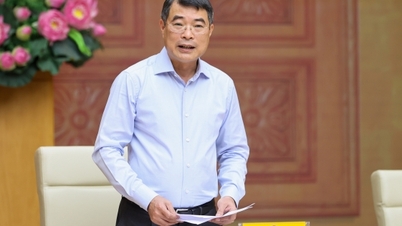
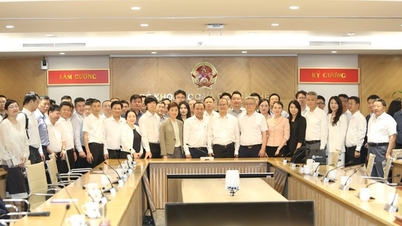
The recovery of domestic consumption, along with stimulus programs, the development of commercial infrastructure, ensuring the supply of goods, and promoting digital transformation, are contributing to creating new growth momentum. At a recent meeting between Minister of Industry and Trade Le Manh Hung and the Department of Domestic Market Management and Development, Mr. Tran Huu Linh, Director of the Department, stated that developing the domestic market is identified not only as a short-term solution but also as a long-term strategy to create a foundation for sustainable economic growth.
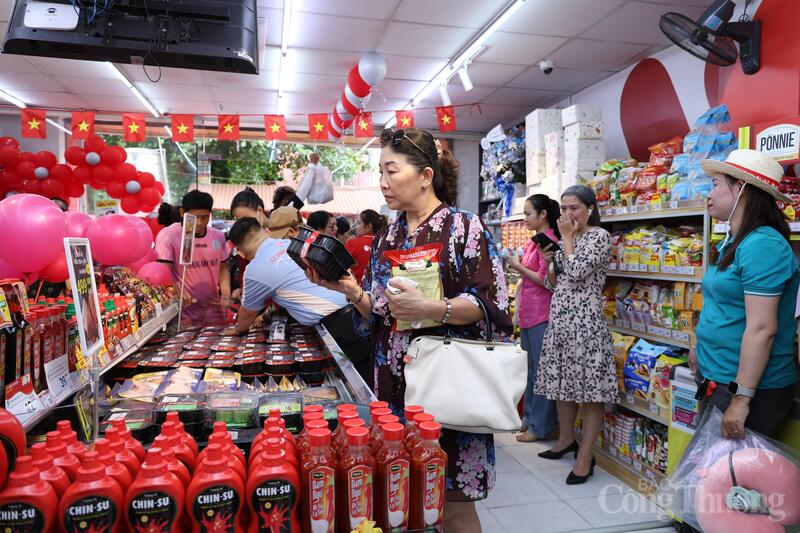
The domestic market is showing a remarkable recovery.
Over the years, domestic consumption has consistently been one of the key drivers of Vietnam's economic growth. During the period 2019-2024, final consumption accounted for the highest proportion (and contributed the most to GDP growth), approximately 55%. By 2025, total retail sales of goods and services are projected to reach VND 7,009 trillion, equivalent to approximately US$269 billion, representing a 9.2% increase.
Entering 2026, amidst global economic uncertainties, the role of the domestic market becomes even more prominent. Geopolitical shifts in the Middle East directly impact the global oil supply chain; the increasing trend of trade protectionism and tariff confrontations between major economies continue to put pressure on production and exports. In this context, domestic purchasing power becomes a "balancing force" for the economy.
According to a report by the Department of Domestic Market Management and Development, total retail sales of goods and consumer service revenue in April 2026 reached VND 646.3 trillion, an increase of 12.1% compared to the same period last year. The cumulative figure for the first four months of the year reached VND 2,546.6 trillion, an increase of 11.1%.
Notably, even excluding the impact of price increases, total retail sales of goods and services still grew by 6.3%. This indicates a positive recovery in real consumer spending, reflecting improved market confidence.
Mr. Tran Huu Linh stated that developing the domestic market is being identified by the Party and Government as one of the key tasks to create new growth drivers for the economy.
Citing the spirit of Conclusion 18-KL/TW of the 2nd Conference of the 14th Central Committee, Mr. Tran Huu Linh emphasized: “Developing the domestic market becomes an important pillar for growth; strongly shifting towards modern distribution models. Organizing large-scale, substantive, and effective consumer stimulus programs.”
Beyond simply aiming for retail revenue growth, this strategy also necessitates a comprehensive restructuring of the domestic market towards modernization, digitalization, and close integration with domestic production capabilities.
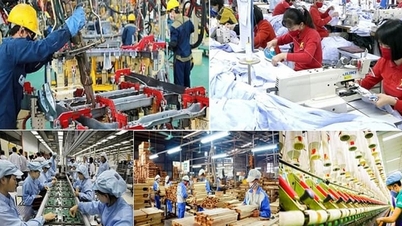
Looking at the broader picture, the domestic market is now not only a place for consuming goods but also a "large training ground" for Vietnamese businesses to improve their competitiveness, perfect their supply chains, build brands, and increase their resilience to external fluctuations.
Stimulating consumer demand, developing infrastructure, and promoting digital transformation.
To further promote the development of the domestic market, the Ministry of Industry and Trade is implementing a comprehensive set of solutions, ranging from improving policies and stimulating consumer demand to developing commercial infrastructure and digital transformation.
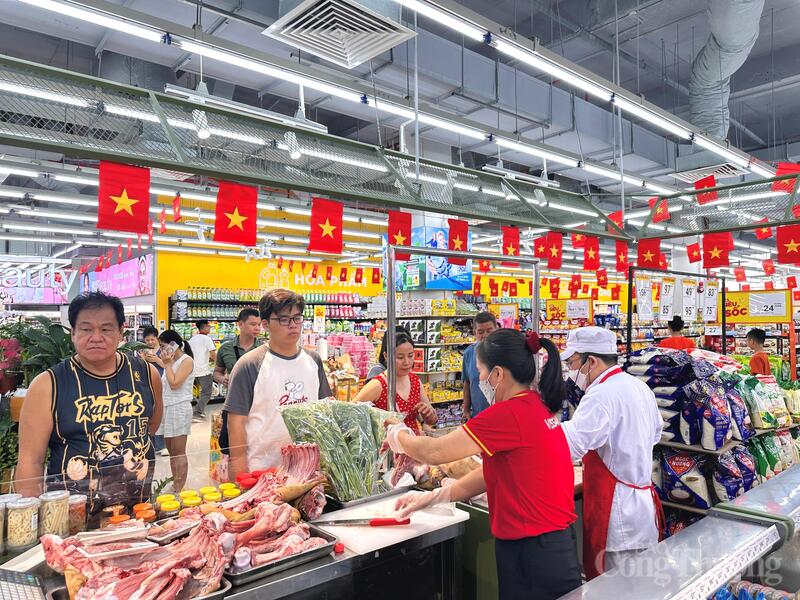
Retail channels offer a diverse range of goods at stable prices.
According to Mr. Tran Huu Linh, one of the current priorities is the effective implementation of Government Resolution No. 88/NQ-CP on promoting the development of the domestic market and stimulating consumer demand.
In addition, many new programs are being developed to create a stronger ripple effect for Vietnamese goods. These include the "Made-in-Vietnam: Touch Vietnam, Receive Pride" program, the "Vitality of Vietnamese Goods" program supporting the consumption of local products (implemented twice a month), and the proposal to distribute free vouchers to the public to stimulate consumer demand.
Speaking with reporters from the Industry and Trade Newspaper, representatives of businesses and cooperatives participating in the "Vitality of Vietnamese Goods" program all highly appreciated the program's effectiveness. Ms. Tang Thi Phuong Thanh, Director of Thu Ka Indigenous Agricultural Cooperative - a unit bringing products from Lai Chau ginseng - emphasized: “The 'Vitality of Vietnamese Goods' program is a very reputable program. Participating products must have clear origins. Personally, I and the cooperative have high expectations for the program's spread, especially with the support of state management agencies for cooperatives operating in disadvantaged areas like Lai Chau.”
A notable point is that the development orientation of the domestic market is no longer confined to the traditional retail system but is strongly shifting towards a modern, multi-channel, and digitized model.
The Department of Domestic Market Management and Development is developing a strategy for the development of the domestic trade market for the period 2026-2030, with a vision to 2045; and simultaneously proposing a project to develop a logistics system to reduce the cost of goods circulation.
Currently, Vietnam's logistics costs remain at around 19% of GDP, significantly higher than many countries in the region. This is one of the "bottlenecks" that reduces the competitiveness of Vietnamese goods.
Alongside the development of logistics, the Ministry of Industry and Trade is also promoting the development of markets, shopping centers, convenience stores, outlet models, and large-scale shopping clusters to stimulate domestic consumption combined with tourism development.
From a business perspective, expanding e-commerce and digital transformation are considered key to market expansion. The Ministry of Industry and Trade is developing a comprehensive digital transformation support program for agricultural businesses, helping them and cooperatives reach consumers faster and reduce intermediary costs.
In state management, digital transformation is also creating significant changes. From March 1, 2026, the Department of Domestic Market Management and Development completed the technical connection with the National Public Service Portal for online payment of administrative penalties.
This year, the verification of violators via VNeID and the electronic notification of penalty decisions will also be implemented simultaneously. At the same time, the system for managing petroleum and other key commodities will officially be operational from June 1, 2026. The acceleration of digitalization will not only improve management efficiency but also contribute to market transparency, reduce commercial fraud, and better protect consumers.
In addition to market development solutions, market management continues to be tightened to ensure a healthy business environment. From December 15, 2025 to May 10, 2026, market management forces nationwide inspected 17,407 cases, detecting and handling 14,923 violations. The total amount of administrative fines reached 250.5 billion VND. The violations mainly involved smuggled goods, goods of unknown origin, industrial property violations, food safety, and e-commerce.
According to Mr. Tran Huu Linh, tightening legal discipline regarding product quality, traceability, and consumer protection will be a continuous task in the coming period.
In an economy aiming for double-digit growth, the domestic market has been and continues to be one of the strategic drivers of development. With strong domestic purchasing power, a more modern distribution system, improved logistics, and increasing consumer confidence in Vietnamese goods, the market of nearly 100 million people will not only be a place for consuming goods but also a crucial foundation for Vietnam's sustainable economic acceleration.
Source: https://congthuong.vn/thi-truong-trong-nuoc-khang-dinh-vai-role-be-do-457017.html
![[Image] Close-up view of the interchange connecting the two expressways and Long Thanh Airport.](https://vphoto.vietnam.vn/thumb/1200x675/vietnam/resource/IMAGE/2026/05/25/1779703378210_ndo_br_z7863716673926-224453a31600126cce10622af6290afd-4549-jpg.webp)


![[Image] Hanoi's urban life under the challenge of a "scorching hot" environment](https://vphoto.vietnam.vn/thumb/1200x675/vietnam/resource/IMAGE/2026/05/25/1779706979265_nang-nong-t5-2026-minh-duy-7-4636-jpg.webp)








































































Comment (0)