

 |
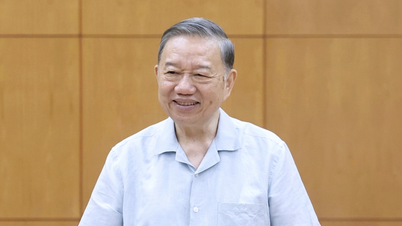
| Associate Professor Dr. Dinh Xuan Thao, former Director of the Institute of Legislative Research, former member of the Central Theoretical Council. |
This administrative reorganization is not just about streamlining the apparatus, but also about restructuring the development space. In your opinion, what is the greatest significance of this policy?
I believe that viewing the reorganization of administrative units merely as a measure to reduce organizational layers is a rather narrow approach. The deeper meaning of this policy is to create opportunities for Vietnam to redesign its economic development space with a new mindset, in line with the requirements of the new development stage and the trend of global competition.
For decades, our development model has been somewhat dominated by historical administrative boundaries, while modern economies operate according to the logic of regional linkages, supply chains, logistics systems, and growth poles. This has led to the reality that many localities are small in scale, have limited resources, and struggle to form competitive economic centers due to dispersed investment, overlapping planning, and even unhealthy competition in attracting projects.
Reducing the number of provincial-level administrative units helps to expand the development space, creating larger-scale economic entities, thereby facilitating long-term planning, attracting large investments, and reorganizing economic sectors in a more efficient manner. Reducing the number of provinces by almost half not only expands the development space but also creates conditions for the formation of economic entities large enough to compete at the regional and international levels. A merged province could have a population of several million people and a GRDP equivalent to an average global economy, thus providing the conditions for more systematic planning of industry, services, urban areas, and infrastructure.
In particular, reorganizing local government by reducing intermediate levels (districts, counties) not only reduces administrative costs but also improves governance efficiency, shortens decision-making processes, and increases policy responsiveness. More importantly, this helps shift from an administrative management model to a development-oriented governance model.
I believe that this reorganization of administrative units is essentially a development-oriented institutional reform, not simply an administrative reform.
 |
| Hanoi serves as a valuable lesson for localities across the country to change their development mindset after mergers. |
According to him, what is the most important thing after a merger to avoid it being just a mechanical addition without creating new impetus for development?
If we only merge geographical boundaries without changing the development mindset, we will not achieve the greatest goal of this reform. In my opinion, there are three shifts in thinking that need to be implemented.
Firstly, we need to shift from a mindset of "independent localities," as many National Assembly representatives jokingly said, "each locality is a separate economy," to a mindset of "integrated economic regions." After the mergers, it's no longer possible to continue thinking of each former locality as a separate development center. Instead, we must clearly define the role of each region within the overall development structure: which is the industrial center, which is the logistics center, which is the high-tech agricultural region, and which is the ecological space.
Secondly, the mindset should shift from "requesting projects" to "creating an investment ecosystem." Large localities after mergers need to focus on building a transparent investment environment, integrated infrastructure, and high-quality human resources, instead of competing through individual incentives.
Third, we need to shift from a growth-oriented mindset focused on extensive expansion to one based on productivity, innovation, and digital transformation. This is the foundation for sustainable growth.
If these three transformations are done well, the merger will not be a simple addition of "one plus one equals two," but will create the effect of "one plus one must be greater than two."
We've had many mergers and divisions before, but they were purely administrative in nature. This time, the merger is about "changing the mindset for development," and we lack experience in that area?
Vietnam has undergone numerous reorganizations, divisions, and mergers of provincial-level administrative units from 1975 to the present to suit the requirements of management and socio-economic development. A notable example is the large-scale merger of provinces in 1976, which reduced the number of provinces and cities nationwide from 72 to 38.
The administrative reorganization during this period was driven by subjective political will, aiming for a "great leap forward" similar to merging cooperatives to create a "nationwide cooperative." The prevailing mindset at the time was that many weak cooperatives merging would create a strong one, and many strong cooperatives merging would create an even stronger one.
The nationwide cooperative movement was implemented synchronously in the North before 1975 and was deployed in the South after the liberation and reunification of the country. However, by the mid-1980s, this model revealed its limitations: low productivity, lack of individual motivation, and a stagnant subsidy mechanism. Therefore, the Party and State made a historical turning point by implementing Contract Farming System 10 in 1988. This shows that we were not acting on willpower, but rather following the laws of development.
Similarly, during that period, the general level of education and the leadership at the local level were limited, infrastructure, especially transportation and information technology, was extremely backward, and the large scale of the province created barriers to development and stagnation. Even in the South, many rural areas were more backward than before 1975.
With the success of Contract Farming No. 10 and innovative thinking, the Party and State decided to divide provinces and cities starting in 1991. The last provincial division was carried out in 2004 with the splitting of Can Tho and Dak Nong provinces, at which point the whole country had 64 provincial-level administrative units.
The result of this separation is improved local governance, increased regional competitiveness and economic dynamism, strong economic development in each locality, region, and the entire country, and improved living standards for the people.
But that's a "change in development mindset" after the split, not a merger, sir?
With Hanoi being the country's second-largest economic center, before 2008 its area was too small for the needs, lacking space and momentum, like a growing body confined in a tight garment. Meanwhile, Ha Tay had space and potential but lacked momentum. Therefore, based on the Government's proposal and the Party's resolution, the 12th National Assembly decided to merge Ha Tay into Hanoi in 2008.
Subsequently, the new Hanoi developed strongly by leveraging and maximizing the strengths of the two former localities. Without the merger, Hanoi and Ha Tay would certainly have continued to develop, but the Hanoi region, encompassing both the old Hanoi and Ha Tay, could not have achieved the "foundation and potential it has today."
Hanoi is currently developing a Master Plan for the Capital City with a 100-year vision, with the urban areas surrounding the city center all located in the former Ha Tay province and the former Me Linh district. This would never have been possible without merging Ha Tay into Hanoi. Therefore, while it's true that we lack experience in "changing development thinking" after a merger, Hanoi's experience serves as a valuable lesson for localities nationwide to adapt their development mindset after mergers.
"Changing the development mindset," shifting from a mindset focused on administrative boundaries to one focused on spatial development management, is a matter of survival. If mergers occur without a change in development thinking, it will be very difficult to achieve breakthroughs.
Many believe that, after a short period of "land restructuring," new growth poles have emerged. What is your opinion on this?
I completely agree with this viewpoint. One of the limitations of the previous development model was that many localities were too small to form true growth poles. For example, Bac Ninh, Ha Nam, Hung Yen, Thai Binh... have areas of 800-1,000 km2, so the development space is limited. In general, most localities before the merger had small market sizes, limited budget resources, and scattered industrial land, making it difficult to attract large-scale, leading projects.
After the merger, the economic scale of each province increased significantly. This allowed for the planning of highly specialized economic centers, such as large-scale processing and manufacturing industrial centers; logistics centers linked to seaports and airports; financial or service centers; innovation centers... - factors that play a crucial role in improving productivity and the quality of growth. When the scale is large enough, the locality can attract multinational corporations with multi-billion dollar projects - something that many smaller provinces previously found difficult to achieve.
Furthermore, expanding administrative boundaries also helps address a very practical issue: infrastructure connectivity. Many routes previously crossed multiple localities, resulting in lengthy coordination efforts. By streamlining administrative centers, planning and investment will become much easier.
In the history of many countries, major turning points have often been associated with institutional reforms and the organization of development space. Vietnam is facing a similar opportunity. The key is for localities to quickly develop integrated planning, clearly identifying growth poles and economic corridors to leverage economies of scale.
Source: https://baodautu.vn/thiet-ke-lai-mo-hinh-phat-trien-theo-tu-duy-moi-d580206.html
![[Image] Hanoi's urban life under the challenge of a "scorching hot" environment](https://vphoto.vietnam.vn/thumb/1200x675/vietnam/resource/IMAGE/2026/05/25/1779706979265_nang-nong-t5-2026-minh-duy-7-4636-jpg.webp)
![[Image] Close-up view of the interchange connecting the two expressways and Long Thanh Airport.](https://vphoto.vietnam.vn/thumb/1200x675/vietnam/resource/IMAGE/2026/05/25/1779703378210_ndo_br_z7863716673926-224453a31600126cce10622af6290afd-4549-jpg.webp)


























































































Comment (0)