"Vietnam's moment has arrived - a golden opportunity to rise to the top in the AI era."
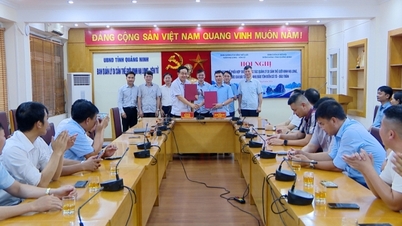
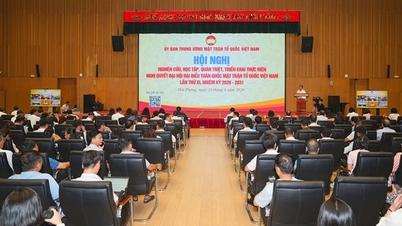
On October 10th, the first Private Sector Economic Overview Program (ViPEL 2025) took place at the National Convention Center in Hanoi.
Speaking at the event, Ms. Nguyen Thi Phuong Thao, Chairwoman of the Board of Directors of Sovico Group, emphasized that the world is undergoing a powerful shift in the technological and artificial intelligence revolution, opening up a "golden opportunity" for Vietnam to break through and take the lead in the new era.
"We are living in an era where artificial intelligence, semiconductors, data, and the digital economy are changing every day, every hour. These technologies are not only shaping how we produce, but also changing how we live, learn, and develop," Ms. Thao stated.
According to her, in this context, the big question is how Vietnam will participate in this global game. "This moment is a golden opportunity for Vietnam – the beginning of a golden decade of innovation," Ms. Thao emphasized.
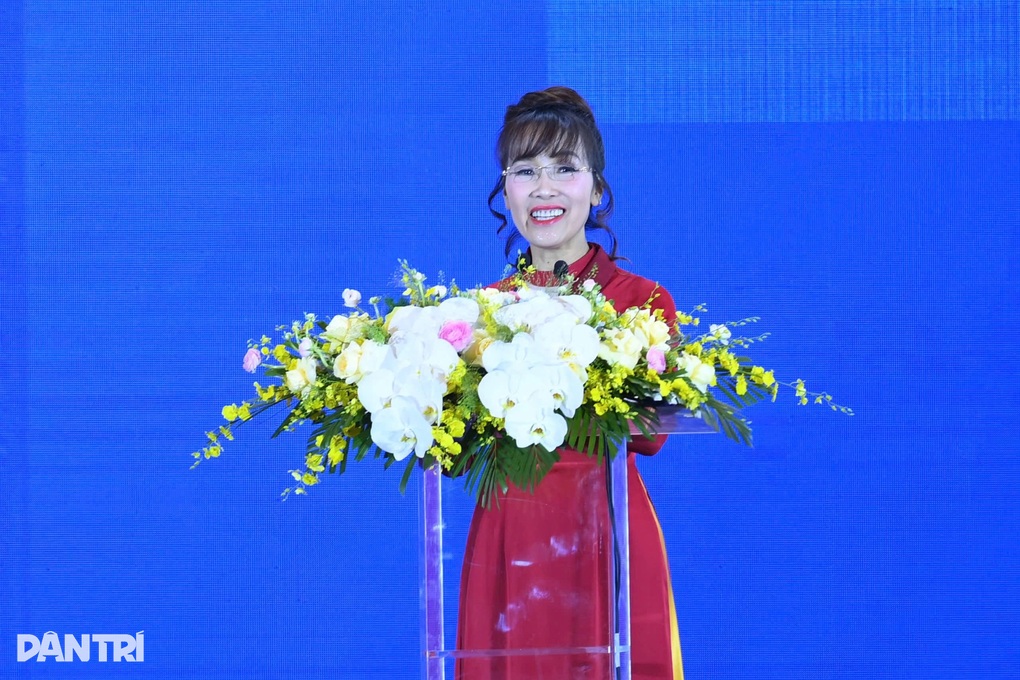
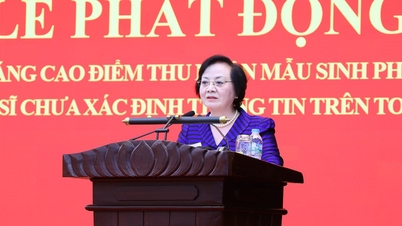
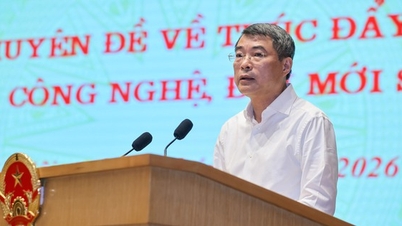
Ms. Nguyen Thi Phuong Thao, Chairwoman of the Board of Directors of Sovico Group (Photo: Hai Long).
She cited that Vietnam is currently among the top 6 globally in terms of openness to artificial intelligence, and possesses a thriving innovation ecosystem spanning from digital finance and smart manufacturing to clean energy.
In the semiconductor sector, the global supply chain shift offers Vietnam a unique advantage: a safe, dynamic, and attractive environment. "For the first time, we have the opportunity to participate more deeply in the value chains of leading global technology corporations," Ms. Thao emphasized.
She believes that future fields such as agricultural drones, clean energy, and carbon credits are "great windows of opportunity" for Vietnamese businesses. "Vietnam's moment has arrived. If we dare to think, dare to act, and dare to move quickly, we can absolutely become the new innovation hub of Asia," she asserted.
However, to turn opportunities into reality, Vietnam needs to overcome four major challenges. Firstly, infrastructure and data, as the payment system is still weak, data is fragmented, and security is insufficient. Secondly, institutions and legal frameworks require an open, flexible legal framework that allows for experimentation within a sandbox model. Thirdly, human resources, requiring the training of high-quality technology engineers along with financial and management experts. And finally, capital, because innovation cannot go far without long-term capital and genuine support from the State, businesses, and society.


According to Ms. Thao, the private sector needs to take the lead in public-private partnerships to work with the government in shaping the future. "It's not just about having the right policies, but also about having the right mindset: a mindset of working together and creating value together," she said.
Vietnam could select leading enterprises in key sectors such as artificial intelligence, semiconductors, and digital finance to share risks and jointly seize investment opportunities.
"Technology is not just a tool, but also a story of people, vision, and dreams. When the government is proactive, businesses are pioneering, and society is supportive, we will create a synergistic force that will propel Vietnam to breakthroughs and lead the way," she shared.
“The 21st century must be the century of Vietnamese intellect – a creative, self-reliant, and shining Vietnam. The private business community is committed to working alongside the Government to build a strong, prosperous, and happy Vietnam,” Ms. Thao affirmed.
Unleashing the potential of Vietnamese agriculture.
Sharing his views on the agriculture, forestry, and fisheries sector, Mr. Mai Huu Tin, Chairman of the Board of Directors of U&I Investment Joint Stock Company, emphasized that this is a field with enormous development potential, but to achieve breakthroughs, it needs a substantive and constructive action mechanism like ViPEL, aimed at unleashing potential and optimizing national competitiveness.
“Vietnam has ideal natural conditions for agriculture and fisheries, and is among the world’s leading exporters of coffee, rice, and many other products. Vietnamese people are diligent, intelligent, and quick learners – that is their most valuable resource for progress,” Mr. Tin said.
However, he argued that the linkages between businesses and the State remain limited, preventing the industry from developing a long-term strategy. "The industry ecosystem is still largely spontaneous, lacking sufficiently strong public-private partnership mechanisms. The links between pioneering enterprises and small businesses are weak, leading to the inefficient exploitation of national resources such as land," he analyzed.
Furthermore, the agricultural sector faces numerous policy barriers: slow tax refunds, difficulty accessing credit, lack of brand support, and insufficient export promotion. The majority of products are still exported in raw form or with minimal processing, reducing added value and national branding.
To address this, Mr. Mai Huu Tin proposed implementing the ViPEL mechanism as a breakthrough solution, based on three pillars: proactive policies, leading enterprises, and supportive government agencies. “Policies must be truly open, and administrative procedures need to be simplified. Land, credit, and tax access must be streamlined; while simultaneously encouraging innovation, promoting trade, and building national brands,” he added.

Mr. Mai Huu Tin, Chairman of the Board of Directors of U&I Investment Joint Stock Company (Photo: Hai Long).


According to Mr. Tin, the private sector must play a leading role, forming linkages within the industry and coordinating with the State in sustainable planning and investment. "Capable businesses need to become the driving force, leading small and medium-sized enterprises, instead of engaging in fragmented competition," he emphasized.
He also called for significant changes from the State, particularly in areas such as amending the Land Law, digitizing management, and expanding access to credit and infrastructure projects for private businesses. “A clear public-private partnership mechanism is needed, with ViPEL acting as a bridge, providing independent feedback, and promoting substantive action,” he proposed.
Finally, Mr. Mai Huu Tin emphasized that private enterprises must proactively take responsibility, not just rely on policies. "We must take a leading role, participate in funds and programs, provide policy critique, and ensure transparency of information, so that ViPEL becomes a truly effective model," he affirmed.
Source: https://dantri.com.vn/kinh-doanh/thoi-khac-nay-chinh-la-co-hoi-vang-cua-viet-nam-20251010172852679.htm



![[Photo] Prime Minister Le Minh Hung presides over the thematic session on promoting science and technology development and innovation.](https://vphoto.vietnam.vn/thumb/1200x675/vietnam/resource/IMAGE/2026/06/23/1782207872934_ndo_br_dsc-1724-jpg.webp)