

 |
The rear camera cluster of the iPhone 17 Pro Max. Photo: Ars Technica . |
According to analyst Ming-Chi Kuo from TF International Securities, the variable aperture lens on the iPhone 18 Pro and 18 Pro Max costs 50% more than the cameras equipped in current models.
Previously, rumors suggested that the iPhone 18 Pro series would use a variable aperture camera. After much speculation since 2024, Apple's partner is believed to have started manufacturing the components earlier this year.
Variable aperture allows the camera to adjust the amount of light reaching the sensor. This means that when shooting in a dark environment, the camera can open the aperture wide to capture more light, while in a bright environment, the aperture is narrowed to avoid overexposure.
According to MacRumors , this feature also gives users better control over the depth of field, including the sharpness of the surrounding space relative to the subject.
Apple has never equipped iPhones with cameras that have variable aperture. From the iPhone 14 Pro to the 17 Pro, the main camera has had a fixed aperture of f/1.78, with the lens opening and capturing images at that level.
According to Kuo, this component currently has an average selling price (ASP) that is about 50% higher than the 7-element plastic lens (7P) used for the main camera of the iPhone 17 Pro. Sunny Optical is expected to supply 40-50% of Apple's orders.
9to5Mac suggests that rising component prices don't necessarily mean Apple will raise product prices. However, this is happening against the backdrop of soaring memory costs, putting pressure on the company's profits.
Samsung previously equipped the Galaxy S9 and S10 (2018-2019) with variable aperture lenses, but due to their thickness and high cost, the technology was removed in 2020.
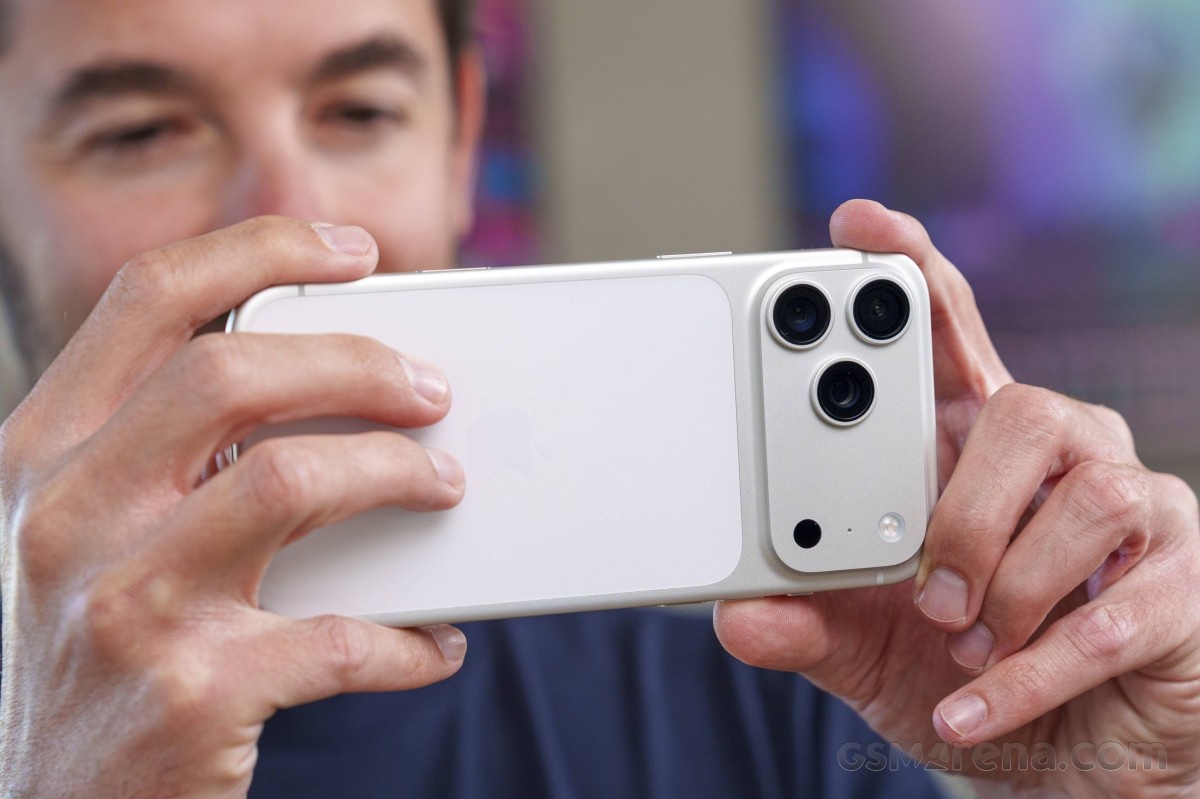 |
The back of the iPhone 17 Pro Max. Photo: GSMArena . |
The ultra-wide-angle lens on the iPhone 18 Pro is also expected to change, transitioning from flip-chip packaging technology (inverting the chip to connect metal particles on the chip surface to the circuit board) to an improved COB (chip-on-board) technology.
This technology allows for the direct attachment of the chip backplate onto the circuit board, then connecting them with ultra-thin wires to save space.
According to Kuo, Sunny Optical has several advantages in providing this technology. Using COB allows for thinner or smaller ultra-wide-angle modules, freeing up space for other components in the phone. If the size remains the same, image quality can be improved.
Sunny Optical has also become a supplier of compact camera modules (CCMs) for the MacBook Neo. According to this analyst, MacBook Neo shipments are better than expected. Production is estimated to increase from 5 million to 10 million units in 2026.
Besides Apple, the analyst said Sunny Optical has received orders to supply components for two products from OpenAI, including a smartphone and a handheld device.
Apple is expected to launch the iPhone 18 Pro series in September along with a foldable iPhone. The standard iPhone 18 series is expected to debut early next year.
Source: https://znews.vn/thong-tin-moi-ve-iphone-18-pro-post1655736.html




![[Photo] General Secretary and President To Lam and the President of the Philippines hold talks.](https://vphoto.vietnam.vn/thumb/1200x675/vietnam/resource/IMAGE/2026/06/01/1780283481955_vna-potal-tong-bi-thu-chu-tich-nuoc-to-lam-va-tong-thong-philippines-hoi-dam-8797519-1429-jpg.webp)




















![[Photo] General Secretary and President To Lam and the President of the Philippines hold talks.](https://vphoto.vietnam.vn/thumb/1200x675/vietnam/resource/IMAGE/2026/06/01/1780286997787_anh-man-hinh-2026-06-01-luc-11-09-43.png)
















































































Comment (0)