

In a tree-lined park in the capital of the South American nation of Uruguay, heavy drilling equipment is carrying out an urgent search for water sources.
For the past 10 days, the noise of machinery has echoed through the urban landscape. "There's always a plan B," said Valeria Arballo, the geologist overseeing the groundwater exploration.
Arballo is located in Batlle, a 60-hectare park that serves as the green lung for the capital Montevideo. Heavy machinery is attempting to extract groundwater to supply hospitals and schools.
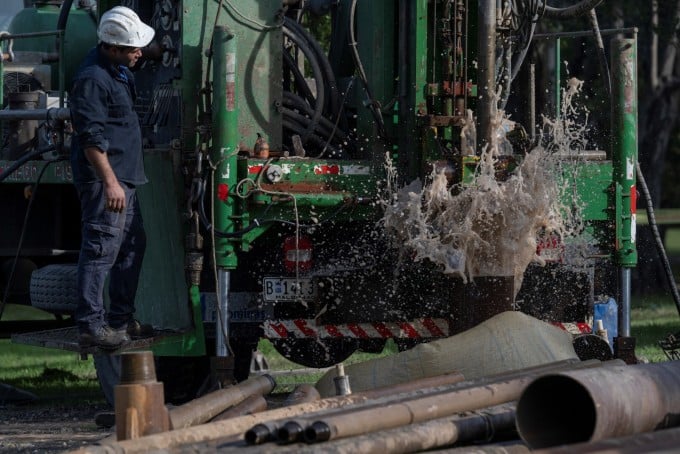
Workers from the state-owned water company OSE drill for groundwater in a park in the capital Montevideo on June 6. Photo: AFP
"We have to drill for water in Montevideo because of the water crisis," said Arballo, project director of the Groundwater Division of OSE, the state-owned water company.
Two new wells, one 42 meters deep and the other 90 meters deep, have become operational. Water from these wells is treated before being supplied to residents. The authorities may drill several more wells.
Montevideo, a city of 1.8 million and Uruguay's most populous, has long relied on surface water. However, the past three years of drought have been the most severe in 70 years in the city, so OSE has decided to tap into groundwater.
While the drilling was in operation, tankers transported fresh water from a plant in the east of the city to Batlle Park. The water was then transferred to smaller trucks and delivered to hospitals and institutions that were experiencing water shortages.
The water shortage in the Montevideo metropolitan area is alarming. It is predicted that the capital's and surrounding areas' freshwater reserves will soon be depleted if there is no rain.
The city's main source of freshwater is Lake Paso Severino, located 85 km north of the capital. The lake's water level is at its lowest point in history. On June 7th, the lake held only 4.4 million cubic meters of water, a very small fraction of its usual capacity of 67 million cubic meters.
Montevideo consumes an average of 550,000 cubic meters of water per day. To prevent water depletion, OSE has been mixing brackish water taken from points near the Plate River with water from the lake, causing consumer dissatisfaction.
"The water is very salty and sometimes cloudy, making it undrinkable," said Marcelo Fernandez, 43, an employee at a shopping mall.
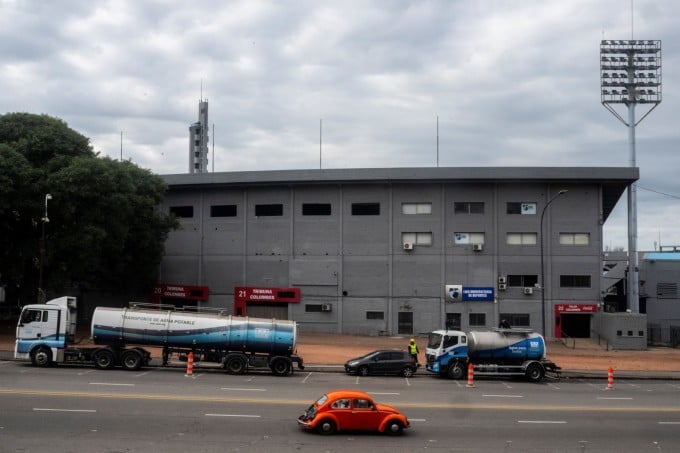
Water is transferred from a large tanker to a smaller tanker for transport to a hospital in front of the Centenario Stadium in Montevideo on June 6. Photo: AFP
This week, health authorities extended the emergency permit allowing higher sodium and chloride levels in water until July 20th. They also authorized an increase in THMs, chemical compounds that form when water is chlorinated and are harmful if consumed over many years.
"Increased THMs over 45 days certainly do not affect health," said Health Minister Karina Rando.
A 6.25-liter bottle of purified water in Montevideo costs around $3.40. Sales of bottled purified water increased by 224% in May compared to the same period last year, according to research published this week.
Scientists predict it won't rain until June 19th. "The rain will ease the pressure, but drilling for groundwater will continue," Araballo said.
Hong Hanh (According to AFP )
Source link




























































Comment (0)