

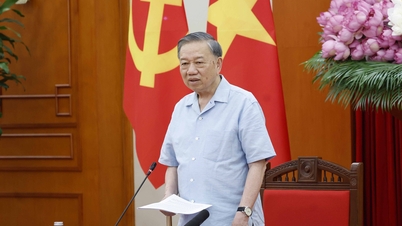
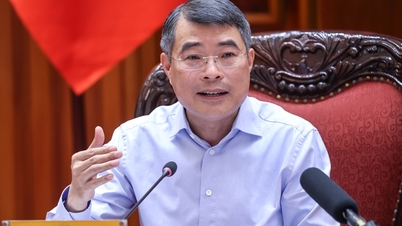
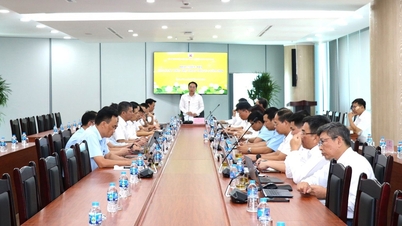
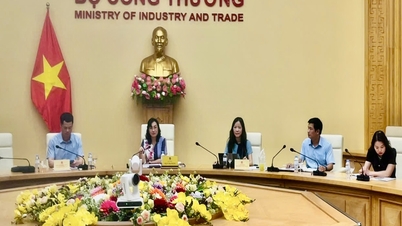
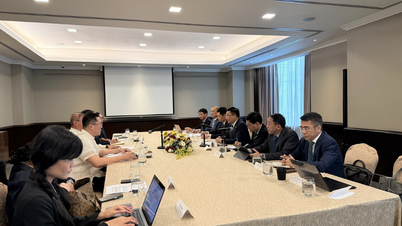
On the afternoon of May 25th, at the Government Headquarters, Prime Minister Le Minh Hung chaired a working session with the Hanoi People's Committee and relevant ministries and agencies on the development of rental housing in the capital city.
Also attending were Comrade Pham Gia Tuc, Member of the Political Bureau and Standing Deputy Prime Minister; Comrade Tran Duc Thang, Member of the Political Bureau and Secretary of the Hanoi City Party Committee; members of the Central Committee of the Party; and leaders of ministries, branches, central agencies, and the city of Hanoi.
The meeting aimed to urgently implement the directives in Notice No. 64-TB/VPTW dated May 22, 2026, regarding the conclusions of General Secretary and President To Lam at a meeting with several agencies on the implementation of Directive No. 34-CT/TW of the Party Central Committee on social housing and the orientation for housing development in the coming period. It emphasized that, in addition to housing for sale, priority should be given to developing rental housing, especially rental apartment buildings in large cities, industrial zones, economic zones, dynamic regions, and important economic corridors.
At the meeting, at the request of the Prime Minister, delegates focused on assessing the actual demand for rental housing in the capital city by segment and target group; clarifying the gap between current demand and supply capacity; and identifying objective and subjective causes.
In addition, discussions will focus on models and approaches for developing rental housing; identifying procedural solutions; mechanisms for mobilizing resources, especially private capital and long-term capital; clarifying the roles of the national housing fund, local housing funds, and preferential credit instruments; and proposing amendments and additions to relevant laws to create a consistent and stable legal framework.
Hanoi needs to take the lead in developing a long-term rental housing model.
Concluding the meeting, Prime Minister Le Minh Hung emphasized that the meeting had reached a high level of consensus and agreement on the approach to further promptly institutionalize the Party's guidelines and policies, improve mechanisms and policies, and implement tasks related to the development of rental housing.
The Prime Minister stated that developing commercial housing in affordable segments and rental housing is a major policy of the Party and the State, consistently affirmed through Directive No. 34-CT/TW of the Party Central Committee and more recently, Announcement No. 64-TB/VPTW.
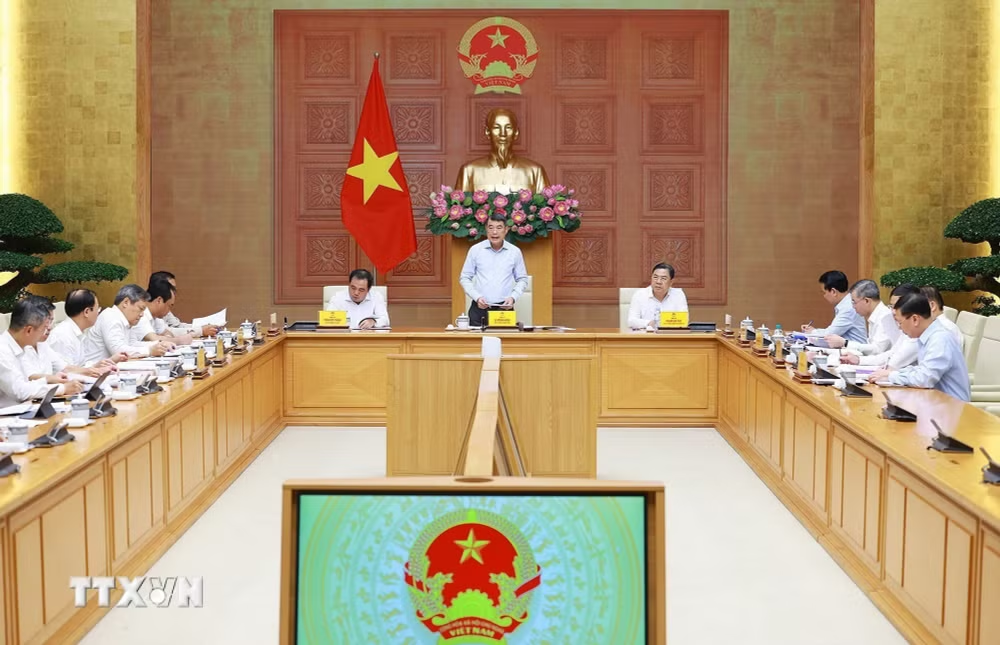
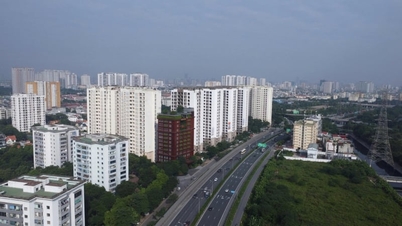
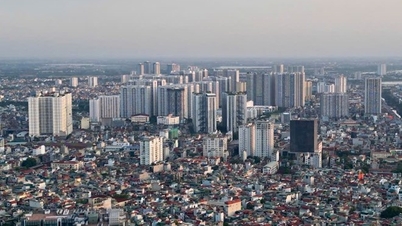
According to the Prime Minister, Hanoi, as the capital and the national political and administrative center, is one of the fastest-urbanizing cities in the country. The selection of Hanoi for in-depth discussion and agreement on a specific, feasible plan for developing rental housing is intended to gain experience, quickly and comprehensively refine policies and mechanisms, and serve as a basis for replication in other major cities and key economic regions.
The delegates unanimously agreed that, in recent times, the development of social housing in general and rental housing in particular has achieved positive results. Institutions and policies have been improved; investment and construction procedures have been simplified; the number of beneficiaries has been expanded; and the supply of social housing has increased significantly. Hanoi has exceeded its social housing development target for 2025 and is implementing a large number of projects for the next phase.
However, the Prime Minister emphasized the need to frankly identify existing shortcomings and bottlenecks, particularly the housing market where supply and demand remain mismatched; the product structure is skewed towards commercial housing and housing for sale, while the segment of long-term rental housing at affordable prices remains very limited. Furthermore, a portion of public housing assets are being used inefficiently, leading to waste; and the mechanisms and policies are not attractive enough to encourage private sector investment in long-term rental housing.
Assessing these as issues that cannot be resolved overnight but must be addressed immediately and decisively without delay, Prime Minister Le Minh Hung emphasized the need to strongly shift the mindset in housing market development from primarily developing commercial housing to simultaneously developing both commercial and rental housing. He stressed that rental housing should be identified as a long-term strategic segment serving a large number of people, especially workers, laborers, students, officials, civil servants, and members of the armed forces, who have a great need for affordable rental housing.
The Prime Minister clarified that the State does not subsidize housing but also does not completely leave it to the market to regulate itself. The State plays a facilitating role through planning, institutions, financial policies, credit, and land to regulate and promote the healthy development of the rental housing market; at the same time, mobilizing businesses and social resources to participate in investment with reasonable profits; ensuring that people have access to stable, long-term, safe housing that suits their ability to pay.
The Prime Minister stated that the development of rental housing must be considered within the overall context of urban planning, land use planning, public transport development, industrial zones, and the labor market; prioritizing development in large cities, industrial zones, and important economic corridors with synchronized infrastructure that facilitates people's daily lives and travel. Along with this, mobilizing diverse resources, including state capital, is crucial, but relying solely on the state budget is not advisable. Focus should be placed on unlocking private capital and long-term capital from investment funds and credit institutions. The efficient use of state resources is essential to guide and drive the market.
The Prime Minister emphasized the need to resolutely address the issue of abandoned or underutilized public housing assets; and to strictly control, publicly and transparently identify beneficiaries of the policy, preventing policy abuse and housing speculation.
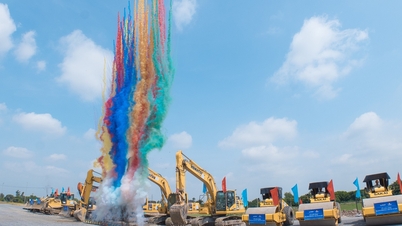
Construction began on several rental housing projects in June.
Highly appreciating the sense of responsibility of Hanoi City, the Ministry of Construction, and other ministries and agencies in implementing the directives of the General Secretary and President on the development of rental housing, the Prime Minister requested Hanoi to prioritize and pioneer the implementation of the rental housing model, utilizing special mechanisms under the Capital City Law to proactively design, implement, and monitor the policy. The city is tasked with urgently reviewing all land use planning, urban and rural planning, as well as the land fund and public property fund that is underutilized to allocate for the development of rental housing; resolutely addressing the situation of abandoned or underutilized public land and houses, and reporting the results to the Prime Minister by June 2026.
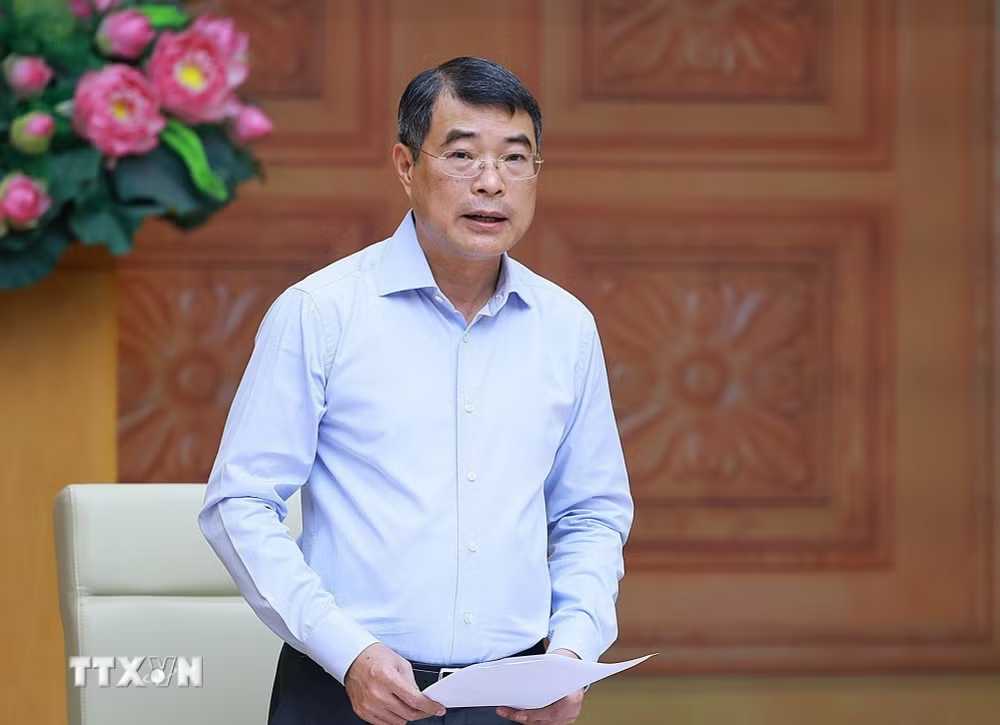
Clearly stating that Hanoi's pilot mechanisms, if implemented effectively, will be replicated nationwide, the Prime Minister suggested that Hanoi should proactively review the needs, target groups, investment mechanisms, and large-scale rental housing models, ensuring quality to meet the actual housing needs of people living and working in Hanoi, including officials and employees of central agencies; strive to start construction on several projects in June 2026; flexibly utilize social housing contribution revenue in cash, with the State investing and professional enterprises operating; and simultaneously develop a plan for investment, construction, and operation of rental housing projects, reporting the results to the Prime Minister in July 2026, proactively proposing mechanisms for mobilizing social resources and the investment, construction, and operation of rental housing in conjunction with appropriate policies on land allocation and leasing.
The Prime Minister assigned the Ministry of Construction to lead the review and propose new mechanisms and policies; coordinate with localities such as Hanoi, Ho Chi Minh City, Dong Nai, Hai Phong, and Da Nang to determine the demand for rental housing for each target group, and build a supply-demand map as a basis for planning and resource allocation; lead the coordination with ministries, agencies, and localities to research and propose specific targets for the development of rental housing nationwide, reporting to the Prime Minister in July 2026; and review and amend regulations and standards for rental housing, especially fire safety standards for small and medium-sized rental housing.
Emphasizing that institutional improvement is a decisive and long-term issue, and that institutions, laws, mechanisms, and policies must come first, the Prime Minister noted the need for careful study of the orientation for classifying housing development into four groups: commercial housing, rental housing, public housing, and policy housing. He also suggested some specific contents such as researching policies for renting houses for 15-20 years or longer; and requiring commercial housing projects to allocate a certain percentage for building rental housing...
The Prime Minister also requested the identification of breakthrough solutions regarding investment procedures, land, planning, and construction under the "one-stop shop, one focal point, one standard process" mechanism, in line with the directive in Notice No. 64-TB/VPTW; linking these to specific responsibilities and deadlines; and especially urging the prompt proposal of a standardized, fast process, linked to high-level tasks and responsibilities for each relevant agency.
The Prime Minister assigned the Ministry of Construction to take the lead and coordinate with relevant ministries, agencies, and organizations to focus intensely on amending and supplementing the Law on Housing and the Law on Real Estate Business according to the direction in Notice No. 64-TB/VPTW, urgently concretizing the policies and guidelines, submitting them to the National Assembly at the 2nd session of the 16th National Assembly (October 2026), and reporting to the Prime Minister in July 2026 for submission to the competent authority.
The Prime Minister requested the Ministry of Finance to urgently provide guidance, within its authority, on the accounting mechanism for revenue from social housing obligations in cash, the capital preservation plan when using funds for investment in rental housing development, and the financial and tax incentive mechanisms for long-term rental housing projects, aiming to create sufficient incentives to attract private capital and long-term investment funds; to be completed by July 2026.
The Prime Minister requested the State Bank of Vietnam to take the lead in researching and proposing to the Prime Minister a preferential credit policy for investors in long-term rental housing projects, focusing on stable interest rates and loan terms consistent with the project's payback period; and to report to the Prime Minister in July 2026. If necessary, the State Bank of Vietnam should study a refinancing mechanism for commercial banks or a flexible mechanism regarding credit limits for commercial banks participating in this sector.
Assigning Deputy Prime Minister Pham Gia Tuc to continue directly overseeing related work, the Prime Minister emphasized that developing rental housing is not only an economic issue but also a social welfare issue, demonstrating the Party and State's concern for the people; and expressed confidence that with the synchronized involvement of the entire political system, the consensus of the people and the business community, the goal of developing rental housing will achieve positive results in the coming time.
Source: https://www.vietnamplus.vn/thu-tuong-nha-o-cho-thue-la-phan-khuc-chien-luoc-phuc-vu-nguoi-dan-post1112531.vnp
![[Photo] General Secretary and President To Lam presides over a meeting on preparations for the review of one year of operation of the three-tiered government system.](https://vphoto.vietnam.vn/thumb/1200x675/vietnam/resource/IMAGE/2026/06/02/1780391821195_a1-bnd-4595-9717-jpg.webp)




































































Comment (0)