

That summer was incredibly fun for the country kids. We had ninety whole days off; on summer afternoons, we could all huddle together under the bamboo trees in the garden, playing games like hopscotch and other traditional games.
And of course, there was the anticipation of seeing Aunt Ba's tofu stall, the mother of Tũn, who was in the same class as us. My house wasn't far from Aunt Ba's, and on some mornings, I would pretend to go over to read with Tũn, giving me the opportunity to watch and learn a little bit of his mother's tofu-making skills.
According to Tũn, the night before, her mother had sifted through the soybeans—the main ingredient of this dish—picking out any rotten or damaged beans to feed the chickens, only selecting the round, large, yellowish beans to soak in water.
From 4 a.m., Aunt Ba would go to fetch water from the well, let it settle until it was clear, and then begin grinding the softened soybeans. For up to an hour, she would sit meticulously, scooping out spoonfuls of soybeans, adding water, and using her strength to grind the soybeans into a fine powder using the stone mill. Tũn helped her mother wash a large bunch of pandan leaves to let them dry.
The ground beans are carefully filtered to remove all the solids, leaving only the fine powder. Water is added according to the correct ratio and cooked, stirring constantly with chopsticks to prevent the powder from sticking to the bottom of the pot and burning.
The aroma of pandan leaves blended with soybean milk creates an alluring scent that stimulates the sense of smell and taste of every growing child.
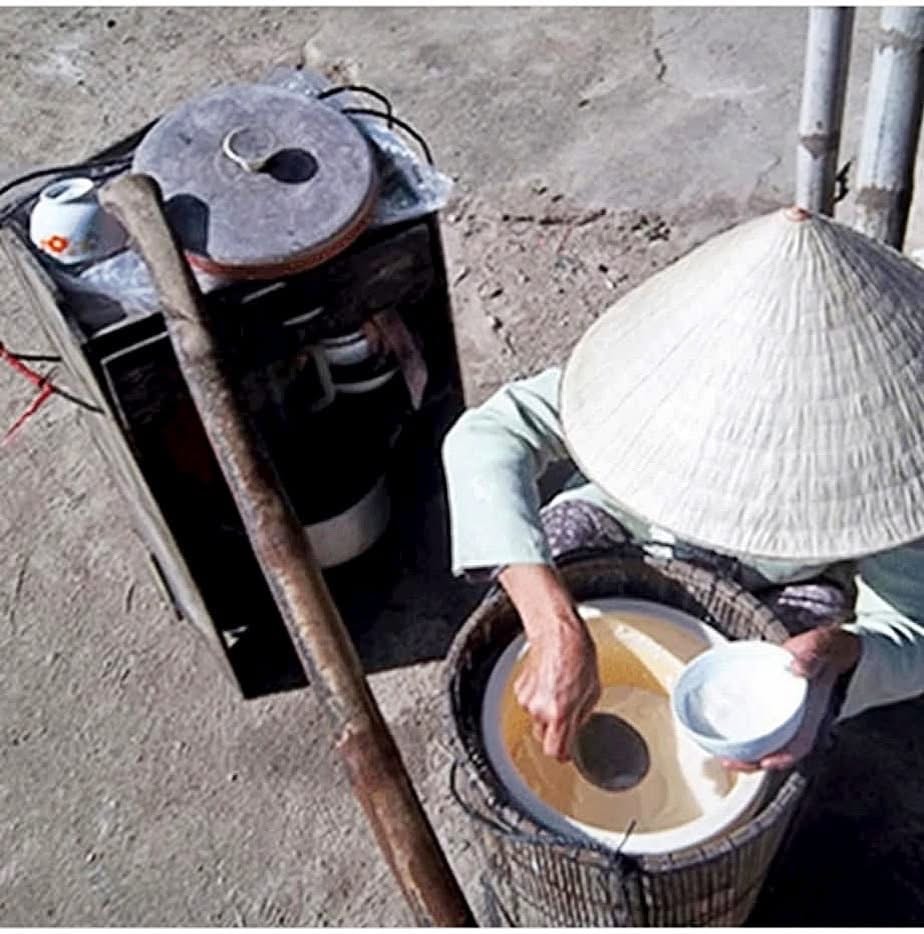
Still curious, I lingered to watch the next steps. Taking a slightly wide-mouthed earthenware jar, about 60 cm tall, which had been wiped dry, Aunt Ba coated the inside with a layer of liquid powder (I learned it was a gelling agent) before pouring in the cooked soybean milk and placing it in a bamboo basket filled with straw to keep it warm.
Then, she brought out several bowls of sugar, chopped it into chunks, and urged Tũn to peel and crush the ginger. The aroma of caramelized sugar and ginger filled the air, transporting me back to the days leading up to Tet, to the small kitchen where my mother was boiling a pot of sugar for the rice cakes...
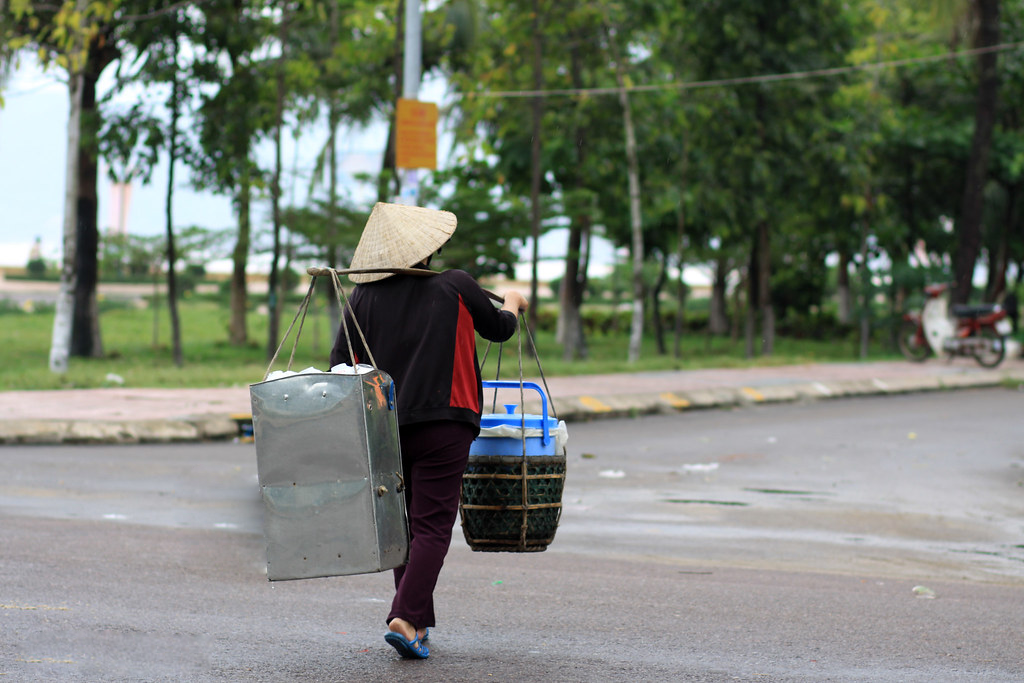
Enthusiastically playing their afternoon summer game of skipping naps, they looked up and saw a tall, thin figure with a pair of carrying poles on his shoulders and heard a familiar, hoarse voice calling out, "Anyone want tofu?"
The hardworking woman carried a yoke with two poles on one side, one side holding a small wooden cabinet with three compartments. The top compartment held two bowls and a small drawer for spoons; the second contained a teapot of sugar water with a banana leaf stopper at the spout; and the bottom compartment held a basin of water for rinsing dishes, with a few pandan leaves added to create a fragrant aroma and prevent the water from spilling out. At the other end of the yoke was a bamboo basket containing a jar of beans.
Ms. Ba carried the load gently, taking small, light steps to avoid shaking it and damaging the jar of tofu that had been the culmination of a whole day's work and was the main source of income for the whole family.
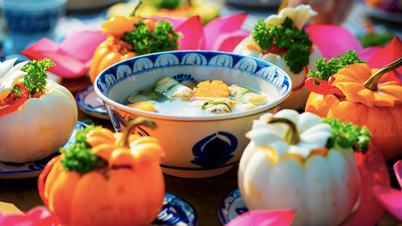
Whenever a customer orders, Aunt Ba stops at a clean, shady spot, carefully opens the jar of tofu, uses an aluminum ladle to scoop out soft pieces of tofu, arranges them around the bowl, and then adds sugar. The bowl of white tofu mixed with light brown sugar syrup, along with a few strands of golden ginger, emits an alluring aroma that entices the diner's sense of smell.
On hot days, a bowl of tofu helps quench thirst; on cold winter days, hot tofu with ginger provides a little extra energy to ward off the dampness and chill. This is a wonderful rural treat that everyone enjoyed many times during their childhood in the countryside.
Modern tofu is still cooked using traditional methods, but for convenience, brown sugar is caramelized into a syrup, and vendors no longer have to carry their tofu on their shoulders like before. However, today's bowl of tofu doesn't have the same aroma as childhood memories; perhaps as people get older, they no longer care as much about sweets, or are simply indifferent because they have everything they need?
Perhaps it's for many reasons? That's why today, streets, towns, and cities are filled with shops selling Singaporean tofu, Yumi fresh tofu, and other varieties, prepared in diverse ways.
Chefs have launched a series of new menus for a traditional dish to attract the attention of all ages. Looking at the menus at these restaurants, one can see the richness of this once-famous local delicacy, now combined and prepared in a variety of forms and flavors...
But for someone with a fondness for nostalgia like me, the simple, rustic, sweet and fragrant taste of Aunt Ba's tofu from my childhood still lingers in my senses, even though half a lifetime has passed. The scent of the countryside, the scent of childhood, will forever be etched in my mind like a mark on the timeline of my life.
Source: https://baodanang.vn/thuc-qua-que-ngay-nang-nong-3298527.html

























































































Comment (0)