

Besides the famous Thach Tu Pagoda, also known as Hang Pagoda, Tuy Phong also has another ancient pagoda with stunning natural scenery and many legends.
That is the Pháp Võ Pagoda, which locals often call Mẹp Stone Pagoda or Mọp Stone Pagoda. This ancient pagoda is built on Mẹp Stone Mountain in Vĩnh Hảo commune, Tuy Phong district. According to the elders here, it is probably one of the oldest pagodas in Southern Vietnam.
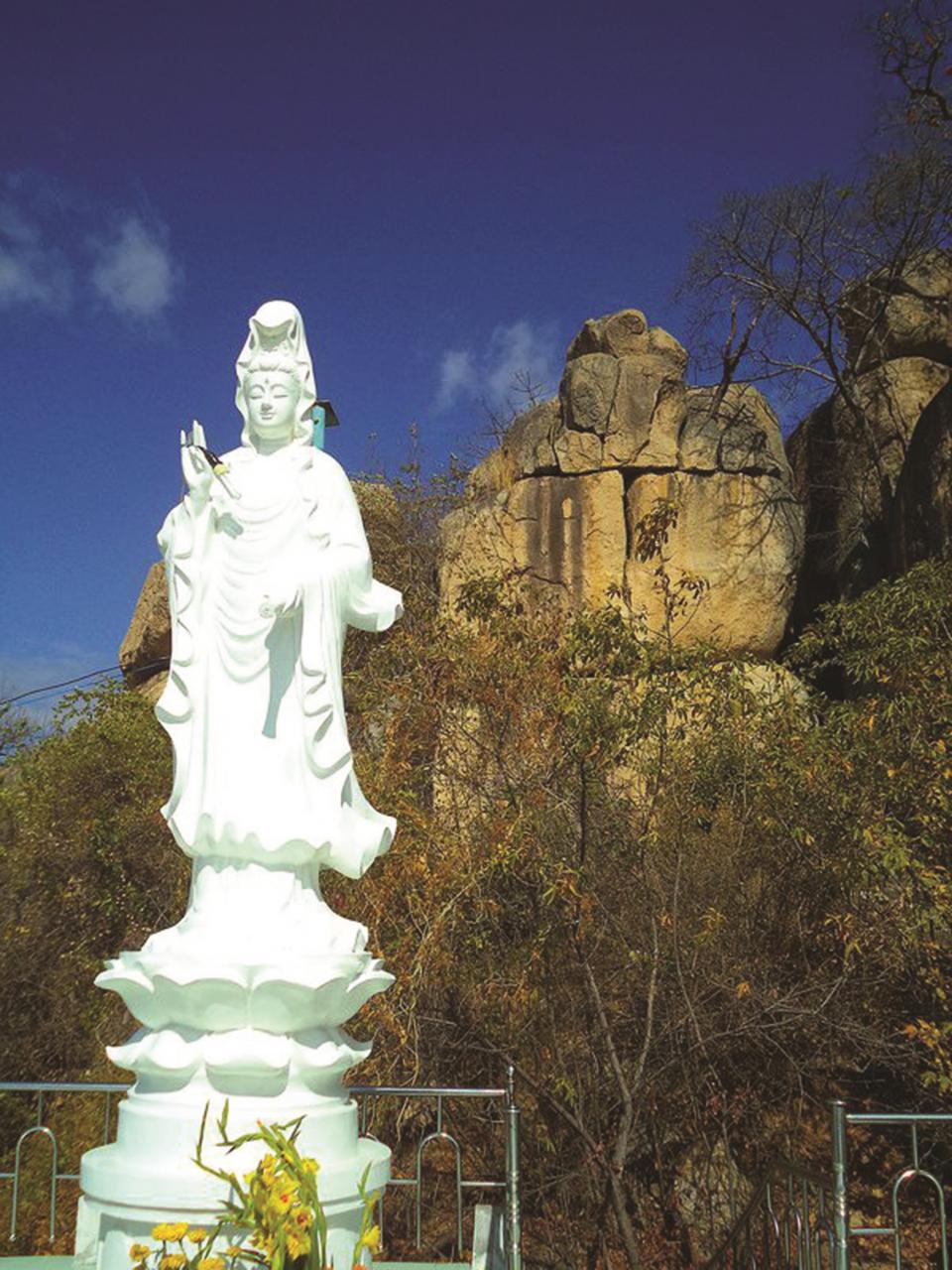
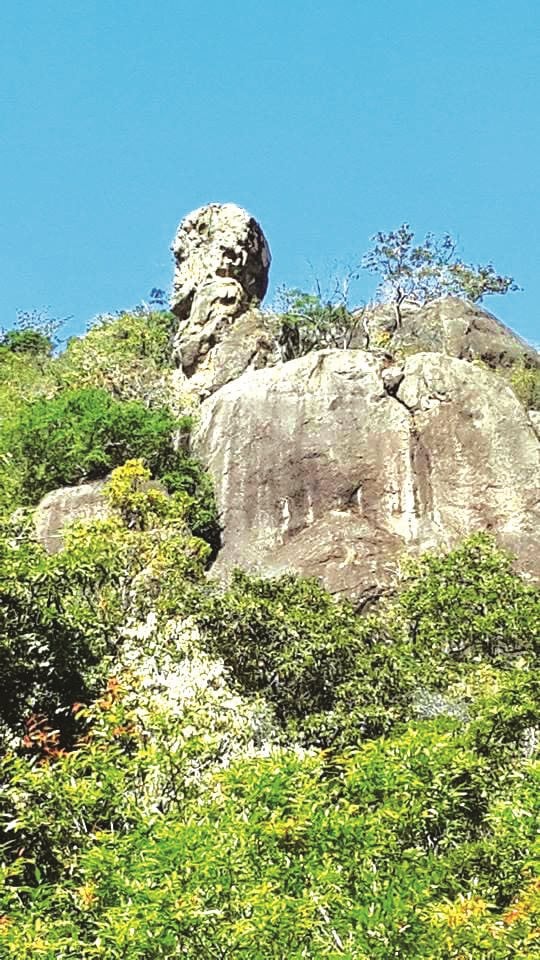
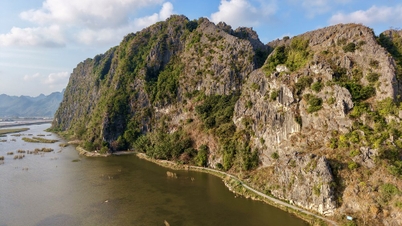
Located about 15 km northwest of Lien Huong town in Tuy Phong district, Phap Vo Pagoda (often called Da Mep Pagoda) boasts many breathtakingly beautiful landscapes. From the turnoff near Vinh Hao Water Company, following the trail west for about 40 minutes by car, you will reach the pagoda. The road to the pagoda is quite beautiful, with a range of strangely shaped rocks, as if arranged by human hands. One of them is a rectangular rock formation lying across the ground, known locally as Ba Doi Duon. There's a story about a Cham princess involved in a love affair, along with many other intriguing tales associated with this rock formation. What surprises and impresses us is how the rock formation, standing in the open air, and the massive rock weighing hundreds of tons lying across its base, have remained untouched for millennia.
Da Mep Pagoda isn't very large, but the surrounding scenery is very picturesque and majestic. The main hall is dedicated to Buddha Shakyamuni, Bodhisattva Avalokiteshvara, and many other Buddhas. The pagoda also has a shrine dedicated to Guan Sheng Di Jun (Guan Sheng Di Jun) and smaller caves dedicated to various other deities. In front of the pagoda stands a rather large statue of Avalokiteshvara.
Legend has it that the present-day Da Mep Pagoda was founded by Patriarch Dat Bon around 1735. Patriarch Dat Bon was the 38th generation of the Lam Te lineage and the 4th generation of Thanh Luong Pagoda (Quy Nhon – Binh Dinh). He had four disciples: Vinh Tuong, Vinh Hao, Vinh Quang, and Vinh Minh. Around 1735, he passed on the Thanh Luong ancestral pagoda to his eldest disciple, Vinh Tuong, and then traveled south to practice his faith. In 1737, his disciple Vinh Hao was falsely accused and exiled to an area near the lower reaches of the river, which is now the riverbed. Legend says that in the past, there was a pair of divine snakes that occasionally appeared at night, so people named it Snake Stream. These divine snakes had red crests like roosters' combs, were very large, and often resided in the stream, passing by the pagoda and remaining still when listening to the monks recite scriptures. In 1740, King Vo Nguyen Phuc Khoat ascended the throne and issued a decree of amnesty. Because of his skill in medicine, Master Vinh Hao stayed in this area to practice traditional medicine and heal the people. In early 1743, Master Vinh Hao traveled upstream towards the Snake Stream to find medicinal plants and unexpectedly met his teacher, Patriarch Dat Bon, in a thatched hut on the mountainside. Behind the hut was a small cave, now known as the ancestral cave of Da Mep. After that reunion, Patriarch Dat Bon entrusted the thatched hut to his disciple Vinh Hao and continued his travels south. Master Vinh Hao practiced here for two years before passing away. Out of gratitude for his kindness, the villagers named this area Vinh Hao, a name that persists to this day.
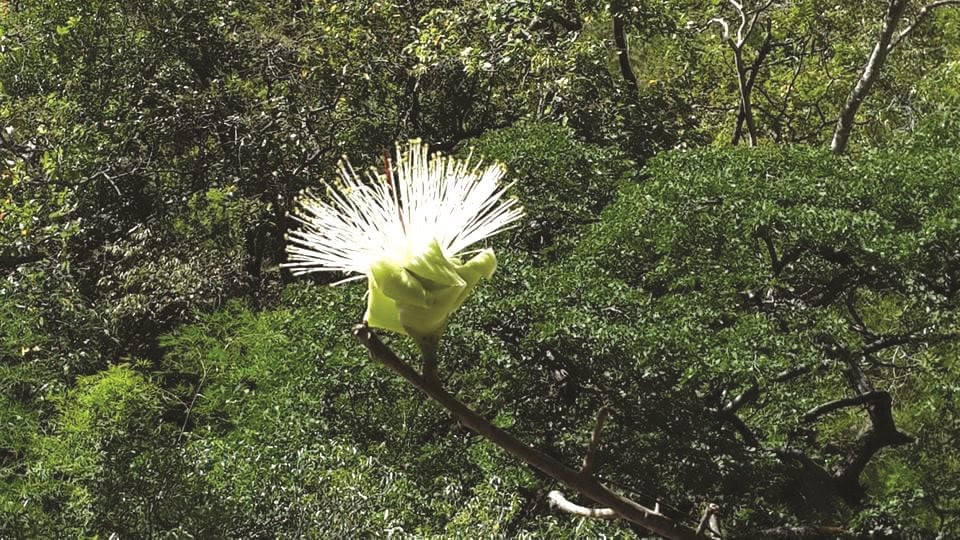
Previously, when we were making a film about La Bá, a revolutionary site of the Tuy Phong army and people, Venerable Thích Trí Huệ - the abbot of Thiên Tường Pagoda - explained that the name La Bá was related to Đá Mẹp Pagoda at that time. According to the local people, La Da means stream, and La Bá means snake, so this area was formerly called La Da La Bá, meaning Snake Stream. Later, when the revolutionary base was formed, it was simply called La Bá.
For a very long time, from 1755 onwards, no enlightened master came to live in seclusion and practice asceticism. The Snake Stream area became wild and mysterious. Stories about the two divine snakes here still circulate among the people.
When his teacher, Venerable Thích Như Kỉnh, recounted the old stories and legends about the founder Vĩnh Hảo, in 1953, Venerable Thích Ngộ Tịnh of Thiên Tường Pagoda set out to rediscover the traces of the past and was very fortunate to find Đá Mẹp Cave again. The old place remained, but the old thatched hut was gone. The mountains were still mystical in the early morning mist, and from then on, the sound of the pagoda bell echoed in the wind and rain.
By 1957, the temple began to be gradually renovated and renamed Da Mep Temple. The name Da Mep Temple comes from a large rock on the mountainside that slopes downwards in a shape resembling a kneeling figure. This rock forms a very large cave, which is the ancestral cave where the temple's founding patriarch is worshipped.
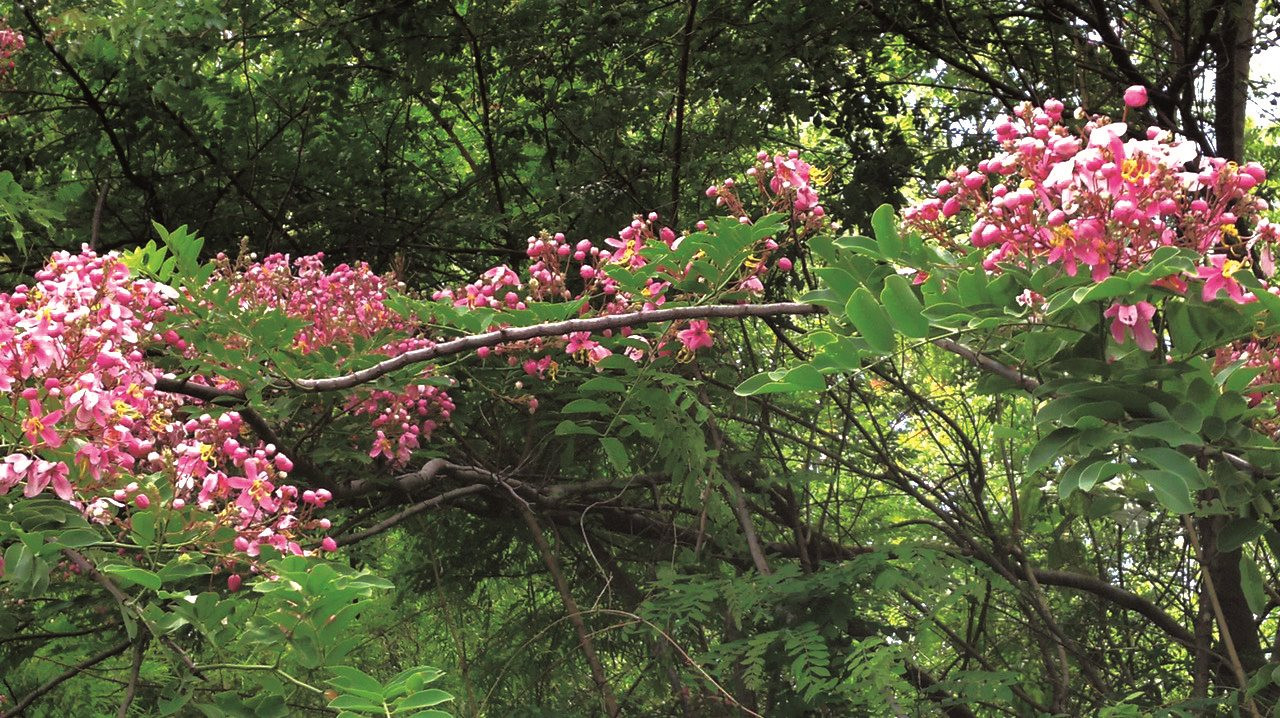
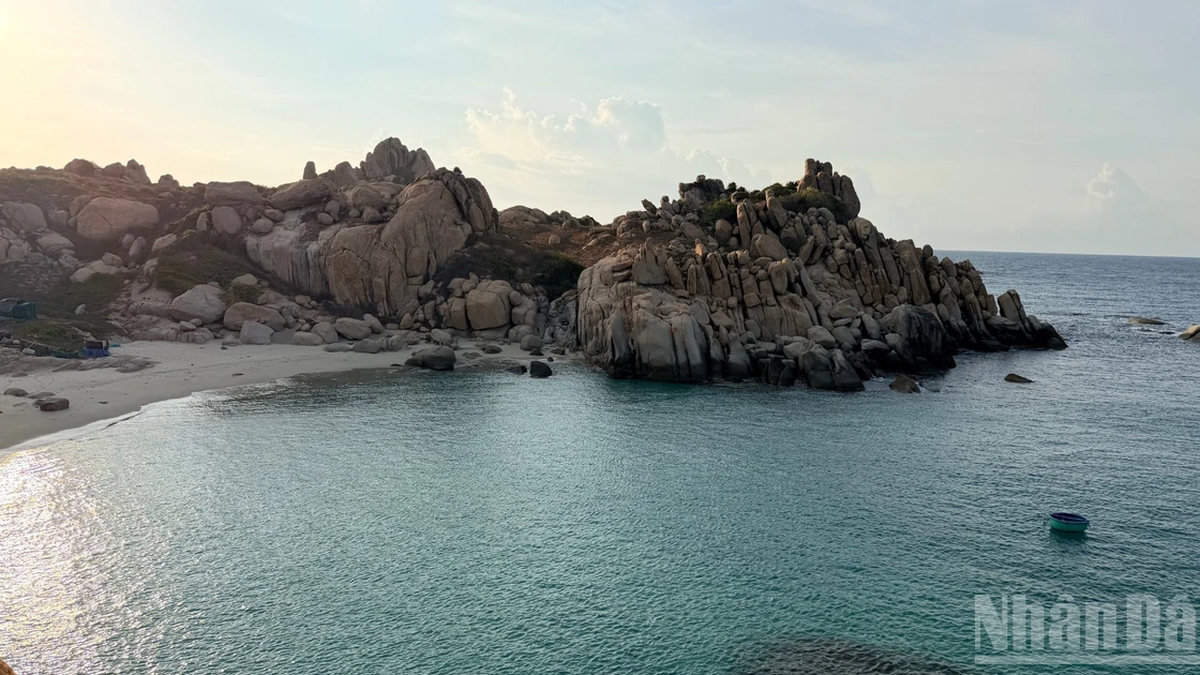
Standing at the temple and looking east, we see the vast salt fields, the waves lapping against the shore at Sứt estuary, and the verdant Cù Lao Câu island beneath the cloudy sky. Looking further up, the scenery becomes even more beautiful with large and small rocks piled upon each other, forming mysterious, dark caves. The grass and trees are lush green thanks to the autumn rains, and flowers bloom joyfully, swaying in the breeze.
The Đá Mẹp Pagoda is beautifully serene and peaceful, nestled amidst the undulating rocky mountains. While not majestic, Đá Mẹp is elegant and imposing, with its landscape resembling a dragon and a tiger, representing a green dragon on the left and a white tiger on the right. Indeed, the ancients skillfully chose this place for spiritual practice. Upon arriving here, one always feels a profound sense of peace amidst the illusions, realities, good, and evils of everyday life. In a world full of turmoil, temptations, gossip, gain, and loss, this is the perfect place to return to relax and find inner peace.
Source


![[Photo] National Assembly Chairman Tran Thanh Man working with the Standing Committee of the Law and Justice Committee](https://vphoto.vietnam.vn/thumb/1200x675/vietnam/resource/IMAGE/2026/05/21/1779378929214_ndo_br_1-4610-jpg.webp)
![[Photo] General Secretary and President To Lam presides over a working session with the Central Policy and Strategy Committee on the development of the materials industry.](https://vphoto.vietnam.vn/thumb/1200x675/vietnam/resource/IMAGE/2026/05/21/1779359935432_a3-bnd-3129-1412-jpg.webp)
































































Comment (0)