

 |
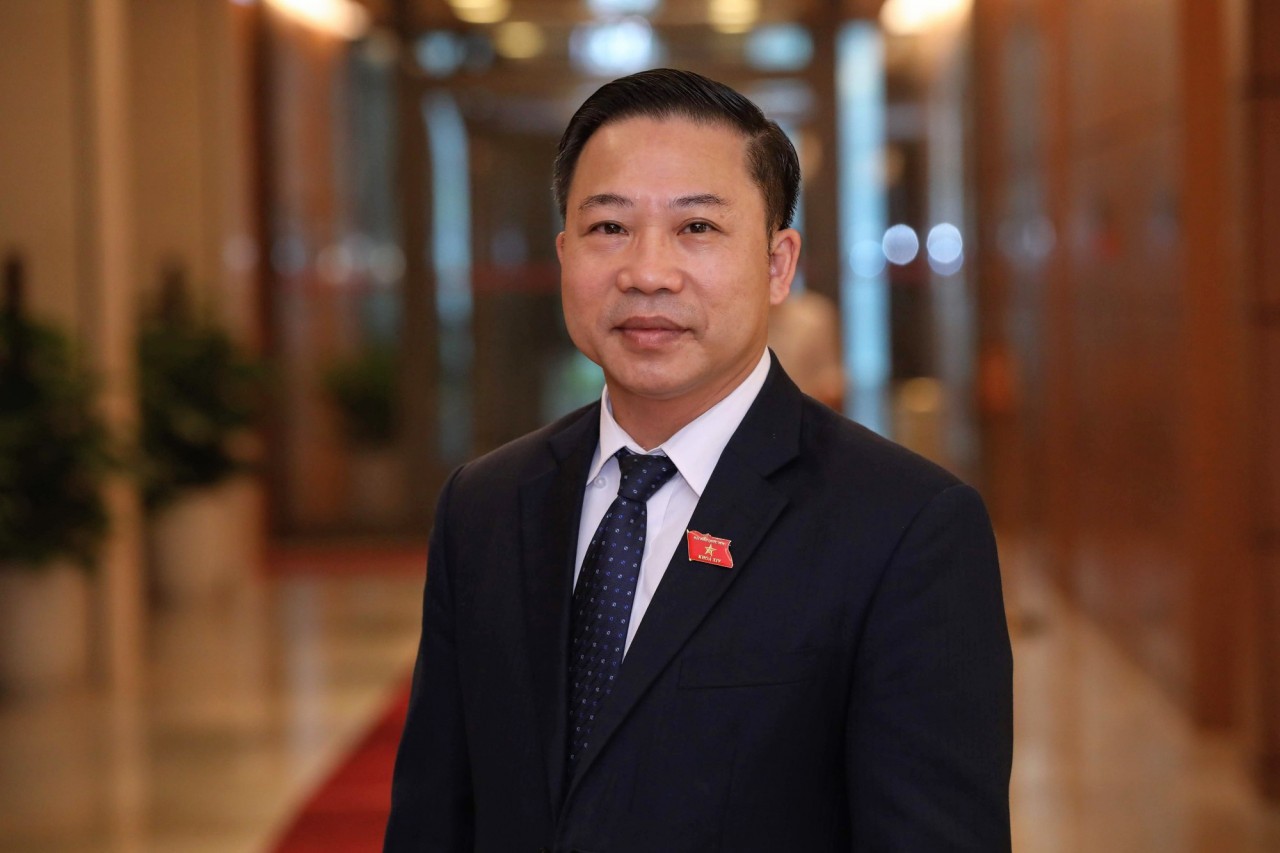
| Dr. Luu Binh Nhuong asserted that wages and income are the "lever" behind labor and creativity. |
Salary - the driving force of creativity
According to him, if civil servants lack dedication and wholehearted commitment, is salary and income a subjective reason for encouraging them?
For state officials and public employees, the lack of full commitment stems from many factors, including salary, income, policies, and rewards. This is because full commitment is also related to setting a good example, a sense of responsibility, and professional ethics.
Secondly, and as many people have mentioned, the working environment is crucial. In an organization where the leader provides support, cares for employees, evaluates and categorizes them according to regulations and fairly, employees will undoubtedly be fully committed.
Nowadays, science and technology are developing rapidly, and their application has created better working conditions, enabling workers to fully develop their abilities, strengths, and professional expertise.
Therefore, there are many reasons, but in my opinion, salary and income are only one issue, but a very important one. Because, from a certain perspective, salary and income, along with material and spiritual rewards, are very powerful "lever" to stimulate and motivate labor and creativity.
So, how do you assess the implementation of salary policy reforms aimed at improving the quality of the civil servant workforce?
As I said, the issue of salary creates a "lever" to motivate employees to strive harder and care more about the fate and reputation of the unit they serve. This is one of the important topics in creating solutions to help employees improve their sense of responsibility, enhance their love for their profession, and increase their dedication.
Therefore, reforming and innovating the wage system and policies will be one of the most important factors, if not the most important, in creating the best conditions for workers. Workers will consider this as one of their goals to strive for excellence; even aiming for breakthroughs and creativity in their work.
In reality, personnel management is the root cause, therefore, what breakthrough solutions are needed regarding personnel organization, salary increases, and salary reform, sir?
If we want to increase salaries, we must address the human resources issue first. To solve the human resources problem, we need to balance the salary budget. Therefore, these two issues are closely intertwined; we cannot discuss human resources without discussing salaries, nor can we discuss salaries without discussing human resources.
When considering a salary increase, it shouldn't be a haphazard, arbitrary raise for everyone, or a uniform increase to create excitement. Salary is directly related to work performance. Therefore, the first thing to consider is productivity, quality, and efficiency. This work must be linked to specific professional skills and job positions.
Therefore, reforming and modernizing the salary system must also reform the personnel system. This requires considering personnel management to ensure a reasonable balance between the quantity and quality of human resources, selecting individuals with sufficient capacity to shoulder responsibilities and manage at different levels. This means arranging the workforce and personnel rationally, utilizing individuals according to their expertise and profession so that they can maximize their strengths.
If salary increases are implemented in a haphazard manner, it will not guarantee fairness, leading to suspicion and disunity within the organization. In this way, salary increases can sometimes become a "trap," and negative consequences can harm the unit or organization itself.
We must have a strategy for attracting and retaining talented individuals.
What concerns does he have regarding the question, "When will we be able to live on our salaries?" and how can we prevent civil servants from having "one foot in and one foot out"?
Salaries depend on many factors such as productivity, quality, work efficiency, economic conditions, and the leadership role of the head of the company. For example, if a company is run without the courage to borrow money to pay salaries, even if it pays very high salaries to its employees, it will never have a good workforce capable of producing valuable, innovative products that generate high profits. Therefore, salaries should not only be considered as payment for the labor invested, but also as an investment.
In my opinion, the State should also act like businesses. To achieve good performance and a strong state, it must invest in its people. More precisely, it must invest heavily, and one of those investments is through salaries and policies for workers such as housing, allowances, training, and professional development.
If we know how to use the principle of "money upfront is money wisely," including in salary payments, we can create a high-quality workforce. By establishing a new, breakthrough salary mechanism, workers can live on their wages and feel secure in their jobs. If we think this way, the gap between "when will we be able to live on our wages" will gradually narrow.
If we continue with the mindset of paying wages based on performance, or paying high wages when there's money and low wages when there isn't, then workers will never be able to live on their wages in the true sense of the word.
Because society is developing and demands are increasing, it's no longer acceptable to say that if you don't have food today, you'll have it tomorrow, meaning you can live on your salary alone. People must be able to live on higher values, including both material and spiritual values. Therefore, salaries must be considered an investment; only then will we be able to live on our salaries.
 |
| Paying high salaries will create a good workforce. (Source: NLĐ) |
What recommendations do you have for creating a team of civil servants and public employees who are professional, competent, and courageous?
The Party and the State have numerous regulations, and each agency and corporation has its own regulations for selecting and assigning personnel to suit its specific circumstances, functions, tasks, and organizational structure.
To effectively manage personnel, agencies, units, and, at a higher level, the State, must have a personnel strategy and job position plan. From there, they must train, nurture, and utilize talented individuals, especially outstanding ones, knowing how to attract and retain talent.
However, in reality, the current system of "attracting and retaining talented individuals" seems to be only theoretical. In practice, it can be said that agencies and ministries have not yet implemented the Party's policy and the State's laws on valuing and utilizing talent; more accurately, this issue remains... neglected. For example, National Assembly representative Le Thanh Van once suggested that the National Assembly should have a law on valuing and utilizing talent, but to date, this issue is clearly still a long way off. Meanwhile, many legal documents mention, and we even have regulations on valuing and utilizing talented Vietnamese people abroad with high technical expertise.
For example, in Ho Chi Minh City, after Resolution 54 on special mechanisms was issued, the policy of increasing salaries was basically implemented, but in terms of attracting and utilizing talent, it has not been truly effective to date.
In areas like Hanoi, Ho Chi Minh City, and Da Nang, there is a need to utilize talented individuals to support projects aimed at creating breakthroughs and implementing special mechanisms. To build a strong, motivated workforce capable of excelling or fulfilling their functions and responsibilities, agencies and units need a strategy. We already have a human resources strategy, but its implementation within the system of units must be based on specific circumstances.
The government will submit to the Central Committee and the National Assembly a proposal for the comprehensive reform of the new salary policy, in accordance with Resolution No. 27-NQ/TW, effective from July 1, 2024. What are your expectations regarding this new salary policy in retaining civil servants and talented individuals?
I believe that this is a very sound policy. We shouldn't rely solely on this Resolution because there have been many similar policies before. This Resolution is simply the next step in implementing the policy of urging, concretizing, and revitalizing this issue. It's not an entirely new Resolution on personnel strategy or personnel management.
We should not rely solely on this one Resolution, but must consider all aspects of policies, guidelines, and legal regulations. In particular, we must base our decisions on the actual conditions and circumstances, and appoint suitable leaders. Because if the leaders are unsuitable, it is impossible to create a good team of officials. Therefore, leaders and heads of departments must be carefully considered, appropriately appointed, and the selection of truly deserving individuals must be accurate.
Thank you, sir!
Source
![[Photo] Prime Minister Pham Minh Chinh presides over a meeting on private sector economic development.](/_next/image?url=https%3A%2F%2Fvphoto.vietnam.vn%2Fthumb%2F1200x675%2Fvietnam%2Fresource%2FIMAGE%2F2025%2F12%2F20%2F1766237501876_thiet-ke-chua-co-ten-40-png.webp&w=3840&q=75)







































































































Comment (0)