

American households are increasingly facing tight financial constraints.
The latest statistics from the Federal Reserve show that total household debt in the US reached nearly $18.6 trillion by the end of the third quarter of 2025, an increase of $197 billion from the previous quarter. Many families are now complaining about having to tighten their spending.
As an office worker in a big city, Chris believes this is a difficult economic time for many people. He himself is having to change his habits, returning to budget-friendly eateries and grocery stores for cheaper options.
Christopher Satch, an office worker, said: "I'm thinking more about prices than ever before. I have to budget for everything. Now I really have to think carefully before going out or before buying anything. You know, prices aren't as good as they used to be. The economy isn't as good as it used to be."
According to a report by Bank of America, by 2025, nearly a quarter of American households will have essential expenses exceeding 95% of their income. They will have virtually no money left for discretionary spending or savings. While the growth rate of this group of families has slowed compared to last year, it is still trending upwards.
Frahydel Falchuk, an American, shared: "Now I'm just trying to spend money on food. Everything else can be reused. You know, I have to try to find different options, because new things are so expensive."
Jim Aiello, co-founder of the Greenwich Economic Forum (GEF), commented: "While not speaking as an expert, from what I see out there, bigger changes could happen in many areas, at least for ordinary consumers. There aren't major changes yet, but they could start happening next year."
A Fed survey released last week showed that American households are more pessimistic about their current and future financial situation. Discretionary purchases are declining sharply during the holiday shopping season. Consumer growth, instead of being based on ample household budgets, is now dependent on promotions and short-term credit incentives.
Many experts also believe that inflation in the US has slowed in recent months, but overall it is still faster than wage growth for low- and middle-income groups. Financial stress is increasing even as people remain employed.
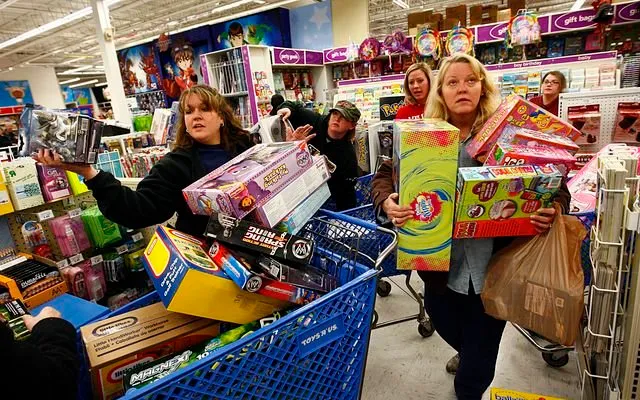
American households are increasingly facing tight financial constraints.
Causes of financial stress in American households
Analysis from experts and research institutions in the US reveals several key reasons for the weakening financial situation of American households. First is inflation. The minutes of the Federal Reserve's October meeting indicated that while inflation in the US has cooled significantly, it remains persistently above the agency's 2% target. One of the main factors driving up prices in the US is the tariffs imposed by the Trump administration this year.
The persistent inflation is also making the Fed cautious about lowering interest rates, thus keeping market interest rates high. Currently, the yield on 10-year US Treasury bonds is above 4.1%, creating further difficulties for long-term borrowers, such as those making mortgage payments.
The uncertainties in the US labor market this year are also posing a major challenge to household finances. In 2025, the US job market is generally expected to stagnate, with uncertainties from tariffs preventing many businesses from hiring or laying off employees, leading to stalled wage growth and making it difficult for workers to improve their income through job changes.
Tight finances and challenges for American consumption.
As personal and family financial difficulties increase, changes in spending and shopping plans are certainly a concern for many American consumers. This is even more evident in the context of the peak year-end shopping season in the US.
In Nashville, Tennessee, many consumers say they are feeling pressured by higher prices this year when shopping for gifts for friends and family during the holiday season. They are all trying to find attractive deals before Christmas, but also trying to spend wisely to prepare for next year.
American consumer Bennett Roach said: "Everyone has to be mindful of how much they spend. And, you know, when you need to buy gifts for a lot of people, you have to split the budget. So each person gets a small piece of the pie, but the pie gets smaller and smaller each year."
According to a survey by the Center for Public Affairs Research, a majority of American adults said they have noticed higher-than-normal prices for food, electricity, and holiday gifts in recent months. About half of those surveyed said they are postponing major purchases or cutting back on non-essential spending.
American consumer Missy Hunt shared: "I used to get my hair and nails done regularly, but now I don't do those things anymore. I started getting my nails done around my birthday and now it's like a special gift. I don't spend as much money on things like makeup anymore."
The demand for hunting down discounts and deals is also driving up participation in shopping festivals like Black Friday and Cyber Monday this year, especially on e-commerce platforms.
According to forecasts from the National Retail Federation, total holiday spending in the US this year will still increase slightly, but there will be a shift in structure compared to previous years, specifically a reduction in purchases of non-essential items. In addition, there will be a differentiation in spending among different income groups.
Olu Sonola, Head of US Economic Research at Fitch Ratings, commented: "Inflation may rise slightly during this year's holiday season, and consumers will complain more. We will also see spending decline among low-income earners, while spending increases among high-income earners. I believe consumer spending may hold up fairly well thanks to the momentum from the high-income group, but the decline in the low-income group will undeniably have a negative impact overall."
Tight financial conditions are also seen as a factor driving consumers to seek out payment methods such as credit cards and buy now, pay later. It is projected that around 42% of US consumers intend to shop with credit cards at the end of the year, while buy now, pay later spending could reach over $20 billion online by the end of this year, an 11% increase compared to the same period last year.
Source: https://vtv.vn/tai-chinh-that-chat-va-thach-thuc-voi-tieu-dung-my-100251216100359569.htm
![[Photo] Prime Minister Pham Minh Chinh receives Lao Minister of Education and Sports Thongsalith Mangnormek](/_next/image?url=https%3A%2F%2Fvphoto.vietnam.vn%2Fthumb%2F1200x675%2Fvietnam%2Fresource%2FIMAGE%2F2025%2F12%2F16%2F1765876834721_dsc-7519-jpg.webp&w=3840&q=75)
![[Image] Leaked images ahead of the 2025 Community Action Awards gala.](/_next/image?url=https%3A%2F%2Fvphoto.vietnam.vn%2Fthumb%2F1200x675%2Fvietnam%2Fresource%2FIMAGE%2F2025%2F12%2F16%2F1765882828720_ndo_br_thiet-ke-chua-co-ten-45-png.webp&w=3840&q=75)

![[Live] 2025 Community Action Awards Gala](/_next/image?url=https%3A%2F%2Fvphoto.vietnam.vn%2Fthumb%2F1200x675%2Fvietnam%2Fresource%2FIMAGE%2F2025%2F12%2F16%2F1765899631650_ndo_tr_z7334013144784-9f9fe10a6d63584c85aff40f2957c250-jpg.webp&w=3840&q=75)
![[Photo] Prime Minister Pham Minh Chinh receives the Governor of Tochigi Province (Japan)](/_next/image?url=https%3A%2F%2Fvphoto.vietnam.vn%2Fthumb%2F1200x675%2Fvietnam%2Fresource%2FIMAGE%2F2025%2F12%2F16%2F1765892133176_dsc-8082-6425-jpg.webp&w=3840&q=75)
































































































Comment (0)