


Intangible costs are greater than tax costs.
The shift in tax calculation methods from fixed lump-sum tax to self-declaration and self-payment based on actual revenue, starting January 1, 2026, is seen as a necessary overhaul to modernize the tax management system and ensure transparency and fairness for over 5 million household businesses. However, experts and household businesses themselves are focusing on the potential risks and consequences of this transformation.
According to market economics expert Tran Manh Hung, the goal of the policy is transparency and fairness, but the Tax Department needs to accurately measure the intangible costs – the compliance costs – that small and medium-sized enterprises (SMEs) have to bear. These costs, including time spent learning regulations, hiring accounting services, and anxiety about being audited, can be much greater than the increased tax amount, especially for small businesses in traditional markets.

For millions of long-time household business owners in traditional markets, the need to keep records and store documents remains a concern.
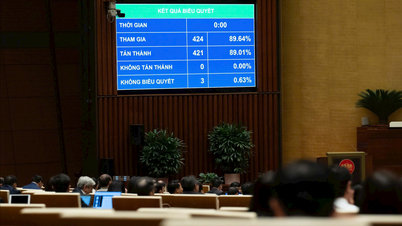
In an effort to ease the initial burden, the National Assembly has just agreed to raise the tax-free revenue threshold to 500 million VND/year. This decision is a flexible move, especially for the smallest household businesses. Furthermore, for those with revenue exceeding 3 billion VND/year, the shift to taxing on profit (revenue minus reasonable expenses), similar to small businesses, is a major incentive, helping them to be more transparent about their costs and ready to transition to a formal business model.
The biggest change is not in the tax rates, which are divided into three more detailed management groups, but in the compliance costs. According to a representative of the Hanoi Small and Medium-sized Enterprise Association (Hanoisme), small businesses in general, and household businesses in particular, bear three types of costs: psychological costs – the fear of violating regulations and being inspected; opportunity costs – lost time due to waiting for administrative procedures or learning new regulations; and information costs – the inconsistency in interpretation and guidance among agencies.
In reality, for millions of long-standing household businesses, especially the older generation in traditional markets, the need to keep records, store documents, and switch to electronic invoices for those with annual revenue exceeding 1 billion VND is a significant administrative hurdle, putting pressure on initial investment costs and changing operating habits.
In particular, the biggest challenge is the "psychological shock" of invoices and accounting records. Previously, with the average lump-sum tax method, many household businesses did not need complex accounting records. Now, the shift to declaration requires them to have complete proof of transactions. In an interview with the press, Ms. Bui Thi Trang, Director of Retail Solutions at MISA Joint Stock Company, pointed out that most household businesses are elderly people who have little habit of keeping records and are concerned that transparency of revenue means their entire operations will be "seen," making them more susceptible to inspections.
This mindset can lead to two major risks. Firstly, household businesses may choose to conceal revenue or evade procedures. Secondly, without thorough preparation from the Tax Department, inaccurate declarations due to lack of understanding could shock these households when the tax rate calculated based on actual revenue is many times higher than the previous flat-rate tax.
Revenue "filter": New policy reduces burden on the smallest groups.
The new tax policy aims not only to collect taxes more efficiently but also to act as a "filter" to classify and encourage potential household businesses to transform into formal enterprises. This is an unavoidable path if Vietnam wants to increase the competitiveness and quality of its private sector.
The National Assembly has just agreed to raise the tax-exempt revenue threshold to 500 million VND per year. This is a flexible decision aimed at reducing the compliance burden for the smallest group of household businesses. Mr. Truong Khac Long, a representative of a construction materials business with revenue exceeding 3 billion VND per year in Hanoi, expressed his agreement: "The shift to a profit-based tax model (revenue minus reasonable expenses) is the biggest motivation. It helps us to transparently manage costs, operate more professionally, and see the clear benefits of transitioning to a business entity. We are ready to invest in accounting software if the declaration procedures are simplified to the maximum extent."

How can we prevent millions of Hong Kong dollars from experiencing a "psychological shock" from the accounting figures?
According to representatives of the Hanoi Small and Medium-sized Enterprise Association (Hanoisme), the shift to self-declaration of taxes is placing three types of intangible costs on small and medium-sized enterprises (SMEs). These include psychological costs stemming from the fear of violating regulations; opportunity costs representing lost time learning new procedures; and information costs due to inconsistencies in guidance between agencies. Experts believe these costs could be significantly higher than the increased taxes, especially for small businesses operating in traditional markets.
However, Mr. Long also suggested that the Tax Department should aim for a more hands-on approach and a stronger digital transformation. Instead of just issuing regulations, it should support household businesses in using electronic invoices and understanding the online tax declaration process.
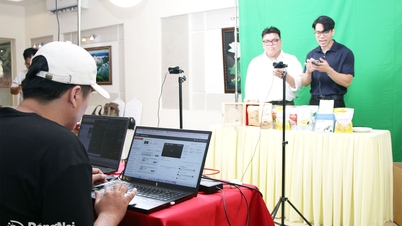
For online businesses and e-commerce operations, the regulation allowing e-commerce platforms to deduct and pay VAT on behalf of businesses is a groundbreaking step to strengthen the management of this revenue source and ensure fairness between traditional and digital businesses.
The new tax policy for household businesses is clearly a revolutionary step, laying the foundation for the professionalization of this economic sector. However, the "problem" with the policy lies in the speed and quality of societal preparation. The current challenge is how to prevent millions of household businesses from experiencing "psychological shock" from the accounting records, and from turning away from transparency due to fear of compliance costs. The success of the policy from January 1, 2026, will depend on the tax sector's ability to transform from a "tax collector" to a "digital partner," simplifying administrative procedures as much as possible and turning accounting records into a tool to support businesses instead of a source of fear.
Source: https://vtv.vn/an-so-chi-phi-vo-hinh-phep-thu-tu-khai-thue-2026-voi-ho-kinh-doanh-100251211200952022.htm























![[Photo] Prime Minister Pham Minh Chinh holds a phone call with the CEO of Russia's Rosatom Corporation.](/_next/image?url=https%3A%2F%2Fvphoto.vietnam.vn%2Fthumb%2F1200x675%2Fvietnam%2Fresource%2FIMAGE%2F2025%2F12%2F11%2F1765464552365_dsc-5295-jpg.webp&w=3840&q=75)












































Comment (0)