


Pressure for Transformation: Non-Tariff Barriers and Sustainable Trends
Although Vietnam's exports to the US have recovered after the US released its inventory, experts and industry associations are unanimously warning about a potential "undercurrent" in trade. The barriers are no longer just anti-dumping duties, with preliminary rates sometimes reaching 18.88% during the POR17 period for some businesses, but have shifted to non-tariff standards and social responsibility. Ms. Nguyen Ngo Vi Tam, Chairwoman of the Freshwater Fish Industry Committee (VASEP), predicts that after 2025, the Vietnamese seafood industry will face significant challenges as the US tightens import standards from 2026. This is a common trend in developed markets, focusing on sustainability and ethical production.
According to updated information from the Import-Export Department (Ministry of Industry and Trade) and specialized agencies under the Ministry of Agriculture and Environment , the US market is shifting from tariff barriers to a more complex and stringent non-tariff standard system. This trend poses many major challenges for Vietnam's seafood industry, most notably the issue of supply chain transparency and combating IUU (Illegal, Unreported, and Unregulated) fishing. Importing countries demand absolute product traceability, covering the entire process from farming and fishing to final processing. Controlling illegal, unreported, and unregulated (IUU) fishing has become a prerequisite, especially after the European Commission (EC) continued to maintain a "yellow card" for Vietnam, further increasing pressure on the legality of raw materials and forcing businesses to thoroughly reform their supply chain management systems.

Pangasius and shrimp businesses remain dependent on the results of the upcoming POR (Provincial Ordinance Review) administrative review.
Dr. Le Xuan Dong from the Central Institute for Economic Research emphasized that: "Current challenges are not limited to clear regulations such as IUU or POR, but also lie in the integration of food safety and environmental regulations. For example, the FDA's Food Safety Modernization Act (FSMA) is shifting from a reactive to a preventative model. This forces US importers to take full responsibility for the safety of products from Vietnam, leading them to set even stricter internal control standards than those mandated by law. If businesses do not proactively transparently disclose quality control records from the initial stage, they will automatically be excluded from the priority list of major importers." Dr. Dong also warned about the trend of carbon footprint tracing, where data on energy consumption during cultivation and processing will become a key factor in determining competitiveness in the next few years.
Alongside requirements regarding origin, labor and environmental (ESG) standards are also being tightened. Regulations on fair labor, food safety, and especially carbon emission control in production will be enhanced, following the global trend towards ESG (Environmental, Social, and Governance). Experts predict that regulations similar to the EU's Carbon Border Adjustment Mechanism (CBAM) may soon be adopted by the US in a different form.
Furthermore, despite the shift in focus, the risk of anti-dumping duties remains a cyclical concern. The future of many pangasius and shrimp businesses still depends on the outcome of the upcoming POR (POR20) administrative review. Although anti-dumping duties are expected to decrease, creating greater competition, this remains a cost barrier and creates significant instability for businesses' long-term business plans.
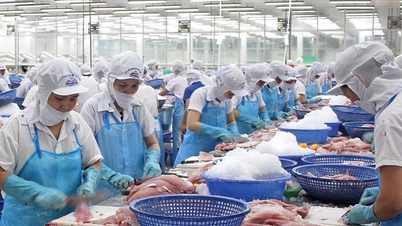
Speaking to reporters, many Vietnamese seafood businesses acknowledged this pressure. They believe that focusing solely on cheap, raw frozen products is no longer a sustainable strategy to maintain the US market. A shift towards value-added products that meet the modern consumer demands of American consumers is necessary. Mr. Nguyen Tien Hai, Director of Hai Tien Import-Export Company ( Can Tho ), shared: "We have to accept investing in deep processing, transforming frozen pangasius fillets into convenient ready-to-eat meals (RTE) or breaded shrimp, to increase product value and easily penetrate retail and food service channels in the US."
Diversify markets and enhance internal capabilities.
In the context of a US market that is gradually stabilizing in terms of demand but harboring significant risks from non-tariff standards and cyclical tariff challenges, the core strategy of Vietnam's seafood industry must be "diversification coupled with added value" and comprehensive strengthening of its domestic capabilities.
The first solution emphasized by economic experts is diversifying markets and effectively utilizing FTAs. The breakthrough in trade turnover within the CPTPP bloc and with China in 2025 is the clearest evidence of this expansion potential. According to a representative of the Vietnam Association of Seafood Processing and Export (VASEP): "Expanding into market blocs with significant tariff preferences, such as the EU (EVFTA) and CPTPP member countries, will help reduce dependence on the US and create a solid safety buffer in case of increased trade risks." VASEP also specifically recommends that businesses actively boost exports to the Middle East, where Vietnam has advantages in terms of trade agreements and rapidly growing consumer demand.

Processed products, especially ready-to-eat or quick-to-prepare products, will help increase profit margins.
Vietnam's seafood industry is on the verge of reaching a new record. However, to surpass the $11.3 billion mark and sustain growth, businesses need to overcome the "undercurrents" from the US market by investing in quality, increasing supply chain transparency, and flexibly diversifying markets. A strong recovery in 2025 provides a foundation, but the rules of the global game, especially in the US, are changing, requiring a complete reshaping of strategies.
According to industry experts, alongside market expansion, the crucial solution is to focus on deep processing and product innovation. Mr. Hai stated: "In the current context, we cannot continue to compete on price with countries that have a lower cost advantage; instead, we must shift to competing on superior quality, convenience, and brand building." Deeply processed products, especially ready-to-eat or quick-to-prepare products, will help increase profit margins and meet the demands of busy consumer trends in developed countries like the US. Investing in advanced processing and packaging technology is essential to meet the high hygiene and food safety standards of the US Food and Drug Administration.
Notably, according to the head of the Import-Export Department, to meet the stringent requirements for ESG and IUU (Illegal, Unreported, and Unregulated) fishing, building sustainable farming areas and digitizing the supply chain are key factors. To ensure transparency, businesses must establish farming areas that meet international certifications (ASC, GlobalGAP) and apply digital technology in management. Pilot projects are applying Blockchain and Artificial Intelligence (AI) technology to help trace product origins in real time.
"Technology is not only a management tool, but also a passport for Vietnamese products to meet the highest transparency standards from the US market, especially in dealing with stringent inspection requirements regarding IUU (Illegal, Unreported, and Unregulated) fishing. We need to consider the US market not only as a sales target, but also as a criterion for upgrading the entire production standards of Vietnam's seafood industry," the head of the Import-Export Department affirmed.
Source: https://vtv.vn/tiem-can-ky-luc-moi-thuy-san-viet-nam-doi-mat-rao-can-moi-100251211221625213.htm





















![[Photo] Prime Minister Pham Minh Chinh holds a phone call with the CEO of Russia's Rosatom Corporation.](/_next/image?url=https%3A%2F%2Fvphoto.vietnam.vn%2Fthumb%2F1200x675%2Fvietnam%2Fresource%2FIMAGE%2F2025%2F12%2F11%2F1765464552365_dsc-5295-jpg.webp&w=3840&q=75)














































Comment (0)