

According to data released by the General Statistics Office ( Ministry of Finance ), Vietnam welcomed nearly 2.1 million international visitors in March 2026. The cumulative number of international visitors in the first quarter of 2026 reached 6.76 million, an increase of 12.4% compared to the same period last year and the highest number for the first quarter ever recorded.
What makes it so appealing?
Of these, China has emerged as the largest source market for tourists to Vietnam with over 1.4 million visitors, followed by South Korea with over 1.3 million visitors. These two markets account for 40% of the total number of international tourists to Vietnam.
According to the General Statistics Office, increasingly liberal visa policies, professionalized promotional activities, a diverse range of products that suit current trends, and continuously improving service quality are important foundations for attracting international tourists to Vietnam.

Phu Quoc is becoming an attractive destination for international tourists. Photo: LAM GIANG
However, in the context of a volatile global geopolitical landscape, the question arises whether Vietnam's tourism sector still has the appeal to attract the targeted 25 million international visitors.
Speaking with a reporter from Nguoi Lao Dong Newspaper, Mr. Nguyen Ngoc Toan, CEO of Image Travel & Event, commented that Vietnam remains a relatively new destination on the world tourism map, especially for travelers who have visited many countries. The development of tourism and entertainment infrastructure, as well as unique architectural works throughout the country, also increases its attractiveness.
According to Mr. Toan, while Vietnam's advantages previously lay primarily in its natural beauty and culture, they are now complemented by a system of services and new products. This diversity caters to various customer segments. Simultaneously, social media plays a crucial role in rapidly spreading awareness of Vietnam's new destinations to the world.
"One often overlooked factor is the highly flexible household economy in Vietnam. Tourists can easily connect with locals to experience local cuisine, shopping, entertainment, and more. This creates a sense of 'good connection with local life,' unlike many highly organized developed countries that have limited interaction with the community," Mr. Toan analyzed.
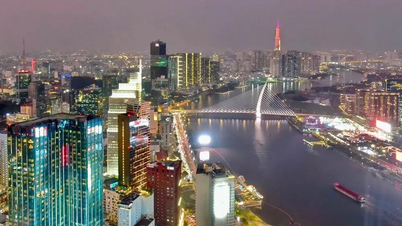
In Ho Chi Minh City, the introduction of many new products and services has contributed to increasing the city's attractiveness. Notably, from March 2026, VinaGroup International Travel Company (VinaGroup Travel) launched a helicopter tour offering panoramic city views from above, expanding the range of experiences for tourists. In addition, VinaGroup Travel, along with partners such as Ben Nha Rong Cruise Joint Stock Company and Tugo Company, has signed a cooperation agreement to develop high-end tours combining helicopter tours and the 5-star Elite of Saigon cruise.
Mr. Nguyen Minh Man, Deputy General Director of VinaGroup Travel, said that helicopters, 5-star yachts, and golf will be the three main products in the ecosystem of high-class tourism products, serving both domestic and international tourists.
According to the latest report from STR (part of CoStar Group), in January and February 2026, the occupancy rate in Phu Quoc reached over 90%, becoming the fastest-recovering resort destination in the region. Notably, Phu Quoc surpassed "resort capitals" such as Bali (Indonesia) with an occupancy rate of around 60% and Phuket (Thailand) with over 80%.
We need to change our approach.
According to Mr. Nguyen Quoc Ky, Chairman of the Board of Directors of Vietravel Group, to maintain growth momentum, Vietnam needs to make good use of opportunities through the policy system and close coordination between management agencies and businesses. "In the context of businesses still facing many difficulties, the State needs to take the lead and clearly demonstrate its facilitating role."
"It is urgent to develop a comprehensive strategy to anticipate the shifting flow of international tourists. Policies must be tailored to each market, with a specific roadmap. The National Tourism Administration and the Civil Aviation Authority of Vietnam could bring together major businesses to jointly develop detailed strategies for each market," Mr. Ky suggested.
Mr. Dang Manh Phuoc, CEO of The Outbox Company, cited figures showing that in 2025, Vietnam will welcome approximately 21.1 million international tourists, nearly 20% higher than before the COVID-19 pandemic. Total tourism revenue is expected to reach around US$39 billion, a 27% increase compared to 2019. However, revenue growth is mainly driven by an increase in the number of tourists, while there are not many signs of significant improvement in the high-end segment or spending patterns.
"Vietnam's Net Promoter Score (NPS) for tourism is currently at 24.2, reflecting a paradox: while the number of tourists is increasing, the brand strength is not keeping pace. Many tourists are satisfied enough to return, but the percentage willing to recommend the destination to others remains low. Meanwhile, markets like Thailand and Singapore have NPS above 53, indicating a more effective ability to convert tourists into 'brand ambassadors'," Mr. Phuoc analyzed.
Meanwhile, many experts argue that Vietnam's tourism industry needs to shift from a growth model based on quantity to a balanced model that focuses on quality and added value. Otherwise, the tourism industry may achieve a large scale but lack sustainability and resilience to external shocks.
One of the key approaches is to expand the customer market by diversifying it geographically, in terms of motivations and consumer behavior, thereby building a more stable demand base.
Supporting businesses amidst rising costs.
Ms. Tran Nguyen, Deputy General Director of the Entertainment and Resort Division of Sun Group, believes that if oil prices continue to remain high and supply is unstable, the negative impact will be prolonged, directly affecting the growth targets of Vietnam's entire tourism and resort ecosystem in 2026 and subsequent years.
In this context, businesses are proposing that the government consider reducing VAT on accommodation, entertainment, and tour services for the next six months, or adjust it flexibly according to market developments and geopolitical situations.
Source: https://nld.com.vn/tim-cach-dat-muc-tieu-don-25-trieu-khach-quoc-te-196260407211649943.htm

![[Image] Hanoi's urban life under the challenge of a "scorching hot" environment](https://vphoto.vietnam.vn/thumb/1200x675/vietnam/resource/IMAGE/2026/05/25/1779706979265_nang-nong-t5-2026-minh-duy-7-4636-jpg.webp)


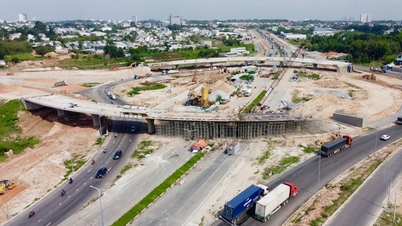
![[Image] Close-up view of the interchange connecting the two expressways and Long Thanh Airport.](https://vphoto.vietnam.vn/thumb/1200x675/vietnam/resource/IMAGE/2026/05/25/1779703378210_ndo_br_z7863716673926-224453a31600126cce10622af6290afd-4549-jpg.webp)









































































Comment (0)