

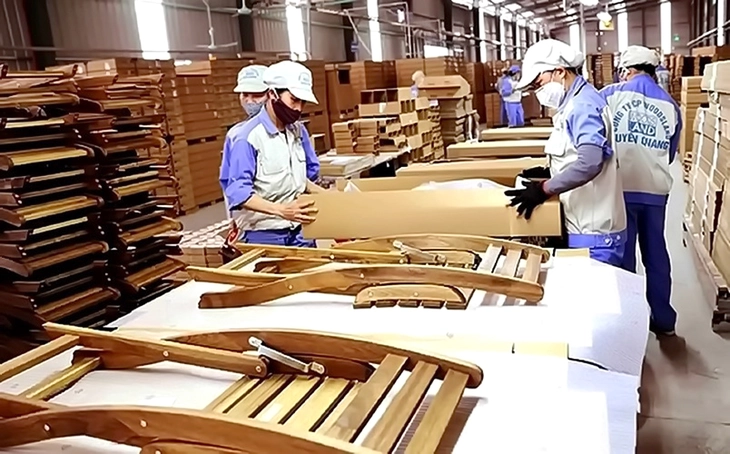
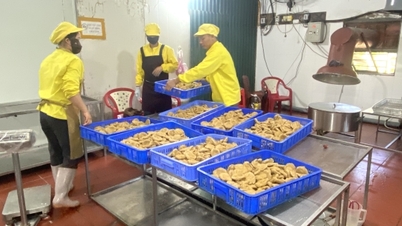
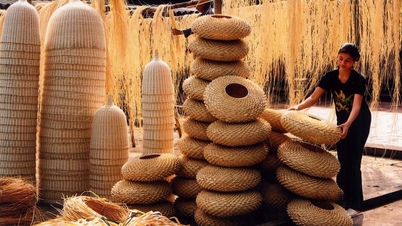
Timber exports are predicted to be most significantly impacted by the US retaliatory tariffs - Photo: D.TH.
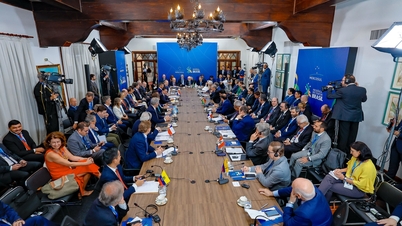
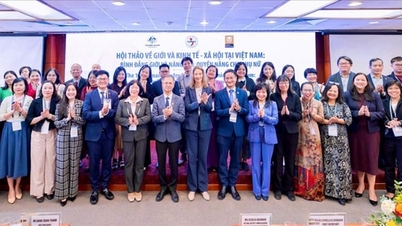
These recommendations were made by many experts at the workshop on US Countervailing Duties and Vietnam's Business Response, organized by the Vietnam Chamber of Commerce and Industry (VCCI) in Hanoi on April 18.
Find opportunities in risks.
Speaking at the seminar, economist Pham Chi Lan commented that the US retaliatory tariffs present both risks and opportunities. "Vietnam has FTAs with 17 countries but not with the US, only BTA and BTA+ agreements with the US."
Cooperation between the two sides remains at the usual bilateral level. Therefore, negotiations need to be accelerated to treat US goods as if they were from a country with a Free Trade Agreement (FTA) with Vietnam, from tariff barriers to non-tariff barriers.
During negotiations, it is necessary to integrate the value of service imports with the value of goods imports from the United States.
Furthermore, it is necessary to significantly increase the localization rate in the supply chain of goods exported to the US. Actively developing supporting industries is crucial to move Vietnam out of the role of mere processing before reaching a higher level of development," Ms. Lan recommended.
The expert also noted that transitioning to new markets is always more difficult than maintaining an existing one, and the cost of opening a new market is three times that of retaining the US market.
Therefore, solutions are needed to maintain the US market, combined with diversifying export markets. The import market for goods also needs to be more diversified than it is currently.
To meet stringent requirements regarding the origin of goods, Ms. Lan recommended that businesses diversify their raw material import markets, avoiding over-reliance on China. However, this needs to be done skillfully, as both the US and China are important partners of Vietnam.
Discussing solutions to respond to retaliatory tariffs from the US, Dr. Can Van Luc, a member of the National Monetary Policy Advisory Council, also suggested that the concerns and obstacles raised by the US regarding Vietnamese goods should be addressed promptly.
The US Department of Commerce report identified 24 barriers and obstacles, including 14 in specific sectors. The government is actively working to remove these obstacles, which is beneficial for domestic export businesses.
Supporting businesses in finding new markets.
Mr. Pham Tan Cong, Chairman of the Vietnam Chamber of Commerce and Industry (VCCI), said that VCCI has submitted a document to the Government proposing solutions to respond to the retaliatory tariffs from the US. At the same time, VCCI has sent letters to the US Secretary of Commerce, the US Chamber of Commerce, and leaders of influential states in the US to express Vietnam's views on the retaliatory tariffs.
Currently, Vietnam has 17 FTAs, but businesses have not proactively exploited all the markets. Therefore, the Vietnam Chamber of Commerce and Industry (VCCI) recommends that the Government support businesses in promoting their exports to new markets where Vietnam has signed FTAs, in order to maximize export advantages.
Markets outside the US will be a way out for export businesses in case the US imposes high retaliatory tariffs.
In the current context, supporting businesses in affected sectors is crucial.
According to Dr. Luc, it is necessary to focus on stimulating consumer demand and supporting businesses in capturing the domestic market.
In addition, the expert also noted that exporting businesses need to be transparent about the origin of exported goods and clearly state the localization rate.
At the same time, we need to make good use of existing FTAs. Currently, we have only utilized 31% of the preferential treatment in FTAs, leaving 69% untapped, so there is still a lot of room for improvement.
Signing a bilateral trade agreement with the US would turn a crisis into an opportunity.
Mr. Dau Anh Tuan, Deputy Secretary General of VCCI, said that in the context of the US imposing retaliatory tariffs on Vietnamese exports, if Vietnam could sign a bilateral trade agreement with the US, it would turn a crisis into an opportunity.
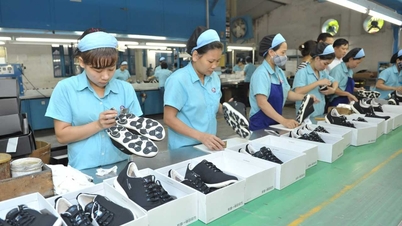
Of the 15 product groups currently exporting billions of dollars to the US, wood and wood products, textiles and garments, and footwear could be significantly impacted.
VCCI also assessed that the wood and wood products sector will be most significantly impacted by the US retaliatory tariffs.
It is predicted that if the US imposes a 10% tariff on Vietnamese wood products exported to the US, export revenue will decrease by approximately 30% this year.
Dr. Can Van Luc assessed that if the retaliatory tariffs that the US imposes on Vietnamese goods are between 20-25%, Vietnam's exports will only decrease slightly by $6-7.5 billion, corresponding to a 1.5% reduction in export growth. Realized FDI capital will decrease by 3-5%.
Furthermore, retaliatory tariffs will have a trade diversion effect globally, and competition in the domestic market will intensify as goods that cannot enter the US are diverted through Vietnam.
Vietnamese businesses discuss ways to restructure supply chains.
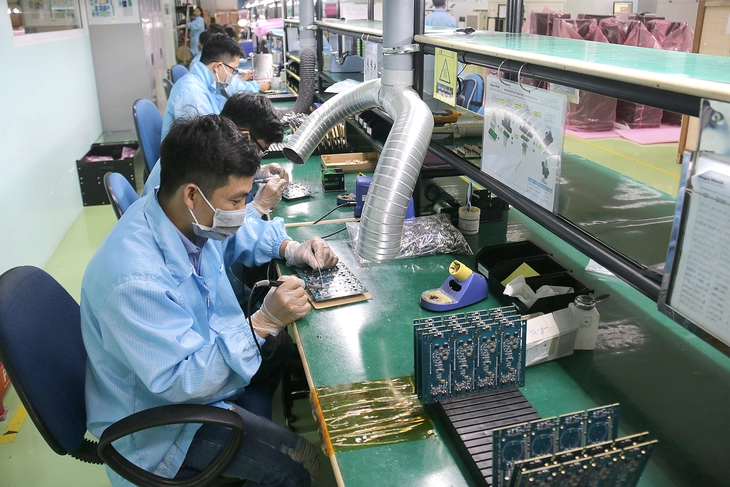
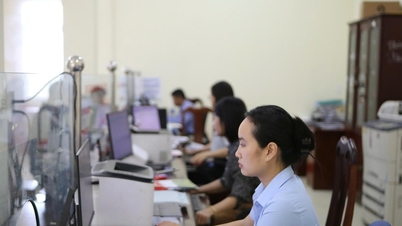
Workers at an electronics factory in Ho Chi Minh City's High-Tech Park - Photo: N. HIEN
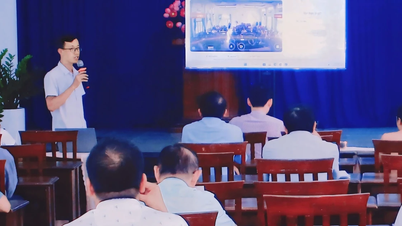
At the conference "High-Tech Parks Facing the Impact of US Tariff Policies," organized by the Ho Chi Minh City High-Tech Park on April 18, Mr. Nguyen Dinh Thien, Deputy Director of DLG Ansen Co., Ltd., stated that the new US tariff policy has caused difficulties for his company.
Some customers in the US market are reducing their orders, and even order cancellations are on the rise.
According to Mr. Thien, businesses are awaiting government policies and hoping for negotiations to reduce US tariffs.
During this period, businesses must proactively optimize production processes and restructure supply chains to avoid dependence on existing supply chains in high-tax markets, as well as seek orders in new markets.
"The company is also focusing on investing in research and development to bring new products to meet market demands in this new phase," Mr. Thien said.
A representative from DGS Electronics stated that because 80% of the company's products are exported to the US, their supply chain is currently being affected by customers postponing and canceling orders.
The company representative argued that, in addition to expanding the supply chain, priority should also be given to using high-tech products manufactured domestically or within the High-Tech Park to temporarily address short-term challenges.
Mr. Dang Van Chung, representative of the Ho Chi Minh City High-Tech Park Business Association (SBA), said that businesses in the High-Tech Park are increasingly participating in global supply chains, especially with the US market, as it is one of Vietnam's major trading partners.
"Businesses are concerned about the risks of supply chain disruptions and how to respond promptly."
"At the same time, we hope for supportive mechanisms and policies from local and central governments to help businesses adjust their market strategies, diversify partners, and strengthen their internal capabilities," Mr. Chung said.
Mr. Nguyen Cong Han, representative of Fab9 EMS Company, suggested that the State needs to have reasonable countermeasures for imported goods, and that import and export policies need to be more flexible to create favorable conditions for businesses to optimize costs in the face of current fluctuations.
Mr. Han stated that the company will diversify its distribution system, seeking and developing additional distribution centers or transportation partners in strategic areas to maintain competitiveness in the new environment.
Mr. Le Quoc Cuong, deputy head of the Ho Chi Minh City High-Tech Park Management Board, said that the new US tariff policy is not only a trade barrier, but also a catalyst for restructuring global supply chains and geostrategic shifts in core industries.
This situation urgently requires the city to restructure its export growth model, promote structural transformation of industries, protect jobs, and enhance the city's economic resilience to external shocks.
Source: https://tuoitre.vn/tim-chien-strateg-giu-vung-thi-truong-my-20250419062715554.htm


![[Photo] Prime Minister Pham Minh Chinh presides over a meeting on private sector economic development.](/_next/image?url=https%3A%2F%2Fvphoto.vietnam.vn%2Fthumb%2F1200x675%2Fvietnam%2Fresource%2FIMAGE%2F2025%2F12%2F20%2F1766237501876_thiet-ke-chua-co-ten-40-png.webp&w=3840&q=75)




























































Comment (0)