

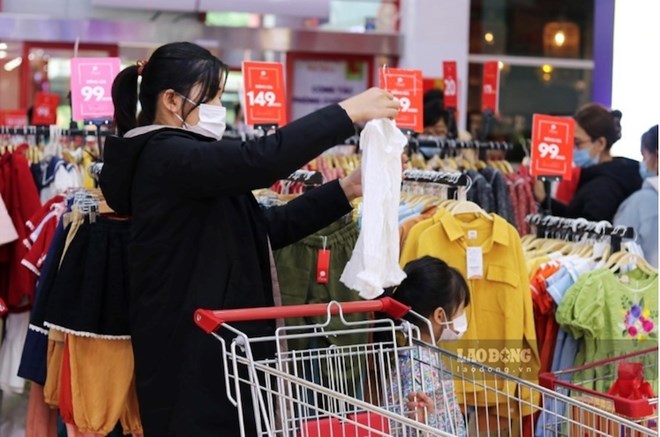
Aggregate demand growth amidst numerous challenges
According to data from the General Statistics Office, total domestic consumer demand, as reflected in the total retail sales index, shows that in the first 11 months of 2023, total retail sales of goods and consumer service revenue at current prices are estimated to have increased by 9.6% compared to the same period last year (compared to a 20.2% increase in the same period of 2022). Excluding price factors, the increase was 7.0% (compared to a 16.6% increase in the same period of 2022).
Speaking to Lao Dong newspaper, Dr. Nguyen Bich Lam, former Director General of the General Statistics Office, commented: "The increase in total consumer demand, as measured by the total retail sales index, is only half of what it was last year. This indicates that domestic consumer demand remains weak. Meanwhile, external consumer demand is also weak. The decline in exports and imports reflects the difficult global context, and domestic production has not yet recovered well," said Dr. Lam.
Regarding public investment disbursement, Dr. Lam believes that while the figures show growth, it is not yet significant enough. According to data from the Ministry of Planning and Investment , the disbursement for the first 11 months nationwide was approximately 461,000 billion VND, reaching 65.1%, higher than the same period last year (58.33%), and an absolute increase of nearly 123,000 billion VND.
Further elaborating on the growth drivers for early 2024, Mr. Lam emphasized the government's and the Prime Minister's efforts in institutional reform. According to him, institutional reform is a growth driver for the economy , but it has not been adequately addressed by the government in the past.
Dr. Lam believes that if there is a favorable legal environment and obstacles to production and business activities are removed, the economy will have a good chance of recovery.
New growth drivers
Discussing possible solutions for 2024, Dr. Nguyen Bich Lam stated that a bright spot in overall demand is that manufacturing businesses are proactively seeking outlets. For example, shrimp exports have expanded to over 100 markets; textile exports, in addition to maintaining traditional markets, are also beginning to explore niche and new markets in the Middle East.
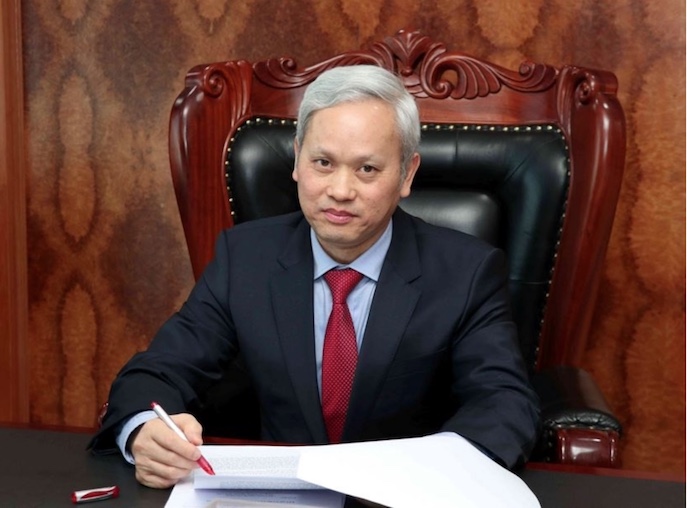
However, Mr. Lam emphasized that many businesses are still facing difficulties in finding markets for their products. Although the Government and the Prime Minister have directed the State Bank of Vietnam to provide credit to manufacturing businesses, the difficulty in finding markets for their products has made businesses hesitant to borrow.
"I believe that one of the first things we can focus on is strengthening solutions to boost domestic consumption. In addition to the 2% VAT reduction policy extended until 2024, I think we need more solutions to reduce prices and offer promotions on goods to increase purchasing power," Dr. Lam analyzed.
Regarding investment, Dr. Lam suggested that to accelerate project progress, the government needs to separate the construction contractor from the unit responsible for land clearance. According to him, land clearance should be delegated to local authorities, with the Provincial People's Committee directing the acceleration of the process. Only after land clearance is completed should bidding be organized to bring contractors in to implement the projects.
Contributing to the discussion on solutions, Professor To Trung Thanh, Head of the Science Management Department at the National Economics University, pointed out a new growth driver. Accordingly, with the economy facing issues of declining aggregate demand and the possibility that this year's growth may not meet the government's target, the digital economy will be one of the important new drivers, helping to bring the economy back on track.
According to Mr. Thanh, the National Economics University recently organized the 6th International Scientific Conference "Contemporary Issues in Economics, Management and Business (CIEMB) 2023". One of the notable points presented by the scientists was the forecasting and quantification of the digital economy's contribution to the overall economy, as well as its potential impact on productivity and competitiveness.
Mr. Thanh said: "The digital economy not only helps increase investment and contribute to increased aggregate demand, but also has a profound and long-lasting impact on the aggregate supply of the economy, helping the economy to grow sustainably."
Source
![[Image] Nearly 125,000 Hanoi students completed the Literature exam for the 10th grade entrance exam.](https://vphoto.vietnam.vn/thumb/1200x675/vietnam/resource/IMAGE/2026/05/30/1780117233041_ndo_br_thiet-ke-chua-co-ten-2-png.webp)







































































































Comment (0)