

A variety of products made from lychee fruit.
Speaking to Thanh Nien newspaper , Mr. Ta Duc Minh, Commercial Counselor and Head of the Vietnam Trade Office in Japan, said that after months of planning, on June 15th, the Vietnam Trade Office in Japan and TOMO Company (a Japanese enterprise specializing in importing agricultural products from Vietnam) successfully organized a trip for 30 representatives from businesses and organizations in Japan to visit and survey lychee growing areas in Thanh Ha District (Hai Duong Province) and Luc Ngan District (Bac Giang Province).
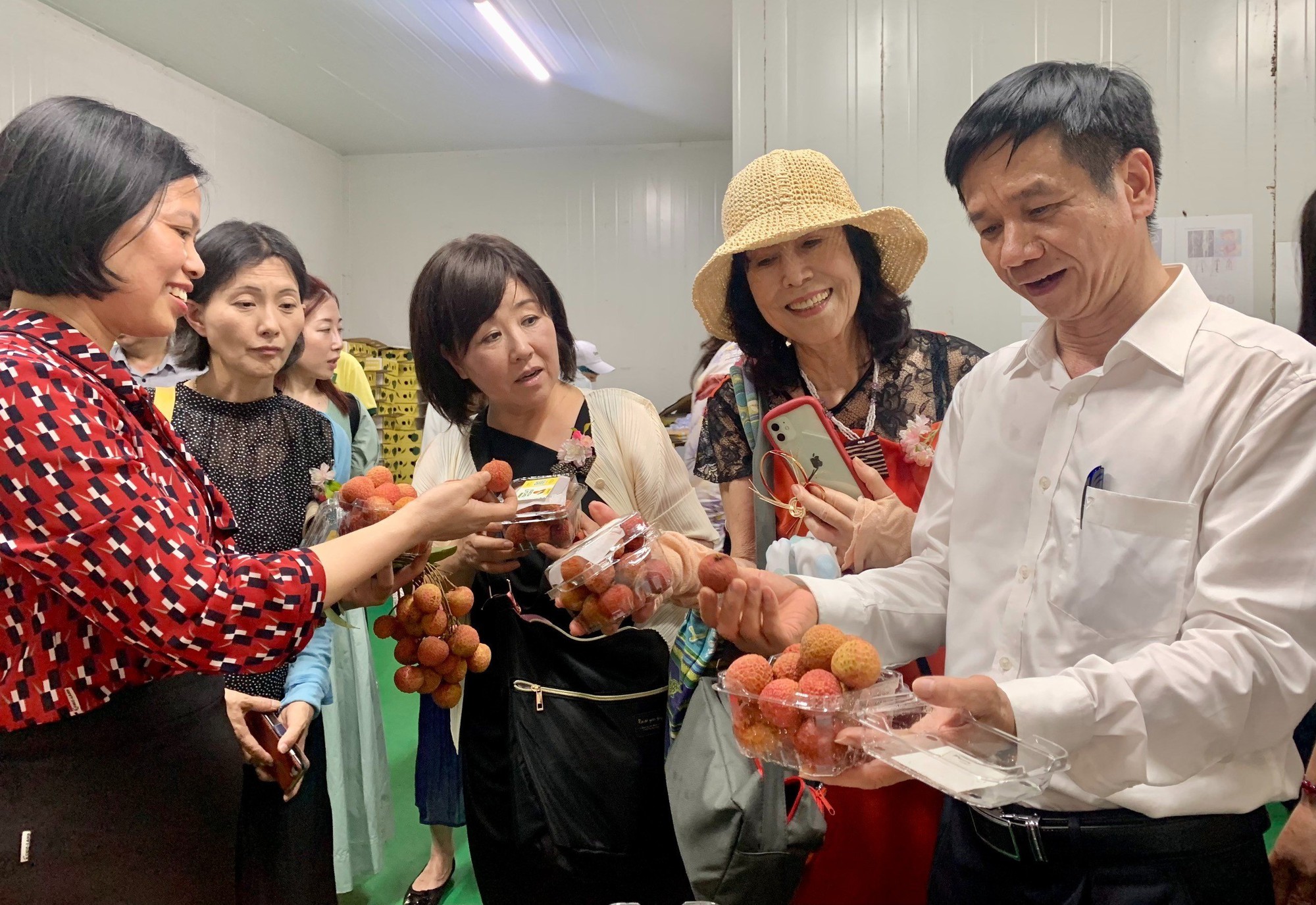
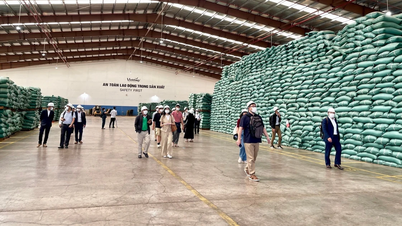
Businesses visit the processing and packaging procedures for textiles exported to Japan in Hai Duong.
This trip had a widespread and positive impact, with some members returning to Japan to organize online talks to many friends and partners about what they saw and heard during their first experience in the two largest lychee-growing regions of Vietnam. During the trip, Japanese businesses offered many suggestions on how lychees and processed products can reach a wider market and penetrate deeper into this market.
With a passion for Vietnamese lychees, Ms. Sadahiro Mari, Director and Secretary of Project A-world (a project specializing in research and development of processed fruit and vegetable products in Japan), said that she has personally visited Vietnam dozens of times for work. In Hanoi , Ms. Sadahiro Mari has bought lychees many times to enjoy. Enchanted by this delicious fruit, Ms. Sadahiro Mari has repeatedly petitioned and voiced her concerns to Japanese authorities to grant permission to import fresh lychees from Vietnam.
"I've eaten lychees in Vietnam and Japan for many years, but I've never tasted them as fresh and delicious as when you pick them directly from the orchard. The lychees are juicy, intensely sweet, and have a beautiful bright red skin," exclaimed Sadahiro Mari after tasting lychees at an orchard in Thanh Ha District.
In Japan, Ms. Sadahiro Mari and her colleagues in the A-world Project have successfully tested the process and technology for fermenting lychees using Japanese probiotics. "Like some Japanese fruit-fermented beverage products sold in the US and Europe, lychees can be processed into fermented juice for export to Japan, and even worldwide ," said Ms. Sadahiro Mari.
Sharing her views with the authorities and businesses of Bac Giang and Hai Duong provinces, Ms. Takei Ayako, Deputy Director of Happy Company (Yamanashi Prefecture, Japan), representing a company with nearly 2,000 dried fruit stores throughout Japan, stated that the demand for processed fruit products in Japan is very high.
During this trip, Ms. Takei Ayako will seek additional sources of import goods from Vietnam. Accordingly, Ms. Takei Ayako advises businesses to invest in processing technology and diversify products for export to Japan. This would not only help localities and farmers reduce consumption pressure during the short harvest season, but also allow processed products to be preserved and exported year-round.
"Exporting fresh lychees requires a complex preservation process, while making dried lychees is much easier. After this trip, we will conduct an assessment of the quality of dried lychees to promote their import," said Ms. Takei Ayako.
Export small quantities, reap big profits.
According to the Plant Protection Department (Ministry of Agriculture and Rural Development), lychee exports to the Japanese market this year are showing quite positive growth signs. In the first half of June, businesses exported more than 82 tons of fresh lychees to Japan. The first shipments of lychees imported from Vietnam attracted the attention of many consumers in Japan. Retail prices at stores and supermarkets reached up to 400,000 VND/kg.
However, Ms. Le Thi Phuong Thao, Deputy Director of TOMO Company, shared that in Japan, the largest consumers of lychees are the Vietnamese, Chinese, and Southeast Asian communities. Japanese consumers of lychees are mainly those who have lived, worked, traveled to, or have friends in Vietnam, but this number is not large.
"For Japanese people in general, Vietnamese lychees are still a new fruit, not yet truly convincing for them to consume. That's why we organize trips for Japanese partner businesses to lychee-growing regions in Vietnam, using them to spread awareness and promote lychees within Japanese communities."
"If we succeed in reaching the Japanese community, the future export potential for fresh lychees and processed products is enormous. We will collaborate with the Japan Fruit Association and Japanese logistics companies to bring lychees to all provinces and cities, penetrating deeper into this market," Ms. Thao said.
Speaking to Thanh Nien newspaper , Mr. Huynh Tan Dat, Deputy Director of the Plant Protection Department (Ministry of Agriculture and Rural Development), acknowledged that exporting fresh lychees to the Japanese market, even in small quantities, brings many important benefits to the agricultural sector.
According to Mr. Dat, the Japanese market is likely to pay high prices for high-quality products; exporting fresh lychees to this market could bring significant profits to businesses and farmers.
Furthermore, Japan sets very high standards for food quality and safety. Exporting fresh lychees to this market requires businesses to strictly adhere to regulations on production, hygiene, and quality. By meeting the requirements of the Japanese market, Vietnamese lychees are highly valued for their quality and safety, thereby building a brand and reputation for this fruit; creating opportunities to expand exports to other markets.
"Exporting fresh lychees to the Japanese market requires businesses to apply technical and technological advancements in the production and processing process. This contributes to enhancing the competitiveness and development of Vietnam's agricultural sector," Mr. Dat emphasized.
Source link


![[Image] A brilliant symphony and explosive power in the skies of Da Nang.](https://vphoto.vietnam.vn/thumb/1200x675/vietnam/resource/IMAGE/2026/05/31/1780196945787_anh-man-hinh-2026-05-31-luc-10-08-51.png)
















![[Video] Sunset at Lap An Lagoon – Where the sun sets over the fishing nets](https://vphoto.vietnam.vn/thumb/340x192/vietnam/resource/IMAGE/2026/05/31/1780192137701_beach-landscape-sea-water-nature-grass-745871-pxhere-com.jpeg)
































































Comment (0)