

Tra Vinh province was re-established in May 1992 with a very low starting point, a high proportion of Khmer ethnic minority (nearly 32% of the population), and was one of the poorest provinces in the Mekong Delta, with 40% of households living in poverty and nearly 20% experiencing hunger. Through 32 years of implementing a comprehensive range of solutions, the strong determination of local Party committees and authorities, and the efforts of the people, Tra Vinh province has basically completed the task of building new rural areas. This achievement is largely due to the significant contributions of policy credit programs – the "lever" that has helped many households in Tra Vinh escape poverty and achieve stable lives.
For over 20 years, policy-based credit has been "unlocked" to poor households and other policy beneficiaries. In Tra Vinh province, nearly 226,000 poor households have accessed this preferential loan source to improve their lives, contributing to helping over 142,000 households escape poverty and achieve stable living conditions. Policy-based credit is likened to a lever, creating momentum for the poor to strive to assert themselves, overcome adversity, and enthusiastically engage in production to improve their income and develop their family economy .
Giving "fishing rods" to poor households
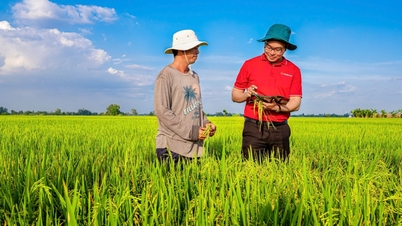
Mr. Nguyen Quoc Toan's family in Da Loc commune, Chau Thanh district, escaped poverty at the end of 2022 thanks to assistance from policy-based credit. He shared that 15 years ago, although both he and his wife were of working age, they lacked land for production, and their eldest daughter suffered an accident that left her very weak. Therefore, their wages from working as laborers had to cover all living expenses and medical treatment for their daughter, leaving the family constantly struggling to make ends meet, and poverty plagued them. For many years, he, his wife, and their two children lived in a dilapidated, leaky bamboo and thatch house without the money to repair it.
Good fortune began in 2010 when his family received 8.4 million VND in government assistance and an 8 million VND loan from the Social Policy Bank to build a house that met the "three solid" standards as stipulated in Decision 167/2008/QD-TTg of the Prime Minister . Having a house to protect them from the sun and rain brought immense joy to the family, giving them added motivation to work and produce.
In 2018, Mr. Toan's family received another 40 million VND loan from the Policy Bank under the poverty alleviation program to develop their family economy and improve their income. With this money, they bought two breeding cows, built a barn, and planted grass to feed them. After 14 months, the mother cows gave birth to two calves, and the herd gradually increased. The family chose to sell some of the beef cattle to cover living expenses and support their children's education. In addition, Mr. Toan diligently learned the trade of repairing pesticide sprayers for his neighbors in the hamlet. By the end of 2022, with a stable income, his family was removed from the list of impoverished households by the local authorities.
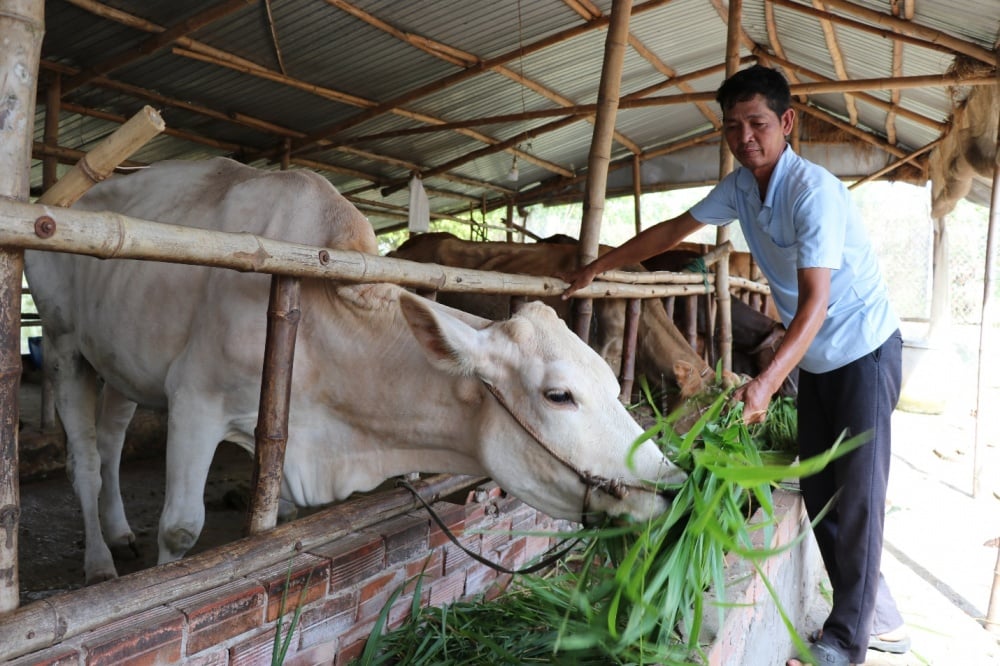 |
| The family of Mr. Nguyen Quoc Toan, from Da Loc commune, Chau Thanh district, escaped poverty thanks to access to policy-based credit. |
In early 2023, Mr. Toan was again given the opportunity to borrow 80 million VND from the loan program for newly-escaped-poverty households to buy more breeding cows and equipment for repairing machinery. To date, his family's herd has grown to 8 cows. On average, he sells 5 calves each year (approximately 10 million VND/calf), along with money from selling cow manure and repairing pesticide sprayers, so his income has improved significantly. Currently, his family has escaped near-poverty and has some savings.
Mr. Kim Thang's family in Ngu Lac commune, Duyen Hai district, earns their main income from rice farming, vegetable cultivation, and livestock raising. However, due to the impact of climate change and frequent disease outbreaks, their income is very unstable. Therefore, in 2011, when his eldest child was accepted into university, he was both happy and worried. Fortunately, his family received a loan from the Social Policy Bank under the Ngu Lac Commune Farmers' Association's program for disadvantaged students, so he boldly joined the village's savings and loan group. In 2015, when his second child was accepted into university, he again borrowed from this program. In 2019, one of his children received a loan from the Duyen Hai District Social Policy Bank to work abroad. To date, the total amount of preferential loans Mr. Kim Thang's family has received from these programs is 241 million VND; every month, he saves a portion of the money to repay the bank on time.
Mr. Kim Thang shared: “Thanks to these loan programs, my children have been able to receive a proper education. My family has capital to start businesses, develop economically, and become wealthy. Currently, my eldest child is working for the government with a stable income; and my second child is working in Japan, able to save about 30 million VND per month. I hope that all sectors and levels of government will continue to create conditions so that more and more people can access these credit loan policies.”
The entire political system is involved.
Mr. Le Hoang Phi, Director of the Social Policy Bank branch in Tra Vinh province, said that initially, when it was established in 2003, the Social Policy Bank branch in Tra Vinh province received over 55 billion VND in outstanding loans from the poverty alleviation loan program of the Bank for Serving the Poor. In 2004, it received two more policy credit programs, raising the total outstanding loans to over 122.6 billion VND. From these three credit programs, the Social Policy Bank branch in the province has now expanded to 17 policy credit programs, "unlocking" preferential capital to 100% of hamlets and villages in the province, creating conditions for the poor and policy beneficiaries to access policy credit capital conveniently and promptly.
Depending on their specific needs and circumstances, people are supported in accessing appropriate loan sources, such as loan programs for poor households, near-poor households, ethnic minority households facing extreme difficulties, students from disadvantaged backgrounds, loans for job creation, clean water and sanitation, etc.
In addition, over the past period, policy credit funds have helped create jobs for over 100,000 workers; nearly 35,000 disadvantaged students have received loans for their studies; supported the construction and renovation of over 111,300 clean water and sanitation facilities in rural areas; and supported the construction of new houses for over 36,000 poor households…
As a result, people's lives have improved significantly. By the end of 2023, the poverty rate had decreased to approximately 1.19%, and average per capita income reached 81.75 million VND/person/year, an increase of nearly 112 times compared to when the province was re-established.
According to Kim Ngoc Thai, Permanent Deputy Secretary of the Tra Vinh Provincial Party Committee, policy credit capital has contributed to the effective implementation of the Party and State's guidelines, policies, goals, and tasks on poverty reduction, job creation, and socio-economic development in the locality; creating strong changes in remote areas and ethnic minority regions in Tra Vinh. The policy has awakened the self-reliance and aspirations of the people; at the same time, it has helped the locality prevent and repel the negative impacts of "illegal lending"; contributing to political stability, social order and safety, ensuring national security and defense, and strengthening and consolidating the people's trust in the Party and the State.
In particular, to promote the role and enhance the effectiveness of social policy credit, and to implement Directive No. 40-CT/TW dated November 22, 2014, issued by the Party Central Committee on strengthening the Party's leadership over social policy credit, in recent years, Party committees and authorities at all levels in Tra Vinh have identified social policy credit activities as an important and regular task, always integrated with national target programs and socio-economic development plans at the local level, and linked to resolutions of Party congresses.
The entire political system of Tra Vinh province has joined forces with the Social Policy Bank in lending and managing the use of credit funds. With the guidance of Party committees and authorities at all levels, and the participation of socio-political organizations in managing entrusted funds, the people have been able to effectively utilize the borrowed capital.
Annually, entrusted organizations and associations, together with local authorities and relevant agencies, regularly organize training courses integrating policy credit programs with agricultural and industrial extension programs, technology transfer, and the development of production and business models that leverage potential and strengths, linked to OCOP product brands, supporting farmers in transforming their economic structure and crop and livestock production for high efficiency.
Source: https://thoibaonganhang.vn/tin-dung-chinh-sach-bai-1-158894.html















































![[Reaching New Heights for Vietnamese Businesses] VIMC – A Journey of Overcoming Challenges and Reaching Further](https://vphoto.vietnam.vn/thumb/402x226/vietnam/resource/IMAGE/2026/02/05/1770280569772_vimc-lines-4-2-26-2.jpeg)

































Comment (0)