

Implementing Resolution No. 72-NQ/TW of the Politburo on protecting, caring for, and improving the health of the people, the province focuses its resources on implementing a program of free periodic health check-ups and disease screenings to support people once a year. This is a strategic step by the locality to establish a comprehensive health management system right from the grassroots level.
 |
| The province focuses its resources on implementing a program of free annual health check-ups and disease screenings to support the people. |
Establish a comprehensive health management system.
To concretize the decision and guidance of the Ministry of Health , the Department of Health advised the Provincial People's Committee to issue an implementation plan that closely matches the actual conditions of the locality. The main goal of the program is to ensure that all residents living and working in the area receive free annual health check-ups and disease screenings.
In implementing this policy, the health sector has recently coordinated with other sectors, organizations, and localities to organize many free medical examinations and tests to support the people, with special priority given to policy beneficiaries, the elderly, people with meritorious services to the revolution, poor households, children under 6 years old, students, and workers in industrial zones.
Expressing her delight at receiving healthcare, Ms. Vu Thi Chinh (Long Chau ward) shared: "At my age, regular health check-ups are essential. If there's any illness, it can be detected early and treated promptly. I'm so happy to have been thoroughly examined by the doctor, had all the necessary tests done, and received advice on everything from diet to regular exercise. I hope these free check-ups will become more frequent so that those in difficult circumstances and those living alone have the opportunity to receive healthcare."
From the beginning of 2026 to the present, more than 56,300 people in the province have benefited from free general health check-up packages, integrated during the Lunar New Year, National Health Day, or the Sene Dolta festival, with a total cost of nearly 12 billion VND. According to the Director of the Department of Health, Ho Thi Thu Hang, the free health check-up activities in the locality have been aimed at concretizing Resolution No. 72-NQ/TW of the Politburo, with the long-term orientation of helping people form the habit of proactively monitoring their health and screening for diseases early on.
One of the highlights of the healthcare sector is the integration of routine health check-ups with the comprehensive digital transformation process. Accordingly, the entire province has 1.7 million people whose electronic health records are integrated into the VNeID application, reaching 40.36% of the population, ranking 8th out of 34 provinces and cities nationwide in terms of integration rate.
The province currently has 39 public medical examination and treatment facilities; 6 private hospitals; 124 commune/ward health stations; and 199 health station locations. 100% of health stations offer health insurance coverage and generally meet the human resource requirements for routine health check-ups. This is a significant advantage that allows for health check-ups to be conducted at the local level, reducing pressure on higher-level facilities.
Prioritize resources for public health.
Despite the advantages of a widely distributed network of 124 commune and ward health stations, realizing the goal of providing at least one annual health check-up for all citizens still presents many significant challenges. The Director of the Department of Health acknowledges that with a population of over 4.2 million people, the pressure on human resources, infrastructure, and finances each year is immense. The estimated cost of a health check-up is approximately 350,000 VND per person per visit, and the total estimated cost will exceed the local budget's capacity without support from the central government and social mobilization.
Furthermore, although the province's information technology infrastructure has made significant progress, ranking 8th out of 34 provinces and cities in the percentage of people integrating electronic health records on VNeID, internet access and equipment for digitalization remain very limited in some remote health stations. The team of doctors at the grassroots level is both insufficient in number and uneven in professional competence in specialized areas such as screening for non-communicable diseases, dementia, or diagnostic imaging…
To overcome difficulties and ensure feasibility and sustainability, the health sector is developing a suitable implementation roadmap, prioritizing funding allocation, organizing examinations by target groups, and strengthening mobile examination teams in disadvantaged areas. Simultaneously, it will continue to consolidate grassroots healthcare, improve service quality, and develop specialized medical services according to local needs. The sector also recommends the early issuance of a health insurance payment mechanism for routine health check-ups, promoting socialization and mobilizing the participation of private hospitals and businesses; and strengthening coordination in managing population data between the health sector, police, and local authorities.
Director of the Department of Health, Ho Thi Thu Hang, affirmed that with the decisive direction from the Central Government and the province, and the consensus of the people, the province has sufficient grounds to realize the goal of providing free periodic health check-ups for all citizens, contributing to improving the quality of life, ensuring social security, and creating momentum for sustainable development.
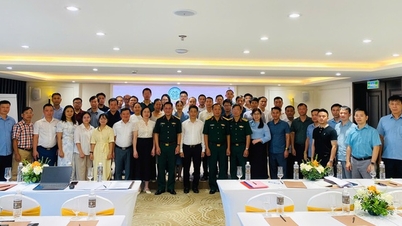
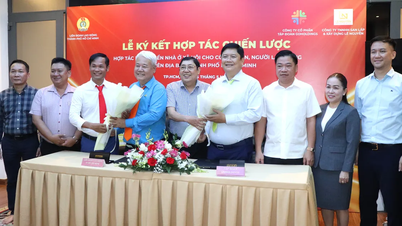
The Department of Health recently held a signing ceremony to transfer assets allocated from regional health centers to the People's Committees of communes and wards for management.
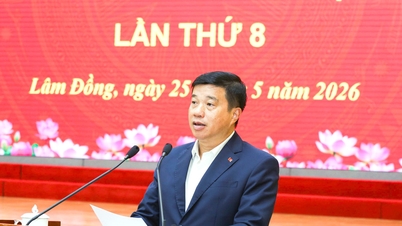
Speaking at the ceremony, Director of the Department of Health, Ho Thi Thu Hang, requested that the units continue to strengthen coordination, effectively manage, preserve, and utilize the handed-over assets; use them for their intended purpose and in accordance with the law; and continue to invest in and strengthen the grassroots healthcare network, contributing to improving the quality of healthcare for the people in the locality.
Text and photos: THUY QUYEN
Source: https://baovinhlong.com.vn/xa-hoi/y-te/202605/tinh-huong-toi-kham-suc-khoe-mien-phi-toan-dan-8b841a1/
![[Image] Close-up view of the interchange connecting the two expressways and Long Thanh Airport.](https://vphoto.vietnam.vn/thumb/1200x675/vietnam/resource/IMAGE/2026/05/25/1779703378210_ndo_br_z7863716673926-224453a31600126cce10622af6290afd-4549-jpg.webp)

![[Image] Hanoi's urban life under the challenge of a "scorching hot" environment](https://vphoto.vietnam.vn/thumb/1200x675/vietnam/resource/IMAGE/2026/05/25/1779706979265_nang-nong-t5-2026-minh-duy-7-4636-jpg.webp)





































































Comment (0)