

With an area of 14,109 km2, Son La is a large province. Before and after the merger, it remained the leading province in the Northern Midlands and Mountains region, while its national ranking changed from 3rd out of 63 to 6th out of 34. Initially less than 40,000 people, its population has now increased to over 1.4 million, representing a 0.3% increase in the national average. Its national ranking before and after the merger changed from 29th out of 63 to 30th out of 34. Its regional ranking changed from 4th out of 14 to 5th out of 9. Son La's ethnic communities comprise 12 ethnic groups: Thai, Kinh, Mong, Muong, Xinh Mun, Dao, Kho Mu, La Ha, Khang, Lao, Tay, and Nung. The Thai ethnic group is the largest, but its proportion has decreased from 75% to 53%, while the other ethnic groups have increased from 25% to 47%. From being inhabited solely by indigenous people, the development process has attracted people from most northern provinces to come here to make a living and establish businesses, contributing to the development of Son La, which now accounts for over 17% of the population, the second largest group after the Thai ethnic minority.
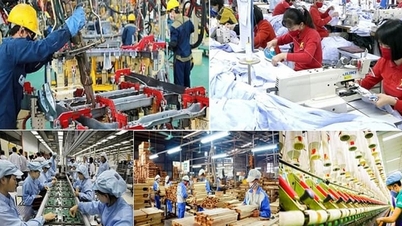
Son La province has historically lagged behind the rest of the country in terms of production methods (by hundreds of years). While the rest of the country was in the late stages of feudalism and the early stages of capitalist industry and commerce, Son La was still in the pre-feudal stage with a self-sufficient agricultural system, half production, half hunting and gathering. After 130 years, the province's economy has become a commodity-based economy, oriented towards industry, with agriculture accounting for only 23%, industry increasing to nearly 30%, and services over 41%. The GRDP reached VND 76.6 billion (2024), ranking 43rd nationwide and 4th in the Northern Midlands and Mountains region (estimated at VND 82.7 billion in 2025). Budget revenue reached VND 4.5 trillion, with a peak of VND 5.3 trillion, ranking 45th nationwide and 6th in the region. Social investment capital reached nearly VND 20 trillion, equivalent to 26% of GRDP, lower than the national average (32%). The value of goods exported, along with the rest of the country, reached over 200 million USD. Forests, once severely devastated, are gradually recovering, with forest cover increasing to nearly 49%. The poverty rate, which was over 70% at the start of the reform period, has now decreased to 8%. The average income per capita in the province is nearly 2.6 million VND/month. More than 41% of communes and wards (83/200) meet the standards of new rural areas, with an average per capita income of over 4 million VND/month, and many households have become millionaires. Although many aspects are still lagging behind the general average, especially infrastructure and living standards, Son La has basically caught up in some essential areas, such as the market for food, pharmaceuticals, consumer goods, energy, basic transportation, information, and the internet.
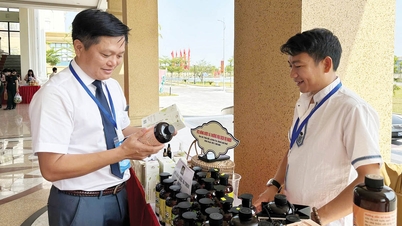
Son La, once known for its remote and desolate landscapes, is now recognized for its impressive projects, events, and figures. These include the Son La hydroelectric power plant, with a capacity of 2,400 MW, the largest in Vietnam and Southeast Asia. Contributing to the construction of this monumental project, Son La province carried out the largest-scale resettlement in history, involving 12,584 households and 58,337 people, representing nearly 10% of the population at the time. Moc Chau Plateau, dubbed the "Da Lat of the North," has become a national tourist area covering 205,150 hectares, the largest in the country, and has been repeatedly recognized by the world as a top natural destination in Asia. The number of tourists visiting Son La has increased to 5.2 million. Son La also leads the country in the scale of fruit tree cultivation (85,000 hectares), is the leading coffee and Arabica tea growing region, accounting for nearly 50% of the national total, ranks 6th in Shan Tuyet tea (nearly 6,000 hectares), and ranks 3rd nationwide in dairy cattle herd (25,000 head). The province has 18 protected products bearing local names, including 3 geographical indications that are national assets. There are 81 OCOP products, including 51 3-star products, 31 4-star products, and 1 5-star product at the national level. There are 5 national brand products: tea, coffee, longan, honey, and milk. Moc Chau fresh milk and yogurt have been awarded the national brand award multiple times. Moc Chau Dairy Joint Stock Company has consistently ranked among the top 1,000 enterprises nationwide contributing the most to the national budget.
The general level of education, health, and life expectancy of the people have improved significantly. 71% of preschools and primary and secondary schools have met national standards. The province has Northwest University, a regional university, and three colleges (Agriculture and Forestry, Medicine, Law, and Culture and Arts), training students from within the province, the region, and neighboring Laos. From a situation where over 99% of the population was illiterate, now 76% have primary education or higher (19% primary, 30.5% lower secondary, and 26.5% upper secondary). Each year, more than 10,000 high school graduates and nearly 2,000 graduates from universities and vocational schools. The province is honored to have Son La City as one of the five cities nationwide recognized by UNESCO as a global learning city. The percentage of the workforce with professional and technical qualifications and certificates reaches 30%, with nearly 7% holding university degrees or higher, equivalent to over 60,000 people. The entire province (including central government units located within its territory) now boasts over 200 PhDs, 6 associate professors, nearly 2,100 masters, and 500 specialists (Level I and Level II). The province has achieved a ratio of 9 doctors and 30 hospital beds per 10,000 people, with a health insurance coverage rate of 97%. The average life expectancy during the French colonial period was under 35 years, but has now increased to 73.38 years, ranking 4th in the Northern Midlands and Mountains region and 48th nationwide. Notably, the province's Human Development Index (HDI) has risen to a high level, reaching 0.75, on par with the national average, ranking second in the region and 14th nationwide.
The allure of Northwest Vietnam, particularly Son La, lies in the diverse cultural identity of its ethnic groups, encompassing festivals, customs, costumes, and cuisine. The Thai, Mong, Muong, and Dao ethnic groups here possess ancient scripts. The Thai people, in particular, have a vast collection of ancient books. Son La boasts 10 cultural heritage sites listed in the National Intangible Cultural Heritage List and one World Heritage site: the Northwest Thai Xoe dance; two national-level tangible relics: the Son La Prison and the Que Lam Imperial Inscription - Temple of King Le Thai Tong; and 16 other national-level relics, including the Tay Tien Regiment historical site and the immortal Co Noi Crossroads historical site. Son La province leads the country with nearly 3,000 grassroots performing arts groups, many of which have reached a level suitable for performing on national stages. The province boasts 3 People's Artists, 27 Meritorious Artists, 2 People's Artisans, and 36 Meritorious Artisans. Another highlight is the Moc Chau Cultural Festival, which has developed into a large-scale national and international event with a strong brand, held annually on National Day, September 2nd. The festival is also known as the "Love Market." The Love Market is truly humane; those without partners can go searching, while those already married can still visit former lovers to reminisce and share stories. The festival attracts hundreds of thousands of visitors from within the province, across the country, and from several countries in the region (Laos, Thailand, China) to participate and experience the event. It's also worth mentioning that Son La and the Northwest region are also captivating due to the legend of the mountain girls bathing in the water, making it a popular destination for journalists, photographers, and travelers seeking out and capturing many beautiful and romantic scenes. This land has also been immortalized in poetry, giving rise to famous works such as "Sống chụ xôn xao" (Farewell to a Lover), "Inh lả ơi", "Tình ca Tây Bắc", "Chiếc khăn Piêu", "Vợ chồng A Phủ"... In the list of 100 best poems of the 20th century in Vietnam, there are 4 poems about the landscapes and people of Northwest Vietnam and Son La: "Tây tiến", "Núi Mường Hung", "Dòng sông Mã", "Nhớ vợ", and "Em Tắm".
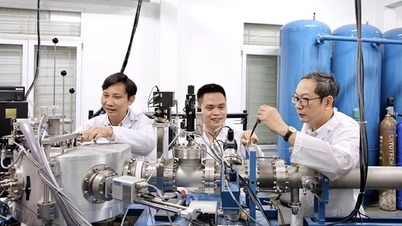
According to incomplete statistics, in the last 10 years, students from Son La have won 2 gold medals, 25 silver medals, and 45 bronze medals in the national excellent student competition, and 2 gold medals in the international Olympiad. One student led the quarterly competition and finished second in the annual final of the "Road to the Olympia Peak" competition. Son La residents have submitted 12 patent applications, received 2 patents, had 5 projects listed in the Golden Book of Vietnamese Science and Technology Innovation, 5 individuals have been honored as scientists for farmers, and 3 have received state awards for literature and art. They have also won 21 gold medals and 35 silver medals at national folk art festivals, 5 gold medals, 8 silver medals, 2 bronze medals, and many other awards at the national music and dance festival; and 1 gold medal and 2 silver medals at the international music and dance festival (Indochina and ASEAN countries). There have been 342 athletes who achieved the Master and Level 1 status, 4 athletes participating in the national team, and 5 athletes participating in the national youth team. Since 2020 alone, the team has won 519 medals of all kinds, including 137 gold medals, 141 silver medals, and 241 bronze medals. Notable achievements include 3 SEA Games gold medals, 1 gold and 1 silver medal at the World Championships; 1 gold medal at the Asian Championships; 1 athlete breaking a SEA Games record; and 1 athlete winning 4 World Championship gold medals.
During its development, Son La province has not only contributed a large quantity of goods for export nationwide, but also provided tens of thousands of workers to industrial zones in the delta, thousands of university graduates, hundreds of master's degree holders, and dozens of doctoral degree holders for the entire country. Regarding high-ranking Party and State leaders, it has contributed 1 Politburo member, 2 Central Committee members, 2 Vice Chairmen of the National Assembly, and 4 officials at ministerial level and equivalent.
Recognizing the achievements of the Party Committee, the military, and the people of Son La, the Party and State have bestowed many prestigious titles: 33 units and 14 individuals were awarded the title of Hero of the People's Armed Forces; 121 mothers were awarded the title of Heroic Vietnamese Mother; 4 collectives and 11 individuals were awarded the title of Hero of Labor; 26 collectives and individuals were awarded the Independence Order of various classes; 938 collectives and individuals were awarded the Labor Order of various classes; 54,100 individuals were awarded the Resistance Order and Medal; the Provincial Party Committee, the government, and the people of all ethnic groups were awarded the First Class Labor Order, the Second Class Independence Order, and the rotating banner of determination to defeat the American invaders, as awarded by President Ho Chi Minh. The military and people of Son La were also awarded the highest Itxala Order and the Labor Order by the Lao State.
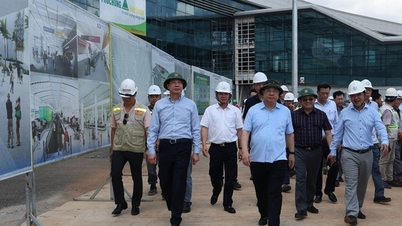
The 16th Provincial Party Congress has set the goal for the 2025-2030 term to build Son La province into a moderately developed province, a center for processing agricultural products in the Northern Midlands and Mountains region, a key tourism destination in the Northern Midlands and Mountains region and the Vietnam-Laos border region. This is a strategic goal in terms of scale and ranking in the new period. To achieve this, Son La must increase the investment-to-GRDP ratio, increase the density of enterprises, significantly improve its GRDP per capita ranking and the budget balance ratio, which is currently low compared to the general average, especially after the merger of the province into 34 provinces. It must also improve the quality and efficiency of the organizational structure and apparatus after the merger, accelerate the implementation and early completion of the expressway connecting Hoa Binh with Son La, promote administrative reform, and enhance provincial competitiveness.
Phan Duc Ngu
Source: https://sonla.dcs.vn/tin-tuc-su-kien/noi-dung/tinh-son-la-tam-voc-130-nam-5658.html
![[Image] Close-up view of the interchange connecting the two expressways and Long Thanh Airport.](https://vphoto.vietnam.vn/thumb/1200x675/vietnam/resource/IMAGE/2026/05/25/1779703378210_ndo_br_z7863716673926-224453a31600126cce10622af6290afd-4549-jpg.webp)
![[Image] Hanoi's urban life under the challenge of a "scorching hot" environment](https://vphoto.vietnam.vn/thumb/1200x675/vietnam/resource/IMAGE/2026/05/25/1779706979265_nang-nong-t5-2026-minh-duy-7-4636-jpg.webp)




































































Comment (0)