

Thirty years later, returning to this place, we see it undergoing and continuing to undergo a major transformation. But amidst these changes, one thing seems to remain unchanged: the human warmth of the mangrove forest.
1. I first visited Can Gio in late 1998. At that time, it seemed like very few people knew about or visited this place, even those originally from Saigon. Back then, the only way to get to this area was by ferry, specifically the Binh Khanh ferry.
The ferry back then always had a very distinctive smell: the smell of seafood, fish sauce, engine oil from the cabin, sweat from the passengers, and the sea breeze. The ferry engine hummed slowly, pushing the boat through the murky waters of the river mouth. But strangely, no one on the ferry was in a hurry.
On the first ferry to Can Gio that year, I met an elderly woman with white hair. In front of her was a small tray containing a few sticks of chewing gum and some packs of cigarettes. She walked from one end of the ferry to the other, slowly offering them to passengers. A friend in my group bought a stick of gum.
He asked the price, but she just smiled and said, "I only sell at the right price. Otherwise, the sea god will punish me." Later, I learned that the "sea god" she was referring to was the God of the South Sea - the whale god, the deity of the sea in fishermen's beliefs. From that moment, I understood that Can Gio is not just a piece of land. It is also a region of maritime culture.
In the early 2000s, due to the nature of my work, I often visited Monkey Island Park when the city began entrusting it to Saigontourist for tourism development. At Monkey Island Park, I met Mr. Tam "the backpacker," a former commando from the Rừng Sác forest. After the war, he stayed on as a security guard for the park. He had an old, rickety bicycle with no springs or brakes.
He said he didn't ride the bicycle far, just to cycle around in the forest, watching the monkeys to see if they were causing any trouble that day. After 1975, the monkey population here was once dwindling to just a few individuals. Mr. Tam and his colleagues gathered vegetables, fruits, and leftover rice to feed the monkeys in the forest to help rebuild the population. Now, tourists see hundreds of monkeys running and jumping around. Few people know about the quiet efforts of people like him behind this story.
One person who often accompanied the tourism development team in the early days was Colonel Le Ba Uoc, whom his colleagues affectionately called "Mr. Bay Rung Sac," the man who achieved resounding victories for the 10th Rung Sac Special Forces Regiment in the waterways south of Saigon during the years 1966-1975. After retiring, he traveled extensively, campaigning for the construction of the Rung Sac Martyrs Memorial Temple in Nhon Trach, Dong Nai.
On the day of the inauguration, Mr. Bay stood silently for a long time before saying, "I cried that day. My brothers and I finally have a place to remember." He also played a major role in recreating the Rừng Sác base amidst the mangrove forest of Cần Giờ – a place where visitors today can understand a part of the history of this land.
Another person I met who made a strong impression was Ms. Hai, who cooked rice for the monkeys. Every day, she cooked dozens of kilograms of rice for the monkeys. She would go to the market, light the fire, and call the monkeys by a very affectionate name – "little ones." They would flock to the kitchen, climb onto the roof, pull off the pot lids, and chatter loudly. But if the monkeys didn't show up one day, she would feel a sense of loss. "I feel sad if I don't see them causing trouble," she told me. There were many other simple yet generous people I met here.
Perhaps the soul of this land still lies within such simple people?
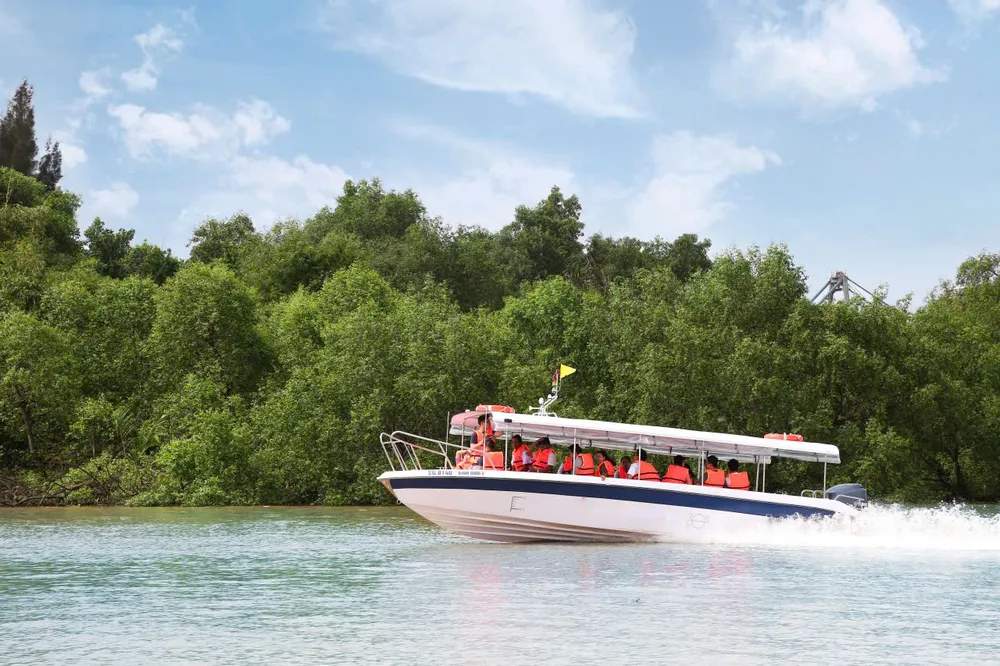
2. In recent years, I've often returned to Can Gio by speedboat, participating in river tourism exploration trips from the city center to Can Gio. We visited Vam Sat, where mangrove forests grow thick like a green wall, and then Thieng Lieng Island, a pristine area with sparkling white salt fields under the sun. These are two locations that are still very suitable for tourists who enjoy exploring Can Gio through waterway tourism.
Especially the afternoon scene, when the last rays of sunlight shine down on the salt fields, making the entire field glow like tiny mirrors. Watching the sun gradually set behind the mangrove forest, I suddenly thought that Can Gio is not only a tourist destination of the future but also a place that preserves a much-needed moment of tranquility for the city.
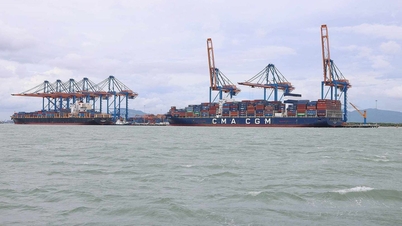
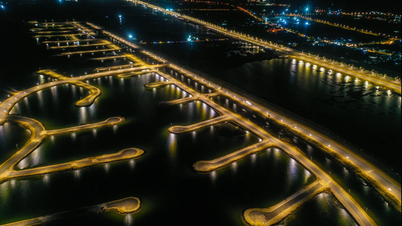
Can Gio today is entering a phase of preparation for major changes. The roads from the city to the area are now wider, both literally and figuratively. Tourist attractions have become, and will continue to be, more crowded. Coastal urban development projects are beginning to take shape, driven by affluent individuals seeking a new, convenient living space while still enjoying the marine and mangrove ecosystem.
The "face" of Can Gio has changed and will continue to change, but one thing remains constant: the feelings of visitors from afar, like myself, when they encounter and become familiar with this destination. And perhaps that is what gives Can Gio its soul – a once quiet land that is gradually becoming the gateway to the sea for Ho Chi Minh City.
Source: https://www.sggp.org.vn/tinh-vung-rung-duoc-can-gio-post849868.html

![[Photo] General Secretary and President To Lam presides over a working session with the Central Policy and Strategy Committee on the development of the materials industry.](https://vphoto.vietnam.vn/thumb/1200x675/vietnam/resource/IMAGE/2026/05/21/1779359935432_a3-bnd-3129-1412-jpg.webp)
![[Photo] National Assembly Chairman Tran Thanh Man working with the Standing Committee of the Law and Justice Committee](https://vphoto.vietnam.vn/thumb/1200x675/vietnam/resource/IMAGE/2026/05/21/1779378929214_ndo_br_1-4610-jpg.webp)























































Comment (0)