

Trusting people too much can sometimes be seen as a sin. Openly trusting and loving animals is sometimes dismissed as eccentric. But a hundred years ago or a hundred years from now, that mindset can still be "decoded," no matter how it's expressed…
1. Ten years before his death in Hue , around 1930, Phan Boi Chau wrote the book "Self-Judgment," in which he criticized himself for being "too honest," meaning excessively truthful.
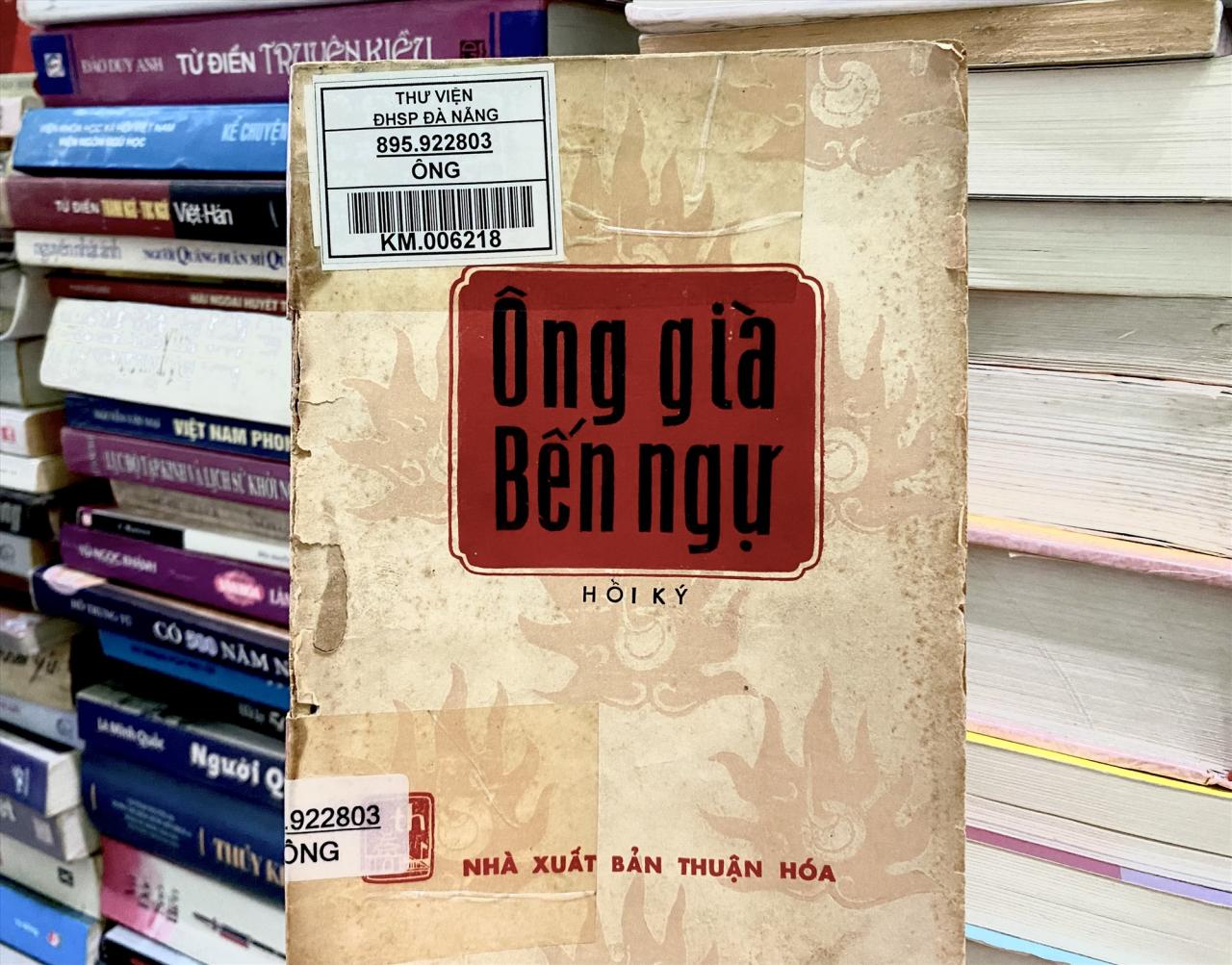
After writing it, Phan Bội Châu, "The Old Man of Bến Ngự," gave it to Mr. Mính Viên Huỳnh Thúc Kháng for safekeeping. This detail was recorded by Lạc Nhân Nguyễn Quý Hương, a native of Tam Kỳ and the editorial secretary of the Tiếng Dân newspaper, in his memoir "The Old Man of Bến Ngự" (Thuận Hóa Publishing House, 1982).
Mr. Nguyen Quy Huong said that Mr. Phan's self-criticism was "excessive," because he believed that there was no one in life who could not be trusted. "He considered this the sin of 'lacking strategic thinking and political acumen,' and history has proven his words. His trusting nature not only ruined great things, but he himself was also a direct victim" (Ibid., page 130).
The editor-in-chief of the Tiếng Dân newspaper cited a few more stories to illustrate how misplaced trust in Phan Bội Châu was. After the General Uprising in Huế, a man was arrested and confessed that he had previously gone back and forth to Phan Bội Châu's house on Bến Ngự slope primarily to spy and relay information to the French.
Who was this spy? He was a man of great literary talent from the capital city, a scholar who had passed the imperial examinations and whose calligraphy was used to write all the couplets in the royal palace and many other documents. He frequently visited Mr. Phan's house, where Mr. Phan held him in high regard and welcomed him warmly; sometimes he even stayed overnight to chat…
Adding to the "excessive truthfulness" of the story, Phan was arrested in Shanghai (China) before being brought back to Hanoi for trial, where he was sentenced to life imprisonment. The informant who tipped off the French to arrest Phan was someone he had raised in his home since Hangzhou, a former graduate with a bachelor's degree, and fluent in French. Based on this information, the French ambushed him at the train station, waited for him to disembark and walk, then forced him into a car and drove him into the French concession…
2. Ms. Le Thi Ngoc Suong, the elder sister of poet Bich Khe, who was involved in revolutionary activities in Quang Ngai from the Democratic Front movement led by the Indochinese Communist Party, also recounted in her memoir "The Old Man of Ben Ngu" an interesting story about a reunion with Mr. Phan Boi Chau.
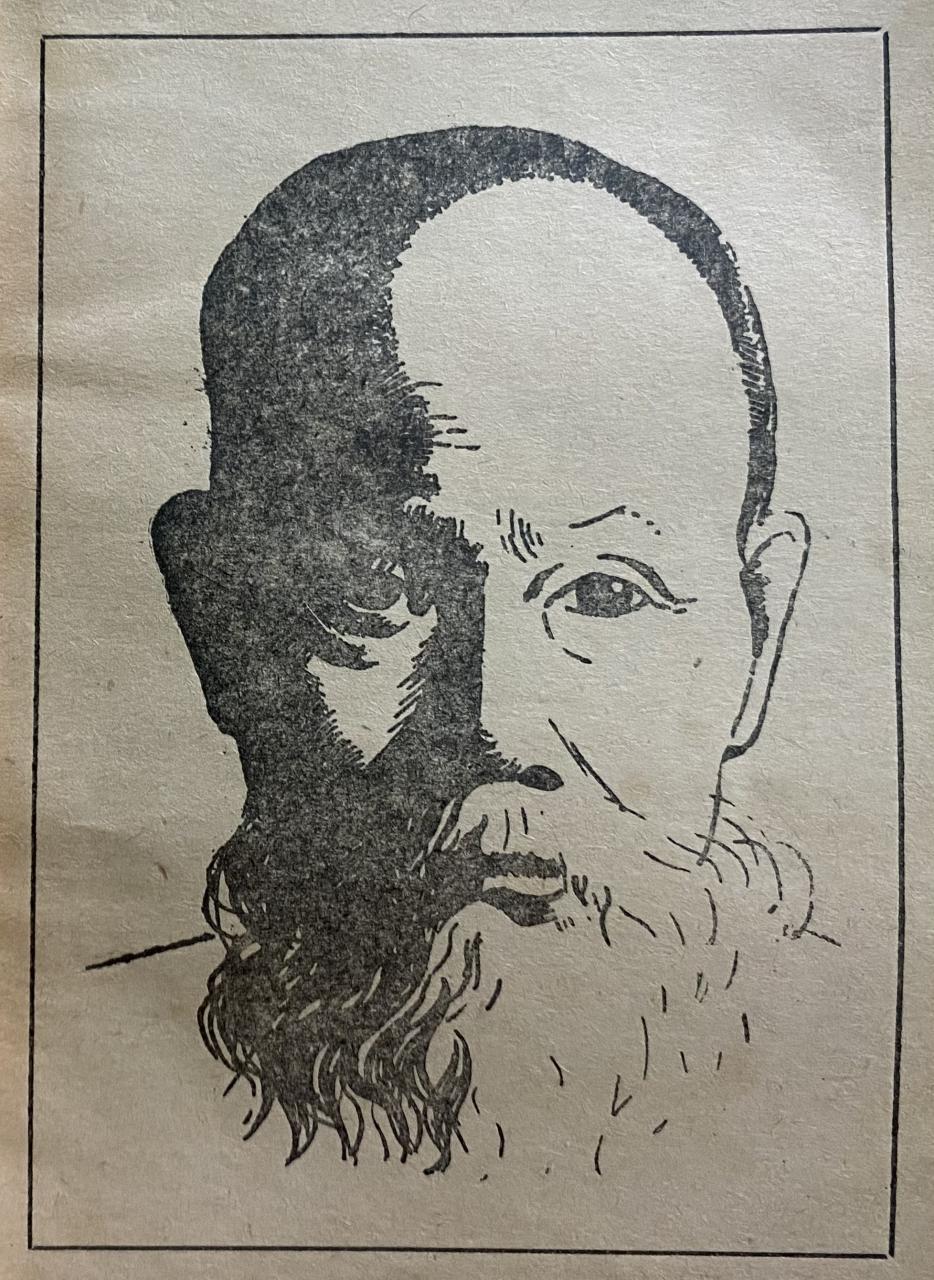
About five years earlier, while still in Hue, the young woman had visited the house on Ben Ngu slope many times to talk with Mr. Phan, but when she returned to Phan Thiet to open a school with the aim of gathering her comrades, she was arrested by Phan Thiet secret police and taken to Quang Ngai, where she was held in solitary confinement for nearly two years… As for this reunion, she remembers that after the conversation, when seeing her off at the gate, Mr. Phan pointed out to Ms. Suong the grave of his “loyal dog,” which had a proper tombstone.
“This dog is loyal to its owner; I love it like a friend. Although it is an animal, I don’t treat it like one. Yet there are people who don’t know their homeland, their own flesh and blood, who day and night lurk around, arresting our relatives and handing them over to their masters to be dismembered and torn apart!” Mr. Phan said to Mrs. Suong.
Later, Ms. Suong was fortunate enough to spend more time with Mr. Phan, including his final days, and she recounted in detail the moment of his burial in the pouring rain. Therefore, she likely had quite a thorough and accurate understanding of Mr. Phan's "loyal dog"...
Now, Phan's "loyal dogs" - Vá and Ky - are no longer unfamiliar. The tombstone for these "loyal dogs" was erected by Phan himself. In front of Vá's grave, there's not only a tombstone with a few Chinese characters interspersed with Vietnamese script: "Brave and loyal dogs."
"The 'tomb-patching' monument," was erected alongside a stele inscribed with lines of praise, as if written for a kindred spirit: "Because of their courage, they risked their lives to fight; because of their righteousness, they remained loyal to their master. It's easy to say, but difficult to do; if that's true for humans, how much more so for dogs?"
"Oh! This dog, Vá, possessed both virtues, unlike someone else, with a human face but a beastly heart. Thinking of that pains me; I erected a tombstone for him." Similarly, Ky has a tombstone inscribed with "Ky's tombstone, a man of wisdom and virtue" (missing the word "dog"), and another tombstone with lines seemingly dedicated to a close friend: "Those with a little virtue often lack wisdom; those with a little wisdom often lack virtue. To possess both wisdom and virtue is truly rare; who would have thought Ky would possess both..."
3. When people saw Mr. Phan erecting a monument for his "loyal dog," some complained that he was being too nosy, treating dogs like people...
This story was recounted by Mr. Phan himself in an article published in a newspaper in 1936. The article mentions the incident of Vá's dog "returning to the land of dogs" in the year of Giáp Tuất (1934), due to illness. "I felt sorry for it. I built a grave for it. The grave is one meter high and wide, near the foot of my birth tomb. On top of the grave, I planted a tombstone about one meter high."
The tombstone was inscribed with five characters: "The Tomb of the Righteous and Valiant Dog," and the words "Vá" were written below the word "dog"... After I finished, a guest came to visit. The guest scolded me, saying: "Why are you making such a fuss over a dead dog? You've already built a grave and erected a tombstone with inscriptions; isn't that too much trouble? Or do you consider dogs to be like people?" Mr. Phan wrote in issue 14 of the "Central Vietnam Weekly."
It's been exactly 90 years since Vá passed away. Coincidentally, in the early days of 2024, there's been a surge in the popularity of pets among young people, who cherish them like children. They even hold funerals for their deceased dogs and cats, and there are even funeral and cremation services available… Sentiments change with time, and the “many affairs” of the 21st century are even more different from those of the early 20th century, but surely, to some extent, the affection remains the same…
Source
![[Photo] Commemorating the unwavering friendship between Vietnam and Laos](/_next/image?url=https%3A%2F%2Fvphoto.vietnam.vn%2Fthumb%2F1200x675%2Fvietnam%2Fresource%2FIMAGE%2F2026%2F01%2F27%2F1769518372051_ndo_br_1-jpg.webp&w=3840&q=75)
![[Photo] The General Secretary attends the groundbreaking ceremony for the construction of the Truong Ha Primary and Secondary Boarding School.](/_next/image?url=https%3A%2F%2Fvphoto.vietnam.vn%2Fthumb%2F1200x675%2Fvietnam%2Fresource%2FIMAGE%2F2026%2F01%2F28%2F1769604498277_vna-potal-tong-bi-thu-du-le-khoi-cong-xay-dung-cong-trinh-truong-pho-thong-noi-tru-tieu-hoc-va-trung-hoc-co-so-truong-ha-8556822-jpg.webp&w=3840&q=75)


![OCOP during Tet season: [Part 3] Ultra-thin rice paper takes off.](/_next/image?url=https%3A%2F%2Fvphoto.vietnam.vn%2Fthumb%2F402x226%2Fvietnam%2Fresource%2FIMAGE%2F2026%2F01%2F28%2F1769562783429_004-194121_651-081010.jpeg&w=3840&q=75)

![OCOP during Tet season: [Part 2] Hoa Thanh incense village glows red.](/_next/image?url=https%3A%2F%2Fvphoto.vietnam.vn%2Fthumb%2F402x226%2Fvietnam%2Fresource%2FIMAGE%2F2026%2F01%2F27%2F1769480573807_505139049_683408031333867_2820052735775418136_n-180643_808-092229.jpeg&w=3840&q=75)
![OCOP during Tet season: [Part 1] Ba Den custard apples in their 'golden season'](/_next/image?url=https%3A%2F%2Fvphoto.vietnam.vn%2Fthumb%2F402x226%2Fvietnam%2Fresource%2FIMAGE%2F2026%2F01%2F26%2F1769417540049_03-174213_554-154843.jpeg&w=3840&q=75)



Comment (0)