

A source of "double income" from intercropping.

The cashew orchard, nearly 5 hectares in size, belonging to Mr. Huynh Phuoc Long's family in Hamlet 2 (Bu Dang Commune) is now over 25 years old. In the early days of their livelihood, Mr. Long's family cultivated only cashew trees, resulting in extremely unstable income. In years with favorable weather and a good harvest, the income was barely enough to cover family expenses. Conversely, in years with erratic weather leading to crop failure, the family almost suffered losses, with income insufficient to cover expenses, causing hardship.
In recent years, Mr. Long has proactively researched intercropping models in various localities to find new approaches to increase economic efficiency per unit area. Through his research, Mr. Long realized that cocoa trees are very suitable for the local soil and climate, so he boldly decided to intercrop them in his cashew orchard. Mr. Huynh Phuoc Long shared that initially, his family only cultivated cashew trees like other households in the area. However, realizing that the annual income was unstable and the economic value was not high, he researched and learned to switch to an intercropping model. This helped his family maximize land use, create a double income stream, and increase profits many times compared to monoculture farming.
To date, with approximately 5 hectares of land systematically planned using an intercropping model of cashew, cocoa, and coffee, Mr. Long's family has earned hundreds of millions of dong more each year than before. Specifically, each cashew harvest yields nearly 10 tons. In addition, the cocoa yield also brings in a significant income, helping to dramatically increase the total economic value per unit area compared to the past. "Intercropping offers great advantages in irrigation and fertilization. We can combine the care of different crops at the same time. Especially, the harvesting times of cashews, cocoa, and coffee do not overlap, allowing the family to manage their time effectively, ensuring smooth operations and saving a lot on labor costs," Mr. Long added.
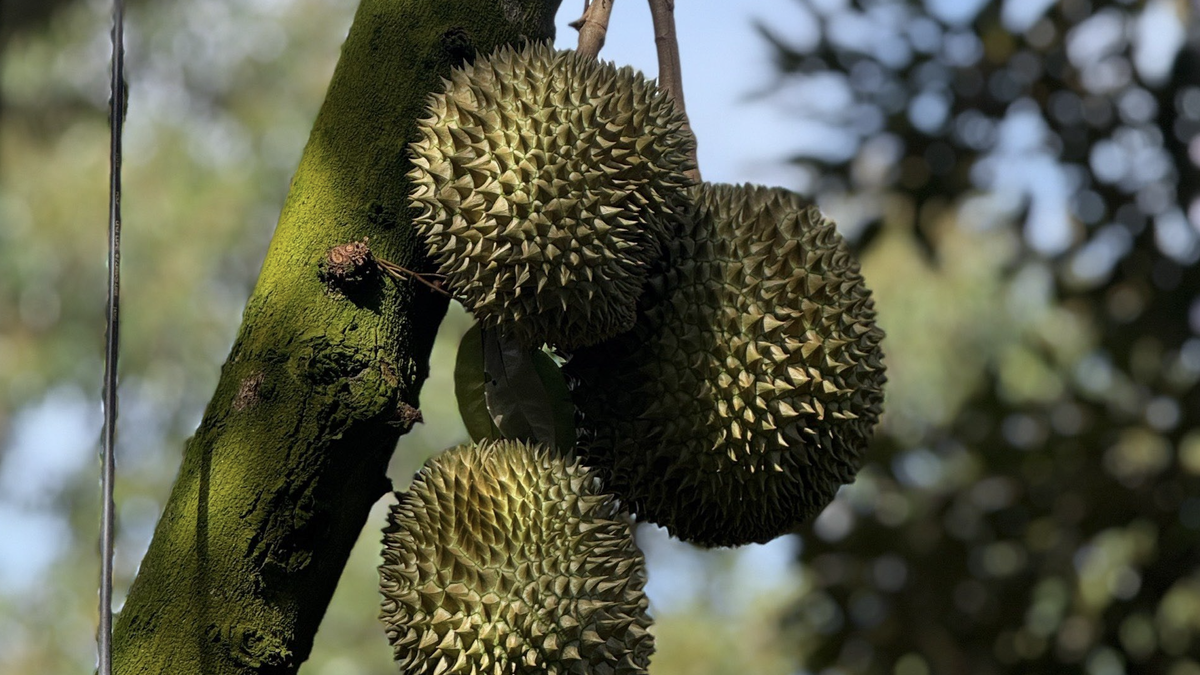
Meanwhile, in Dang Hung village (Bu Dang commune), the innovative farming model of Mr. Nguyen Ngoc Thuyen's family is also becoming a shining example of agricultural economic thinking. On an area of more than 1 hectare of cultivated land, instead of choosing monoculture of durian, which has high economic value but a long basic development time, Mr. Thuyen proactively chose to intercrop with coffee trees.
Intercropping is not a coincidence but the result of actively visiting and learning from successful models in neighboring localities. According to Mr. Thuyen, durian trees require many years of care before yielding a primary income, while the gaps between rows of durian trees in the early years are very large. Leaving this area uncultivated not only wastes land but also creates conditions for weeds to grow, increasing weeding costs. Coffee, on the other hand, grows quickly, and after only about two years of care, it begins to yield a harvest, generating immediate income to cover the costs of fertilizers, pesticides, and labor.
Mr. Nguyen Ngoc Thuyen shared that, with limited land available, maximizing the use of vacant land to increase profits is essential. By intercropping coffee in durian orchards, we not only gain a significant additional income per unit area but also solve the investment capital problem. Income from coffee provides the family with funds to reinvest in durian trees, ensuring stable living expenses and alleviating some of the borrowing and worries during the waiting period for the durians to reach harvest age.
According to Mr. Nguyen Minh Chau, Vice Chairman of the Farmers' Association of Bu Dang commune, farmers in the area have proactively implemented intercropping models. Following the Farmers' Association's guidance, the intercropping model under cashew trees is showing very positive results. This combination not only creates a double income stream on the same area but also helps to maximize space utilization and utilize fertilizers and irrigation water to support each other among the crops.
Sustainable organic polyculture
Currently, many farmers are not only focusing on intercropping but also prioritizing organic farming for sustainable development. Mr. Huynh Phuoc Long's cashew and cocoa intercropping garden in Hamlet 2 (Bu Dang commune) demonstrates the suitability of organic farming under cashew trees. According to Mr. Long, if only cashew trees were grown as a monoculture, each hectare would yield about 1.2 tons with a modest income of just over 30 million VND, leaving negligible profit after deducting expenses. However, by switching to organic intercropping, total income can potentially double or triple depending on the type of tree, without losing additional land area. In particular, the care and irrigation process directly benefits the cashew trees, promoting flowering and achieving better yields.
In particular, the organic polyculture farming model of farmers in Bu Dang commune is closely linked to the African earthworm (ANC) farming model. The advantage of this earthworm species is its ability to consume a variety of agricultural by-products such as buffalo and cow manure, cashew nuts, etc., helping to reduce input costs and protect the environment. Mr. Luong Van Hau, owner of Phuc Hau Earthworm Farm in Duc Loi village (Bu Dang commune), shared: "Driven by the need for farmers to switch from inorganic to clean organic fertilizers, I decided to start a business with African earthworms (ANC) to provide an environmentally friendly fertilizer solution. This ANC earthworm farming model produces fertilizer and other clean organic fertilizer products for farmers."
Currently, not content with just raising earthworms, Mr. Luong Van Hau has successfully researched and developed 15 lines of microbial products such as hydrolyzed earthworm extract, earthworm fertilizer, organic potassium, etc. To ensure credibility, Mr. Hau always conducts rigorous testing at his family farm before releasing the products. Before mass sales, the products must be tested on his own vegetables and coffee plants, then evaluated by local farmers before being launched onto the market.
According to Nguyen Minh Chau, Vice Chairman of the Farmers' Association of Bu Dang commune, the products from Mr. Luong Van Hau's worm farm aim towards sustainable and safe organic farming. Practical use has shown good product quality, encouraging farmers to expand this practice to gradually replace chemical fertilizers. In the coming time, the local government and Farmers' Association will continue to act as a bridge, encouraging people to boldly convert inefficient agricultural land to organic intercropping models. This conversion will be implemented in a phased manner, based on careful calculations of soil and climate to ensure the effective growth of crops.
Currently, although intercropping multiple crops on the same plot of land is not yet widespread, the intercropping model like the one in Bu Dang commune is bringing increased income to farmers. The shift in farmers' mindset, along with the support of the local government, is opening up a new direction for more sustainable agricultural development.
Source: https://baotintuc.vn/kinh-te/toi-uu-hoa-dien-tich-bang-mo-hinh-da-canh-huu-co-20260304065135474.htm


![[Photo] General Secretary and President To Lam presides over a meeting on preparations for the review of one year of operation of the three-tiered government system.](https://vphoto.vietnam.vn/thumb/1200x675/vietnam/resource/IMAGE/2026/06/02/1780391821195_a1-bnd-4595-9717-jpg.webp)














































Comment (0)