

Complete the handover no later than June 30th.
The Ho Chi Minh City People's Committee has recently issued a document guiding the arrangement, allocation, and handling of public offices and assets during the restructuring of administrative units at all levels. Accordingly, agencies and units are urged to promptly develop or supplement comprehensive asset arrangement, allocation, and handling plans into their administrative unit restructuring and reorganization projects, submitting them to the Department of Internal Affairs for compilation and submission to the Ho Chi Minh City People's Committee for approval. The division, allocation, arrangement, and handling of assets must be consistent with the management and use of the assets, their nature and characteristics, maximizing the utilization of existing asset resources while also considering a long-term vision to serve long-term goals.
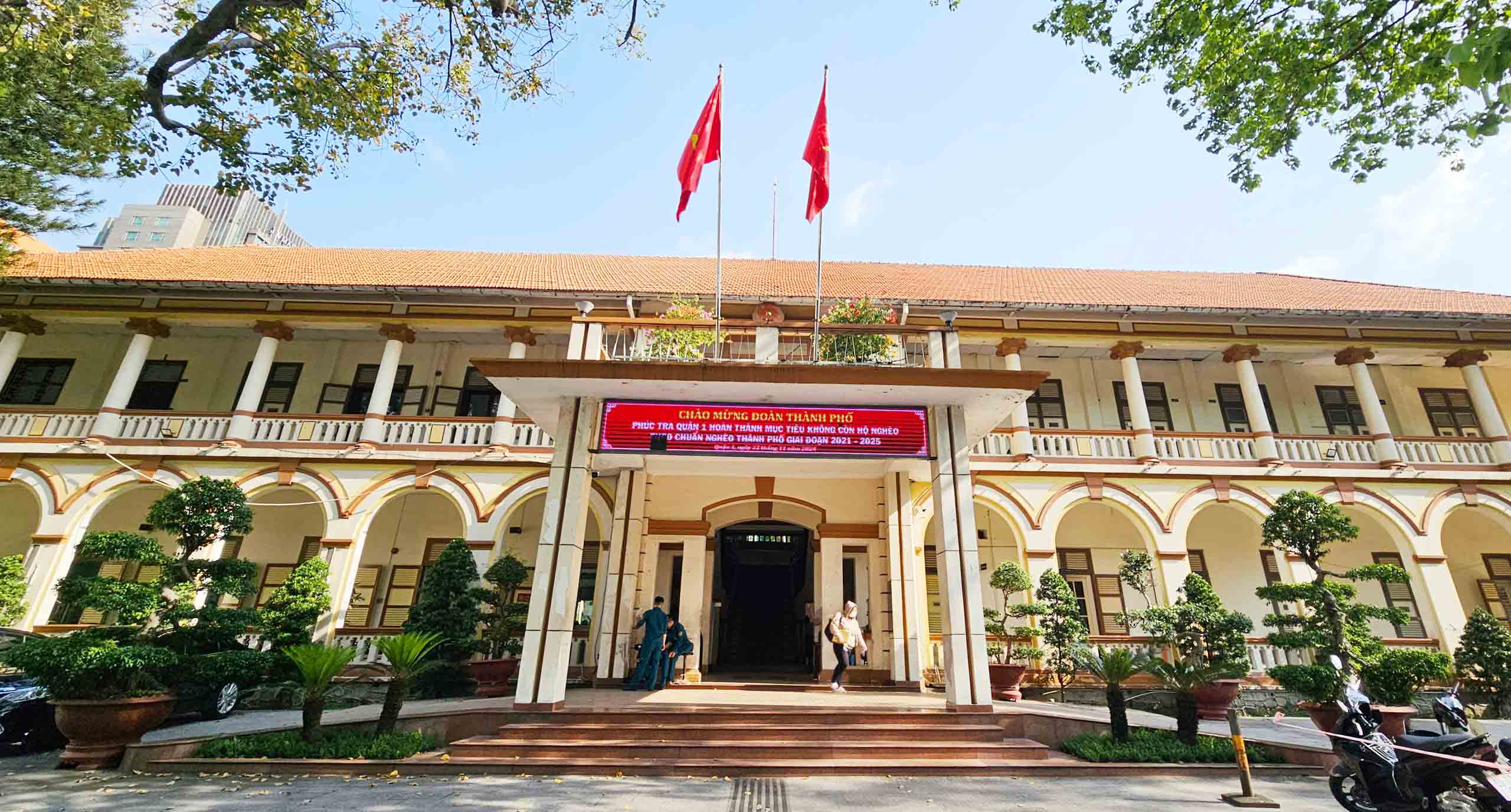
At the district level, subordinate administrative agencies shall hand over their offices, public assets, and records and documents to competent agencies, organizations, and units, ensuring uninterrupted management, preventing asset loss, and avoiding negative impacts on state management and public service provision. Based on the approved plan for the distribution, allocation, arrangement, and handling of assets managed by the district level, the agencies and units shall carry out the handover and acceptance of assets, completing the process no later than June 30th.
From July 1st, the People's Committee of Ho Chi Minh City will inherit all the powers and responsibilities of Ho Chi Minh City, Ba Ria-Vung Tau province, and Binh Duong province before the merger. Regarding the properties and land transferred to the Center for Housing Management and Construction Inspection (under the Department of Construction) and the Center for Land Fund Development (under the Department of Agriculture and Environment), Ho Chi Minh City will consider and decide on the plan and methods for handling and utilizing them, ensuring that all properties and land are used and exploited, avoiding vacancy and waste.
Ho Chi Minh City emphasizes that the conversion of land use functions, adjustments to land use planning, construction planning, and other plans and projects must be carried out in accordance with regulations. Regarding land and buildings belonging to central government ministries and agencies, if the ministry/agency and the Ho Chi Minh City People's Committee have agreed on the exchange or relocation of office buildings or operational facilities and immediate action is needed, the handover and acceptance should be temporarily carried out to ensure timely use.
New wards and communes are using 2-3 headquarters buildings.
According to surveys, many districts and communes in Ho Chi Minh City have announced the new office locations for their wards and communes, allowing residents to be aware and contact them starting from July 1st. Most of the new wards utilize 2-3 offices for Party and mass organization agencies, ward People's Committees, and public administrative service centers. For example, Saigon Ward uses the current District 1 People's Committee building at 45-47 Le Duan Street as the ward Party Committee, People's Council, and People's Committee office, while the Fatherland Front and other mass organizations are located at 29 Nguyen Trung Ngan Street (currently the Ben Nghe Ward Party Committee and People's Committee office). Similarly, in District 6, the District Party Committee and People's Committee building is used as the office for Binh Tien Ward.

Speaking with a reporter from Thanh Nien newspaper, the leader of the District 6 People's Committee said that the district has so far arranged office space for the four new wards, especially the public administrative service center. Small offices and premises no longer needed have been proposed for transfer to the Ho Chi Minh City level for management. Other facilities such as computers and office equipment have also been prepared and distributed evenly to each ward to ensure they are ready to operate immediately. In addition, the district has reassigned tasks to civil servants expected to work in the new wards to help them familiarize themselves with the work. "To date, the district has conducted two trial runs of the two-tiered government organizational model, and everything has gone smoothly," the leader of the District People's Committee added.
In Binh Tan District, the local authorities stated that they have completed the inventory and proposed a plan for handling and utilizing public assets and public land and property addresses after the reorganization, in preparation for transfer to the competent authority. Simultaneously, the local authorities are surveying the current state of existing offices and proposing facilities and equipment to support the work of the five newly reorganized wards.
Specifically, Tan Tao Ward only has one People's Committee office, Tan Tao A Ward, with a construction area of 833 m2 and a floor area of over 2,100 m2, which does not meet the necessary conditions for carrying out activities. Therefore, Binh Tan District has allocated this location to serve as the headquarters of the Tan Tao Ward People's Committee and Tan Tao Ward Police Station, with approximately 160 people; at the same time, a portion of the Ho Chi Minh City Police headquarters in the district is being borrowed for the Ward Party Committee and political and social organizations to conduct their work while awaiting the construction of a new headquarters. The Binh Tan District People's Committee proposes building a new headquarters for Tan Tao Ward in the period 2026-2030 on a 0.6-hectare plot of land facing Tran Van Giau Street, which will serve as the office for the Ward Party Committee, People's Committee, and Vietnam Fatherland Front Committee.
During working sessions on the organization of a two-tiered local government structure, the Chairman of the Ho Chi Minh City People's Committee, Nguyen Van Duoc, proposed that, in the short term, existing offices, including those of the inspection, procuracy, and police departments, be utilized to accommodate the new wards and communes. Subsequently, Ho Chi Minh City will develop a comprehensive plan, compiling the needs of each ward, commune, and sector, and balancing the available public land to invest in building new offices, ensuring sufficient workspace for officials and civil servants.
How will the healthcare sector organize things?
The Ho Chi Minh City Department of Health has also recently sent a new document to relevant departments, agencies, and units requesting feedback on the draft submission, draft plan, and draft decision of the Ho Chi Minh City People's Committee regarding the approval of the plan for rearranging and reorganizing district and county health centers, Thu Duc City health stations, and ward, commune, and town health stations when implementing a two-tiered local government system.
The Ho Chi Minh City Department of Health has requested feedback from relevant units on the plan to reorganize district and county health centers, as well as ward and town health stations, in the context of implementing a two-tiered local government system. Accordingly, 22 health centers under the People's Committees of districts and counties in Thu Duc City will become 22 regional health centers under the management of the Department of Health, providing services across inter-communal and inter-ward areas. After reorganization, these regional health centers will perform the functions and tasks of health centers without inpatient beds. Therefore, health centers with inpatient beds in Districts 3, 5, 10, and Can Gio District will transfer their inpatient examination and treatment functions to general hospitals or specialized hospitals in those areas.
Simultaneously, Ho Chi Minh City reorganized 273 ward, commune, and town health stations into 102 ward and commune health stations under the direct management of regional health centers, named after the reorganized wards and communes. Each new ward and commune health station is equipped with additional health points to enhance access to primary healthcare services for residents. The premises of these health points are reused from the premises of the old ward and commune health stations that were not selected as new ward and commune health stations, or are provided with new premises.
Regarding personnel, the Ho Chi Minh City Department of Health stated that the number of assigned staff for district and county health centers and Thu Duc City in 2025 is 5,168 people (2,510 people for health stations). The total current staff of the health centers is 4,789 people, of which 2,651 are in the health center sector and 2,138 are in the health station sector. All of this personnel will be transferred to the Department of Health in their current state for allocation to the corresponding regional health centers and health stations.
All officials and employees at the medical center will be reviewed and reassigned to align with the organizational structure, functions, and responsibilities of the regional medical center. This reassignment will not affect the benefits, policies, rights, and legitimate interests of officials and employees; nor will it increase the number of salaried employees funded by the state budget, ensuring a streamlined organizational structure and improved operational efficiency.
According to the same document, the People's Committees of districts and communes, including Thu Duc City, are responsible for handing over the health centers and health stations in their current state, including headquarters, assets, finances, personnel, and assigned staff, to the Ho Chi Minh City Department of Health before July 1st.
Source: https://ttbc-hcm.gov.vn/tp-hcm-sap-xep-tru-so-voi-tam-nhin-dai-han-1018986.html
























































































Comment (0)