Challenging but possible
At the working session between General Secretary and President To Lam and the Standing Committee of the Ho Chi Minh City Party Committee on the afternoon of April 27, Ho Chi Minh City Party Secretary Tran Luu Quang affirmed the city's determination to achieve the highest possible socio -economic goals to be worthy of being a growth pole of the country. In particular, the city will strive to reach the target of 1 trillion VND in budget revenue. To achieve this goal, Party Secretary Tran Luu Quang stated that the city has developed a feasible plan to increase revenue by approximately 20% compared to 2025, projected to reach 964,000 billion VND, relying not only on land revenue but also on carefully utilizing other resources to achieve the target.
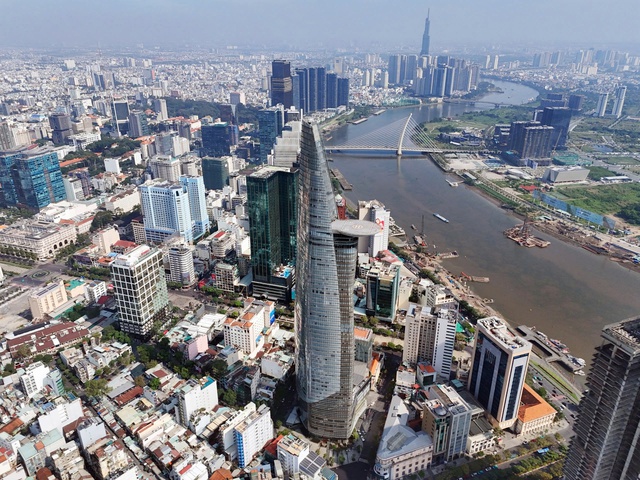
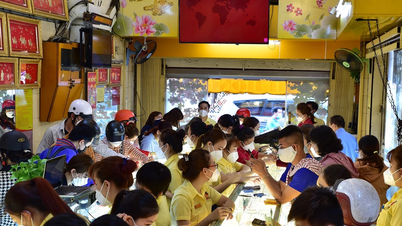
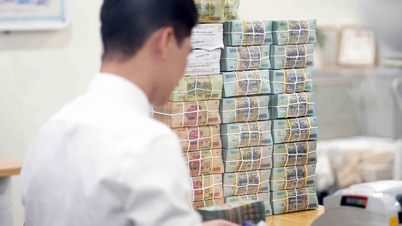
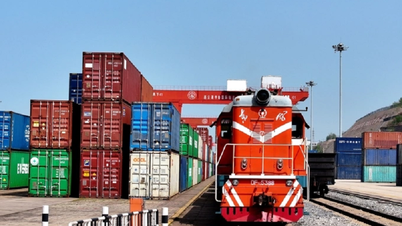
Revenue from financial services, seaports, logistics, trade, etc., plays a crucial role in helping Ho Chi Minh City achieve its target of 1 trillion VND in budget revenue this year.
Photo: Ngoc Duong
In fact, Ho Chi Minh City has consistently led the country in budget revenue, even during times of economic hardship. Remember in 2021, the Covid-19 pandemic was complex and prolonged, and Ho Chi Minh City was identified as the most severely affected. This was also the first time in history that the city's Gross Regional Domestic Product (GRDP) growth rate slowed more significantly than the national growth rate. However, in 2021, the city's state budget revenue still met and exceeded the target by 4.56%.
Economist Dr. Do Thien Anh Tuan (lecturer at the Fulbright School of Public Policy and Management Vietnam) assessed Ho Chi Minh City's target of 1 trillion VND in budget revenue as extremely challenging, but not impossible. By 2025, budget revenue is projected to exceed 800,000 billion VND. In the first quarter of this year alone, the city's budget revenue reached over 203,500 billion VND, equivalent to 32.5% of the annual forecast and a 20.6% increase compared to the same period last year. According to Dr. Do Thien Anh Tuan, these results create a positive foundation for the city to set higher targets, commensurate with its role as the economic locomotive of the country.
"This goal can only become a reality if the city simultaneously achieves several key conditions, including truly breakthrough economic growth; positive improvements in production, business, consumption, investment, and import/export; and more effective budget revenue management, especially in combating revenue loss and transfer pricing. More importantly, the Central Government needs to support Ho Chi Minh City's development breakthroughs, boldly decentralize power and grant the city greater autonomy, in line with the directives of the General Secretary and President at the recent working session. If the city is given sufficient authority, institutional space, and tools to act, I believe the target of 1 trillion VND and even more is entirely feasible," Mr. Do Thien Anh Tuan affirmed.
Dr. Tran Quang Thang, Director of the Institute of Economics and Management of Ho Chi Minh City, also commented that the budget revenue target of 1 trillion VND is unprecedented in the city's development history, but it is well-founded and reflects Ho Chi Minh City's expectation of becoming the number one growth pole of the country in the new phase. According to Dr. Thang, the budget revenue results in 2025 are an important springboard for the locality to enter the next development phase with higher demands and expectations, worthy of its role as the economic locomotive of the country. The target of 1 trillion VND in budget revenue will be achievable if the budget revenue collection rate continues to be maintained as in the first month of the year.
(13%/month); economic growth reached double digits as targeted; solutions to combat revenue losses, reform procedures, and promote investment were implemented decisively and effectively; the Central Government continued to provide maximum support through special mechanisms to best facilitate new development opportunities...
From what sources will the revenue increase?
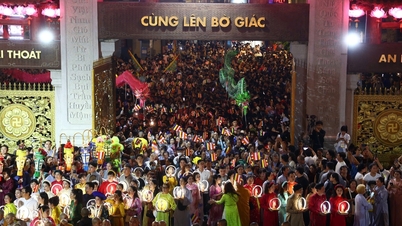
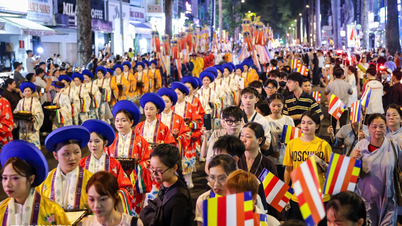
Dr. Do Thien Anh Tuan analyzed: Ho Chi Minh City currently has a very large scale, nearly 14 million people with one of the highest purchasing power in the country; a strong force of domestic and foreign businesses; and many financial services, e-commerce, digital economy... with great potential to contribute. To increase revenue, Ho Chi Minh City needs to better exploit revenue sources associated with the unique advantages of a megacity and major economic center such as port services, transportation, import and export, financial services, tourism , cultural industries and night-time economy.
"Another important direction is to exploit public assets and urban infrastructure through transparent market mechanisms, via leasing, concessions, and TOD (Transit-Oriented Development). For a megacity like Ho Chi Minh City, the central government should consider allowing a pilot real estate tax mechanism according to a suitable roadmap, drawing on the experience of developed cities in the region and around the world," proposed Dr. Do Thien Anh Tuan. According to him, unlike revenue from land sales, real estate tax is a stable, long-term source of revenue directly linked to the urbanization process. Experience from other countries shows that this is the most important source of revenue for cities, and also the tax with the best vertical equity in the tax system.
Dr. Tran Quang Thang suggested that Ho Chi Minh City's economic structure has shifted strongly towards services, accounting for over 60% of total revenue, thus requiring the expansion of revenue sources from this sector. For example, revenue from the International Financial Center, where financial and technology corporations are expanding their operations; revenue from logistics services, seaports, and import/export is also significant, as Ho Chi Minh City currently accounts for approximately 40% of the country's total import and export turnover. When the Can Gio International Transshipment Port becomes operational, Ho Chi Minh City could become a leading logistics center in Southeast Asia. Similarly, revenue from the production and export of high-tech products and innovation is crucial. The Ho Chi Minh City High-Tech Park alone contributes over $23-25 billion USD in export value annually, a stable and steadily growing source of revenue. Finally, revenue from tourism, culture, and the night-time economy could increase, given that tourism spending in Ho Chi Minh City is consistently the highest in the country...
Mr. Do Thien Anh Tuan also acknowledged that the biggest challenge for Ho Chi Minh City is to increase budget revenue to meet the set target while simultaneously avoiding harming the growth of the economy. On the positive side, high economic growth will expand the tax base, naturally and sustainably increasing revenue. Conversely, if budget pressure leads to increased revenue through excessive taxation or increased compliance costs for businesses, fiscal policy could weaken the growth momentum, thereby undermining the foundation of budget revenue in the medium and long term. Furthermore, Ho Chi Minh City's highly open economy is easily impacted by external uncertainties such as geopolitical conflicts in the Middle East, which drive up fuel prices, escalate transportation and insurance costs, and increase the price of imported goods. These factors can increase production costs, narrow business profit margins, slow consumption, and consequently reduce tax revenue. If energy prices continue to rise or remain high, the city will face a double impact: inflationary pressure and a decline in growth momentum.
The city should focus on combating tax evasion, transfer pricing, fraud, and tax avoidance, while simultaneously reforming procedures, removing obstacles to business operations, releasing stalled projects, accelerating the disbursement of public investment, improving the business environment, and supporting the development of the private sector. Once businesses become stronger, market demand expands, and economic activities become more vibrant, budget revenue will naturally increase sustainably.
Dr. Do Thien Anh Tuan, Fulbright School of Public Policy and Management Vietnam
Source: https://thanhnien.vn/tphcm-tang-thu-o-dau-de-dat-1-trieu-ti-dong-18526042819572973.htm




















































































Comment (0)