

On May 17, the World Health Organization (WHO) officially declared the outbreak of Ebola Bundibugyo virus in the Democratic Republic of Congo and Uganda a public health emergency. This is considered the highest alert level from the WHO for a health event with the potential to spread across borders, requiring countries to enhance their response and surveillance capabilities.
Following this information, on May 19th, the Ho Chi Minh City health sector announced that it had urgently activated disease surveillance and prevention measures at border gates to prevent the risk of Ebola entering the city – the country's largest international trade hub with a very large daily influx of people.
According to the Ho Chi Minh City Department of Health, although the WHO has not yet recommended imposing restrictions on international trade or travel due to insufficient scientific basis and potential negative impacts on the socio -economic situation, preventive health units must absolutely not be complacent or negligent in the face of this dangerous disease threat.
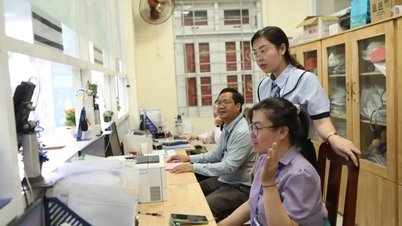
The Ho Chi Minh City Center for Disease Control (HCDC) has been instructed to continue tightening surveillance at international border gates through multiple simultaneous measures. Specifically, medical quarantine personnel will intensify observation of unusual health symptoms in incoming travelers, thoroughly investigate epidemiological factors, travel history, and stay history in areas with outbreaks.
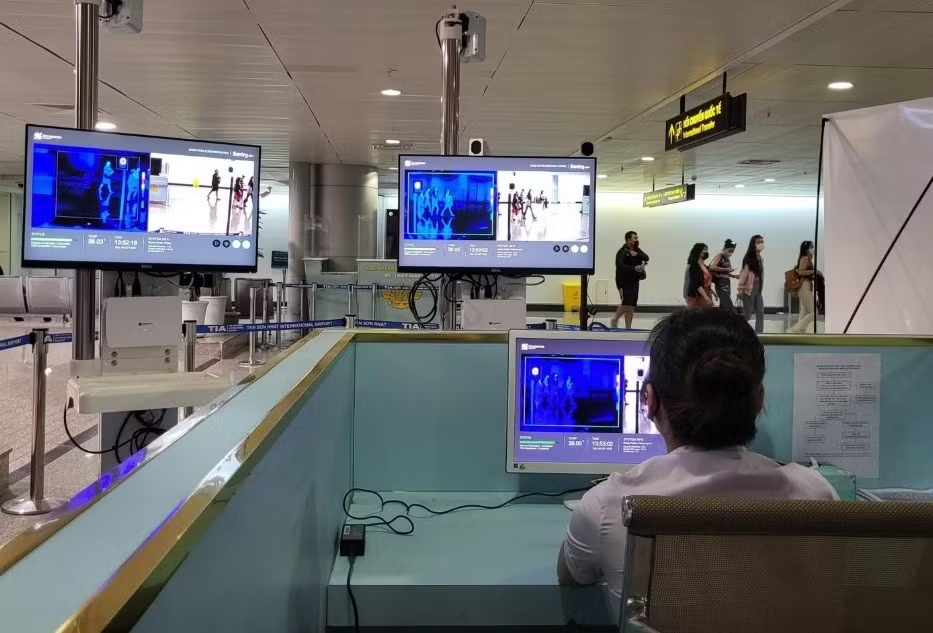
The city's health sector is also working closely with aviation, maritime, and international health quarantine units to detect suspected Ebola cases early at entry points. Simultaneously, procedures for handling, isolating, and safely transporting suspected cases have been prepared to respond should an emergency arise.
According to experts, early detection of suspected cases is a key factor in current border surveillance activities. Ebola is a dangerous infectious disease with a high mortality rate, transmitted through direct contact with blood, bodily fluids, or contaminated objects of infected individuals.
The WHO also recommends that those in close contact with a confirmed case should be monitored for 21 days and limit international travel during this period. For confirmed cases, discharge or travel is only permitted after at least two consecutive negative test results, taken at least 48 hours apart, to ensure infection prevention and control.
In addition to focusing on border crossings, Ho Chi Minh City's health sector is also simultaneously reviewing the response capacity at medical facilities. Training and updating procedures for infection control, the use of personal protective equipment, and the handling of suspected cases continue to be implemented to ensure that hospitals are ready to receive, isolate, and handle situations when necessary.
The Ho Chi Minh City Department of Health stated that it will continue to direct the HCDC to regularly update the latest recommendations from the WHO and the Ministry of Health , and continuously assess risks to implement appropriate response plans based on the actual situation.
According to the WHO, countries are divided into three risk groups to apply corresponding response measures. For countries currently experiencing outbreaks, such as Congo and Uganda, the WHO requires activating national disaster management mechanisms, establishing Emergency Operations Centers, implementing exit checks at border crossings, and strictly isolating infected individuals.
For countries sharing borders with affected areas, the WHO recommends raising preparedness levels, establishing border coordination mechanisms, and ensuring emergency response within 24 hours of detecting suspected cases.
Meanwhile, for countries without shared borders like Vietnam, the WHO does not recommend closing borders or imposing restrictions on international trade and travel. According to the organization, such extreme measures could harm the economy and increase the risk of virus spread as people attempt to travel through uncontrolled routes.
However, the WHO recommends that countries proactively provide information about the risk of disease to travelers coming from or arriving in affected areas, and prepare contingency plans for medical assistance, evacuation, and repatriation of exposed citizens or healthcare workers if necessary.
Source: https://tienphong.vn/tphcm-kich-hoat-la-chan-ngan-ebola-xam-nhap-post1844562.tpo
![[Image] Close-up view of the interchange connecting the two expressways and Long Thanh Airport.](https://vphoto.vietnam.vn/thumb/1200x675/vietnam/resource/IMAGE/2026/05/25/1779703378210_ndo_br_z7863716673926-224453a31600126cce10622af6290afd-4549-jpg.webp)




![[Image] Hanoi's urban life under the challenge of a "scorching hot" environment](https://vphoto.vietnam.vn/thumb/1200x675/vietnam/resource/IMAGE/2026/05/25/1779706979265_nang-nong-t5-2026-minh-duy-7-4636-jpg.webp)










































































Comment (0)