

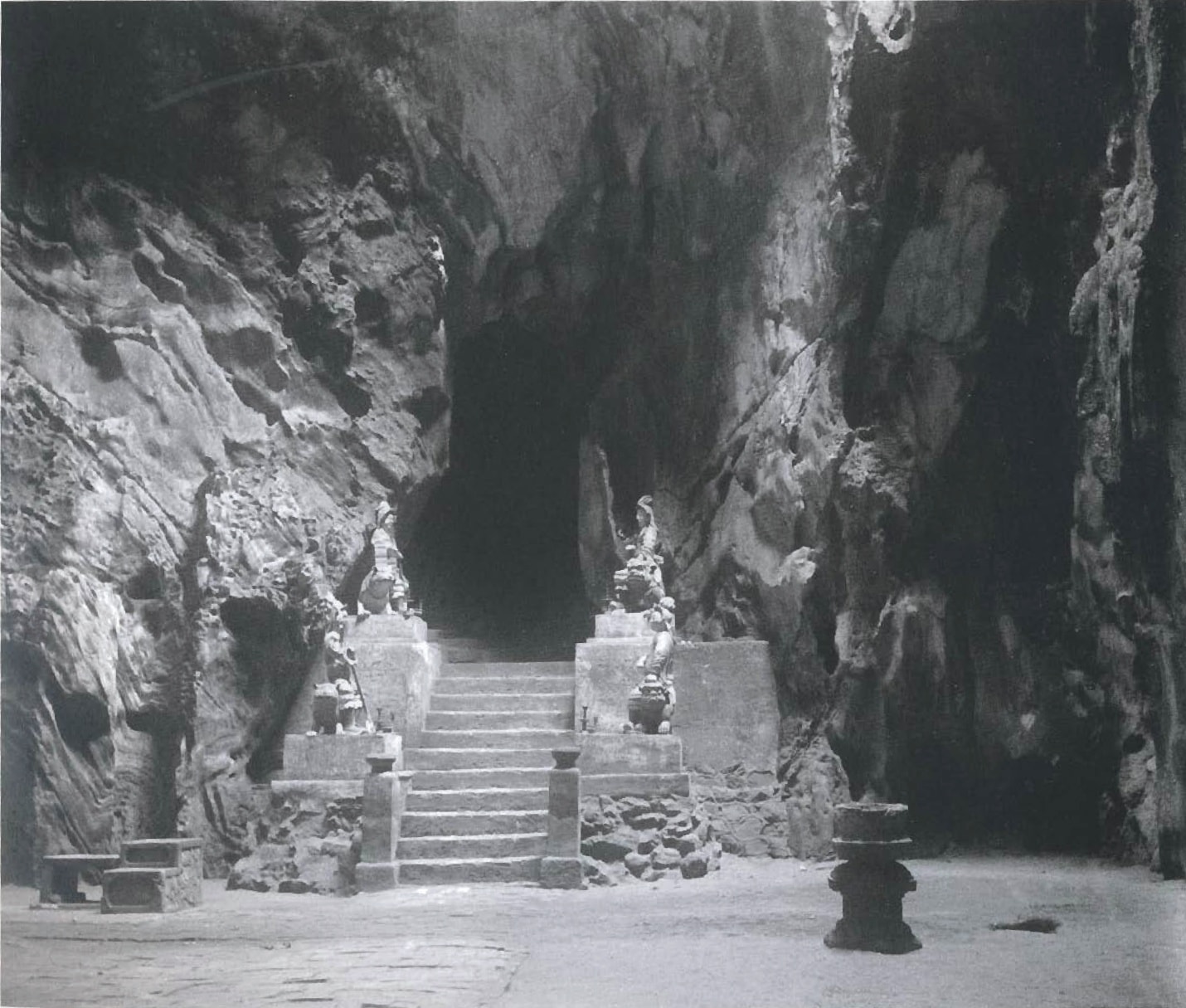
Archaeological sediment layer at the foot of the mountain
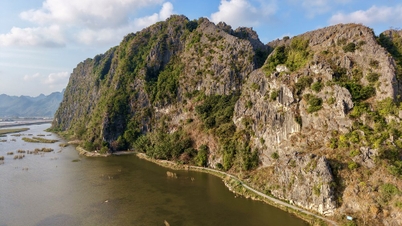
The Marble Mountains (Ngũ Hành Sơn) are a complex of limestone mountains located along the central coast of Vietnam (in Ngũ Hành Sơn ward, Da Nang). For a long time, it has not only been a famous scenic spot but also one of the "living museums" preserving the imprint of Champa culture. Archaeological research over the past decades has gradually revealed the important role of this area in the lives of the ancient Champa people.
According to historical records, the Champa people once settled along the central coast of Vietnam, forming a civilization deeply influenced by India. Throughout history, they left behind many material and spiritual relics, among which the Marble Mountains (Ngu Hanh Son) are a particularly significant settlement site.
A crucial turning point came from the 2000 archaeological excavation in the southern area of Tho Son. Scientists discovered thousands of Cham pottery artifacts, from pots, kendy jars, bowls, cups, vases, to fragments of earthenware and tiles... along with many Chinese ceramics, glassware originating from West Asia, and even ancient human remains. These artifacts are dated to the same period as famous sites such as Tra Kieu and Cu Lao Cham, showing the connection between Ngu Hanh Son and the Champa settlement and trade network.
Subsequent excavations (in 2015) at Khue Bac communal garden also uncovered a large number of artifacts, including: 13 coins (mostly Chinese), 25 mollusk fragments, 207 stone artifacts, and 4,309 ceramic artifacts belonging to the Sa Huynh, Champa, Chinese, and Vietnamese cultures. Researchers believe this is a typical settlement site of the Sa Huynh culture (pre-Champa), reflecting the rich cultural history of the region and contributing to the cultural identity of Da Nang within the overall national culture.
Through these findings, archaeologists believe that the area at the foot of the Marble Mountains was once inhabited by the Sa Huynh people, and later by the Champa people. Specifically, it may have once been a village/port/market... a small trading center, a place for the consumption and transshipment of goods for Chinese, Arab, and other countries' merchants on the international Silk Road, with Cu Lao Cham being a fairly frequent stop.
Religious spaces within caves
While archaeological sites tell stories of material life, the caves of the Marble Mountains preserve the spiritual depth of the Champa people. Dr. Albert Sallet argues: “The Champa people utilized these natural caves as outposts, the limestone formations from prehistoric times standing upright as protectors of the coastal defenses. The caves and passageways reveal mysterious nooks and crannies convenient for a people with a lofty religious inclination, using them as places of worship.”
Tang Chon Cave and Huyen Khong Cave, located on Thuy Son mountain, are two typical spaces that still preserve many traces of Cham religious beliefs. Most notably, they feature a system of linga-yoni worship, considered the central symbol of Hinduism.
At Tang Chon Cave, the Cham people placed two stone pedestals (also called railings) on either side of the entrance to the linga-yoni shrine, creating a solemn atmosphere in the tranquil space. These railings demonstrate the sophisticated sculptural skills of the ancient Champa people and were described by archaeologist Henri Parmentier as follows: “It is a type of series of carved stone railings, consisting of two groups of stones arranged on a narrow staircase. The two groups of stones below have a decorative structure forming a base with a ridge; in front of the base is a carved relief in the shape of a pointed arch or flame… These two shrines house two warriors or guardians, almost like reliefs; the two statues are almost identical;… The statues stand in a fighting stance; their left hand wields a mace, their right hand holds a sword, seemingly still in its sheath, possibly worn at the hip. This imagery is completely standardized; the breasts are like those of a woman, the attire and headscarf are quite elaborate; the headdress is conical, the ornaments are large earrings and a necklace.”
The space of Huyen Khong Cave reveals another layer of cultural exchange. Here, traces of the worship of the goddess Po Inu Nagar, the mother goddess of the Cham people, are still present. She was adopted and worshipped by the Vietnamese under the name Thien Y Ana or Ba Chua Ngoc, evidence of a long process of cultural exchange and assimilation.
Furthermore, the stone pedestals carved with images of deities, Apsara dancers, lions, etc., present in Huyen Khong Cave or found in Tang Chon Cave, also contribute to creating a unique artistic space. Each detail carries symbolic meaning, connected to the mythological system and beliefs of Hinduism.
The lasting legacy and its value today.
Overall, the Marble Mountains are not only a natural scenic spot but also a place where many layers of culture converge. The traces of Champa culture here, although no longer intact, are still sufficient to depict a part of the life of the ancient inhabitants.
From archaeological artifacts to religious spaces, it is evident that the ancient Champa people knew how to utilize favorable natural conditions for living, trading, and practicing their beliefs. They left lasting imprints, contributing to the richness of Vietnam's cultural heritage.
More importantly, these relics also reflect the process of interaction and transformation between cultures. The parallel presence of Champa and Vietnamese elements in the same religious space shows a natural fusion, not conflicting but complementary.
Today, with the Marble Mountains becoming a popular tourist destination, identifying and preserving Champa values is even more essential. It's not just about the story of the past, but also about the foundation for a deeper understanding of the region's cultural identity.
Source: https://baodanang.vn/tram-tich-champa-xua-3336904.html
![[Photo] National Assembly Chairman Tran Thanh Man working with the Standing Committee of the Law and Justice Committee](https://vphoto.vietnam.vn/thumb/1200x675/vietnam/resource/IMAGE/2026/05/21/1779378929214_ndo_br_1-4610-jpg.webp)
![[Photo] General Secretary and President To Lam presides over a working session with the Central Policy and Strategy Committee on the development of the materials industry.](https://vphoto.vietnam.vn/thumb/1200x675/vietnam/resource/IMAGE/2026/05/21/1779359935432_a3-bnd-3129-1412-jpg.webp)












































































Comment (0)