

According to statistics, the number of cases of urinary tract stones in children is on the rise. On average, the Urology Department of Children's Hospital 2 (Ho Chi Minh City) treats about 30 cases of urinary tract stones in children each year, of which nearly 20 cases require surgical intervention.
Alarmingly, many children are brought in late, when they already have complications such as hydronephrosis, severe urinary tract infections, or even kidney failure.
Most recently, a 12-year-old patient was admitted to the hospital with severe abdominal pain, vomiting, cloudy urine, and a mild fever. After examination and necessary tests, doctors discovered that the child had a stone lodged in the lower third of the left ureter, causing urinary tract obstruction leading to urinary tract infection and hydronephrosis in the left kidney.

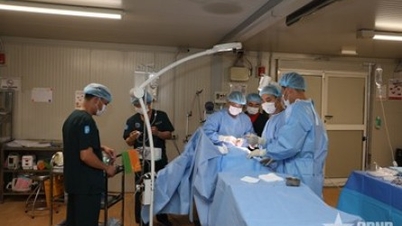
Doctors warn of an increase in urinary tract stones among children. (Photo: Provided by the hospital)
The child's infection was immediately stabilized, and surgery to remove the stones was scheduled. The surgical team performed the stone removal using a minimally invasive endoscopic technique, resulting in less pain and a faster recovery time.
Doctor explains the cause of urinary tract stones in children.
Dr. Phan Tan Duc, Head of the Urology Department at Children's Hospital 2, said: "In children, urinary tract stones can form in the kidneys, ureters, bladder, or urethra. Many parents mistakenly assume that their child only has 'transient abdominal pain' or 'a simple urinary tract infection,' and self-medicate without taking the child for an early examination."
"Delaying examination allows the stones to grow larger, blocking the flow of urine, damaging the kidneys, and easily leading to long-term health consequences for children."
Depending on their location and size, kidney stones can cause symptoms such as lower back or abdominal pain, cramping pain, painful urination, frequent urination, cloudy urine, or blood in the urine. In addition, some children may only exhibit vague symptoms such as irritability, poor appetite, and unexplained fever.
Depending on the patient's condition, the doctor may prescribe appropriate treatment methods such as medication to help expel stones, percutaneous lithotripsy, ureteroscopy and cystoscopy, or surgery in complex cases.
Associate Professor, Dr. Pham Ngoc Thach, Deputy Director of Children's Hospital 2, said: "The main causes of urinary tract stones in children stem from a salty diet, insufficient water intake, overuse of fast food and sugary drinks, and recurrent urinary tract infections. If not detected and treated promptly, stones can cause prolonged hydronephrosis, pyelonephritis, hypertension, or chronic kidney failure."
Doctor's advice
The doctor also noted that some common mistakes parents make include self-diagnosing their child's stomach pain as due to digestive disorders or mild urinary tract infections, and self-administering painkillers, anti-inflammatory drugs, or antibiotics without a doctor's prescription.
Many families don't take their children for ultrasounds or urine tests when symptoms persist; they ignore recurring lower back pain, only taking their children to the doctor when the pain is severe or there is noticeable blood in the urine. In addition, a lack of attention to children's regular drinking and urination habits leads to concentrated urine, increasing the risk of stone formation.
Doctors advise parents to be vigilant for unusual signs of urinary tract problems such as abdominal pain, lower back pain, or intermittent cramping pain.
Other symptoms include painful urination, frequent urination, difficulty urinating, cloudy urine, blood in the urine, or foul-smelling urine. If a child has fever, chills, fatigue, loss of appetite, and unexplained weight loss along with urinary symptoms, consider the possibility of kidney stones or urinary tract infection.
"Parents should not self-medicate their children at home, especially with painkillers, antibiotics, or 'diuretics' and 'stone-dissolving' medications passed down through word of mouth. Incorrect medication use can mask symptoms, delay diagnosis; some medications even risk further harming the child's kidneys," Dr. Thach emphasized.
To prevent urinary tract stones in children, it is necessary to encourage them to drink enough water every day, increase their intake of green vegetables and fresh fruits, and limit foods that are too salty, too high in protein, fast food, and sugary carbonated drinks. Children should be encouraged to develop the habit of urinating regularly and not holding it in; parents should pay attention to the color and frequency of their child's urination.
Children with a history of urinary tract stones, recurrent urinary tract infections, or a family history of kidney stones or ureteral stones should have regular check-ups and ultrasounds.
At the same time, it is advisable to limit foods and minerals that contribute to stone formation, such as red meat, seafood, processed foods, and diets high in salt and sugar.
Source: https://baolangson.vn/tre-mac-soi-duong-tiet-nieu-tang-bac-si-canh-bao-gi-5072872.html

![[Photo] The General Secretary, President and his wife lay flowers at the Ho Chi Minh Monument in Manila.](https://vphoto.vietnam.vn/thumb/1200x675/vietnam/resource/IMAGE/2026/05/31/1780219759477_anh-man-hinh-2026-05-31-luc-16-29-07.png)














![[Video] Sunset at Lap An Lagoon – Where the sun sets over the fishing nets](https://vphoto.vietnam.vn/thumb/340x192/vietnam/resource/IMAGE/2026/05/31/1780192137701_beach-landscape-sea-water-nature-grass-745871-pxhere-com.jpeg)










































































Comment (0)