

Costs decrease, productivity increases.
In recent rice seasons, many households in Duc Thinh village, Hung Khanh commune, Lao Cai province have become accustomed to low-emission rice farming methods, almost completely eliminating the use of pesticides and chemical fertilizers as before. What makes people confident in maintaining this model is not only the reduced labor and cost savings but also the significant increase in yield with each season.
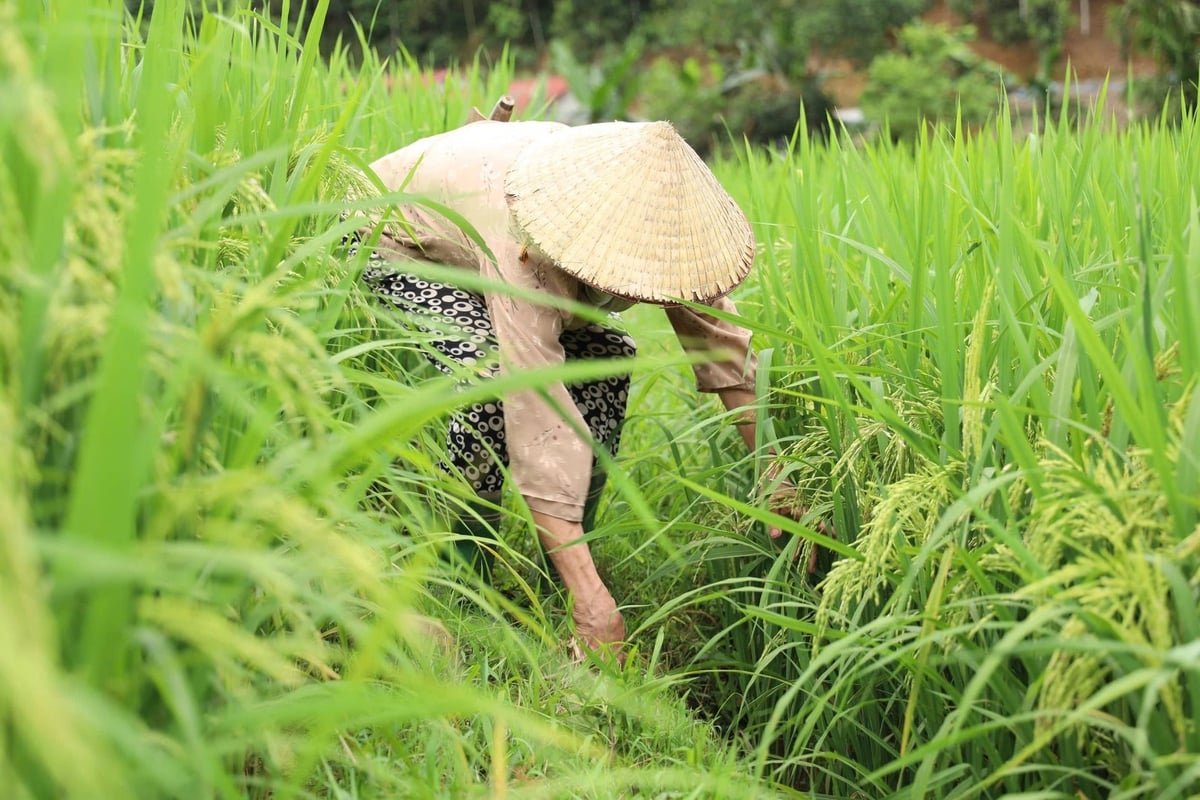
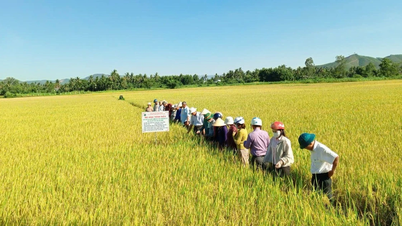
The model of rice cultivation with reduced emissions has been widely adopted and maintained by the people of Duc Thinh village even after the project ended. Photo: Thanh Nga.
Previously, many households were accustomed to dense planting, using large amounts of chemical fertilizers and pesticides. Whenever pests and diseases appeared, people had to spray continuously to save the rice crop. Production costs therefore increased steadily, but yields remained unstable. In some seasons, crop failures left farmers with almost no profit.
Since participating in the project "Improving the quality of sustainable rice production techniques and reducing greenhouse gas emissions in rice-specialized farming areas in Yen Bai province," funded by the Stichting Oxfam Novib organization and implemented by the Department of Agriculture and Environment of Lao Cai province, many households have changed their farming methods.
The project, launched in May 2025, aimed to guide local people towards environmentally friendly rice production models that reduce costs while maintaining productivity. Although the project has now ended, many households in Duc Thinh village continue to maintain this practice because the practical benefits are significantly better than traditional farming methods.
In Duc Thinh village, the project supported 30 households participating on an area of 4 hectares. The villagers received support in the form of rice seeds, fertilizers, biological products, technical guidance, and practical training courses. Most importantly, they received hands-on training right in the fields, making it easier for them to apply the techniques.
According to technical guidelines, before transplanting rice seedlings, the soil is fertilized with organic fertilizer, probiotics, and lime powder to increase nutrients, improve soil quality, and limit pests and diseases early on. When transplanting, the distance between rice clumps must be kept at a reasonable level, neither too dense nor too sparse, to allow the plants sufficient space to grow.
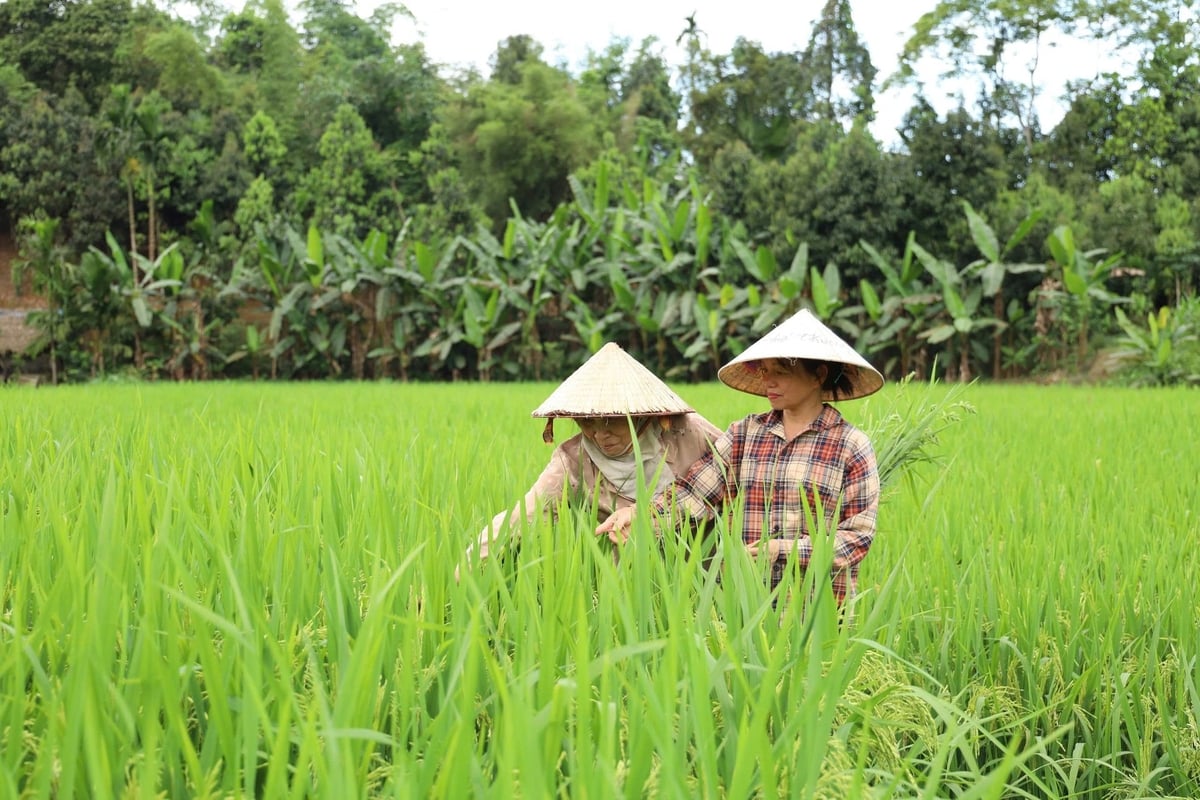
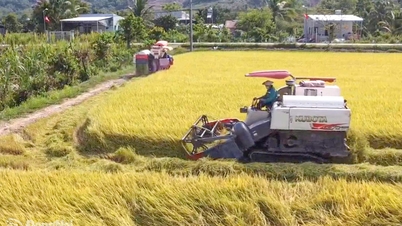
The model yields rice production of 9-10 tons/ha, an increase of about 1-2 tons/ha compared to traditional farming methods. Photo: Thanh Nga.
After about a week, farmers started applying NPK fertilizer in moderate amounts instead of using as much as before. The cultivation process also changed to a more scientific approach, such as regulating water according to each growth stage, weeding, stirring the mud, and supplementing potassium at the right time to help the rice grains develop properly.
Many households said that at first they were quite worried that planting sparsely would reduce yield. However, after one growing season, the results exceeded expectations. The rice plants were healthier, had fewer pests and diseases, the rice panicles were longer, and the grains were firmer than before.
Ms. Pham Thi Tuyen Mai, from Duc Thinh village, said that previously, her family had to spray pesticides 7-8 times continuously for each rice crop. Many days, spraying in the hot sun left her exhausted and nauseous. Since applying the project's farming techniques for three seasons, the rice fields have hardly required any pesticides. This year's winter-spring crop, even though the rice is almost ready for harvest, hasn't required any spraying, and the yield has increased significantly. Previously, each plot yielded just over 1 quintal of rice, but now it's nearly 3 quintals per plot (360m²).
Not only Mai's family, but many households in the village have also noticed that planting rice sparsely, fertilizing, and regulating water properly helps the rice plants grow healthier, making care less strenuous than before. Farmers no longer have to spray pesticides frequently or overuse chemical fertilizers as they used to, significantly reducing production costs while clearly increasing yield and economic efficiency.
Practical benefits
The project's models aim not only to reduce costs, increase productivity, and protect the environment, but also to reduce greenhouse gas emissions in production. According to experts, traditional rice production is one of the major sources of emissions due to prolonged flooding, straw burning, and the overuse of chemical fertilizers.
During farming, gases such as CH4, CO2, and N2O are released from soil, fertilizers, and agricultural by-products. If not properly controlled, these gases will directly affect the environment and contribute to increasingly severe climate change.
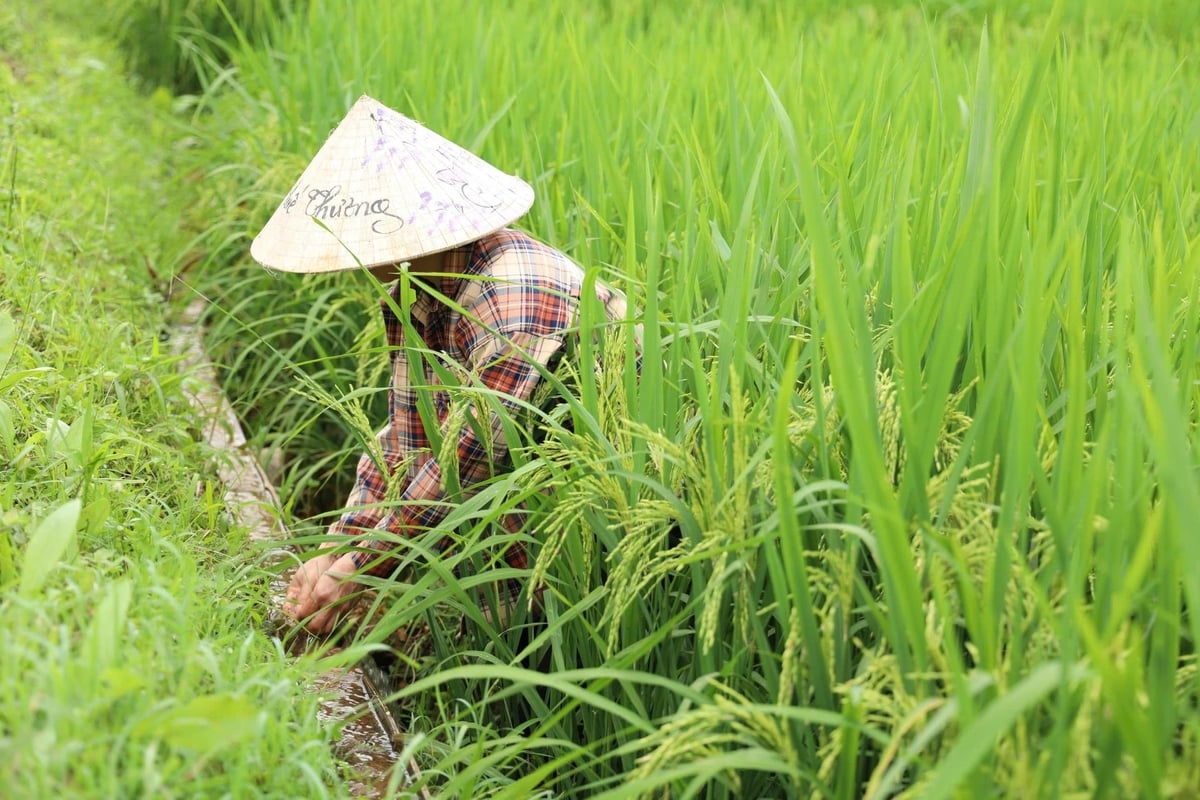
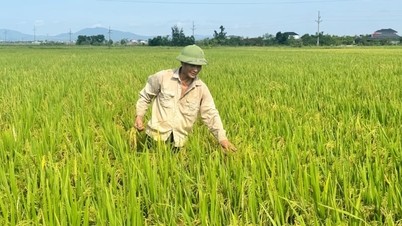
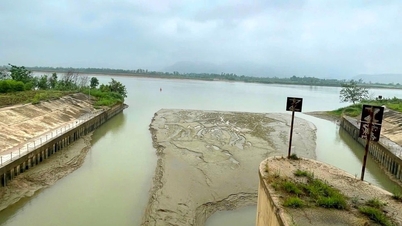
Proper water management helps limit methane emissions from rice paddies, contributing to a reduction in greenhouse gas emissions. Photo: Thanh Nga.
Therefore, the model of low-emission rice production focuses on changing the entire farming process. Proper water management helps limit methane emissions in rice fields. In addition, the use of biological products and reduced nitrogen fertilization also helps improve soil quality and reduce environmental pollution.
Practical results show that the amount of rice seeds used has decreased by about 50-60% compared to before. Water has also been saved by 60-70% thanks to the application of irrigation methods tailored to each stage of rice plant development. The number of pesticide sprayings has been drastically reduced, with very little or no use needed in many areas.
In particular, rice yields reached 9-10 tons/ha, an increase of about 1-2 tons/ha compared to traditional farming methods. This has changed the thinking of many people, as they previously believed that increasing productivity required using a lot of fertilizers and chemical pesticides.
Mr. Luong Ngoc Dung, Head of Duc Thinh village, said that the villagers are currently very eager to expand this model. People clearly see the benefits of scientific production methods, which save costs, increase productivity, boost income, and protect their own health.
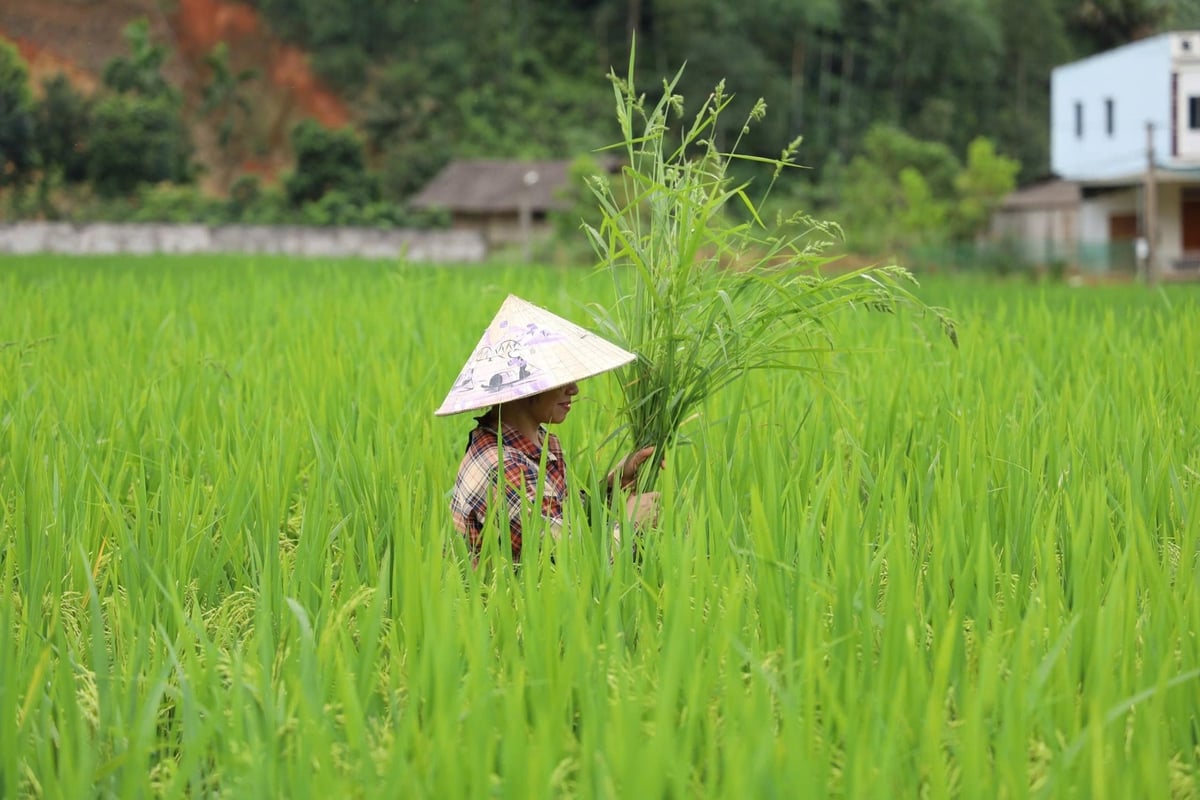
By participating in the model, people have significantly reduced their use of chemical fertilizers and pesticides. Photo: Thanh Nga.
Besides bringing high economic efficiency, the model also contributes to changing people's perceptions of sustainable agricultural production. When the land is improved, water sources are less polluted, and the amount of chemicals is reduced, the living environment in rural areas is also significantly improved.
In the context of climate change increasingly impacting agricultural production, models like the one in Duc Thinh village, Hung Khanh commune, Lao Cai province, are demonstrating a suitable direction for many localities. Reducing emissions is no longer a distant dream but is directly linked to the practical benefits of the people. Based on these initial results, emission-reducing rice production is expected to be further expanded in the future, contributing to building a green, sustainable, and climate-resilient agriculture.
Source: https://nongnghiepmoitruong.vn/trong-lua-giam-phat-thai-tang-them-nhieu-loi-ich-d809990.html






























































Comment (0)