

The U.S. Army's most capable attack helicopter, the AH-64 Apache, has suffered two consecutive accidents within just three days. Two similar accidents had occurred a month prior, raising serious concerns about personnel safety and prompting many units using the helicopter to reassess its safety.
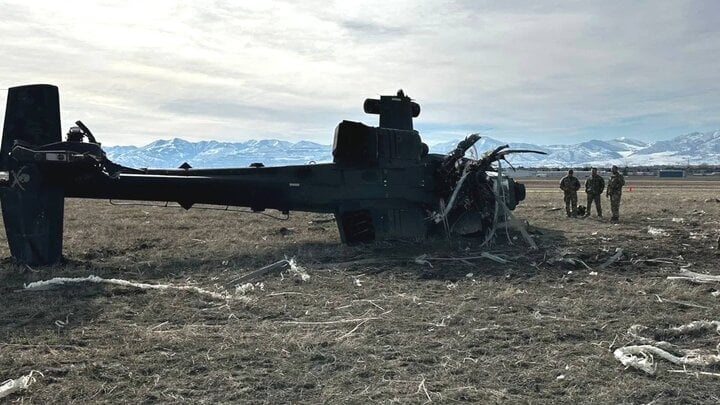
The remains of the US Army's AH-64D helicopter that crashed on February 13th.
A series of incidents
The first of two recent incidents occurred during a routine exercise on March 24 at Joint Base Lewis-McChord, Washington, injuring two pilots. The second occurred on March 26 when an Apache helicopter operating from Fort Carson, Colorado, crashed during training, injuring the pilots.
Previous incidents occurred on February 12th and February 23rd, with the second accident resulting in the deaths of both pilots. Having served for 40 years, the Apache remains the oldest continuously produced heavy attack helicopter. This helicopter has been considered a crucial weapon for the US and NATO in countering the Soviet Mi-24s, which had been in service for 15 years prior.
The cause of recent incidents involving the Apache squadron remains unclear, although in 2023 the U.S. Army revealed a significant increase in the number of alternator failures on the aircraft, which can cause smoke buildup that increases the risk of danger in the cockpit. However, there is no indication that the recent incidents are related to alternator failures.
Questions have also been raised regarding flight conditions, maintenance quality and personnel training levels, as well as the quality of the aircraft, as many believe the fault lies with the manufacturer, Boeing.
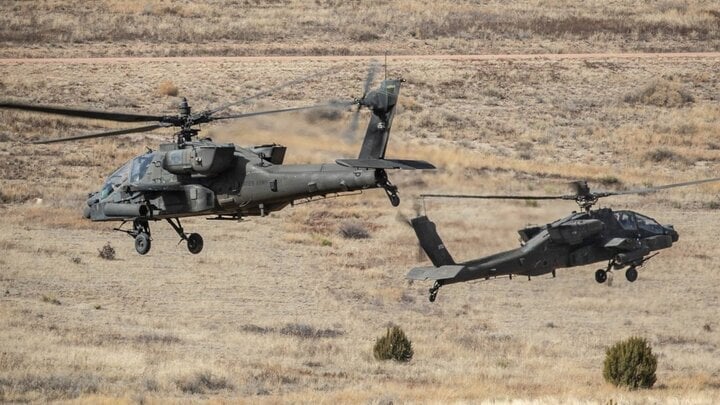
Two AH-64 Apache helicopters are assigned to the U.S. 4th Fighter Aviation Brigade.
There is no replacement version yet.
The U.S. military currently has over 700 Apache helicopters in active service. In addition, approximately 800 more are on order, along with orders from overseas customers. Most notably, Poland placed an order for 96 helicopters in September 2023.
The U.S. military's reliance on the Apache has also increased significantly due to the Higher Attack Reconnaissance Aircraft program, which aims to produce a multi-purpose helicopter to replace nearly half of the country's Apache fleet that was canceled last February.
As a result, the Apache helicopter will continue to be produced and operate for a significantly longer period. Furthermore, the reality on the Ukrainian battlefield shows that armored helicopters are increasingly vulnerable to modern weapons, which is also a major reason why some new helicopter programs need to be reconsidered.
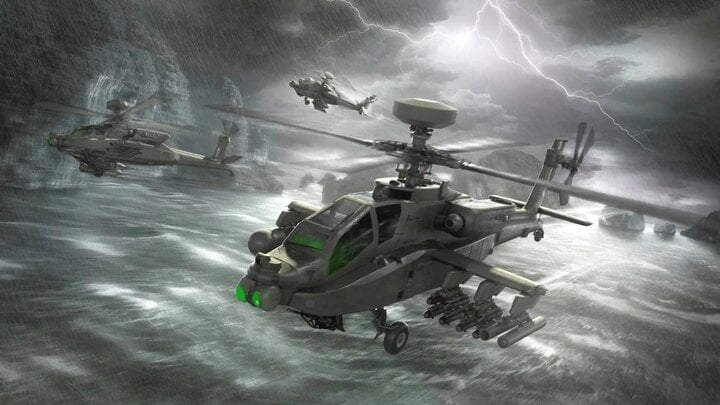
A Boeing drawing outlining a concept for an upgraded Apache with larger wings and other improvements.
Strong competitors
Currently, the Apache also faces significantly newer helicopter designs, including the successors to the Mi-24, the Mi-28 and the Ka-52, which are considered to have much greater combat capabilities than the American helicopters. Both the Mi-28 and the Ka-52 are more complete and sophisticated helicopter versions in terms of design compared to the Apache.
The People's Liberation Army of China's first heavy attack helicopter was first seen on March 21, and while clearer images of the aircraft have yet to emerge, the program is likely to cost the U.S. helicopter contracts with traditional allies.
The Russian Mi-28 remains the primary attack helicopter in service with the Algerian Army, a potential adversary of the US and a leading military power in Africa outside Washington's sphere of influence. Additionally, the Iranian Revolutionary Guard Corps, which Washington lists as a terrorist organization, is also expected to receive Mi-28s ordered by Iran in 2023.
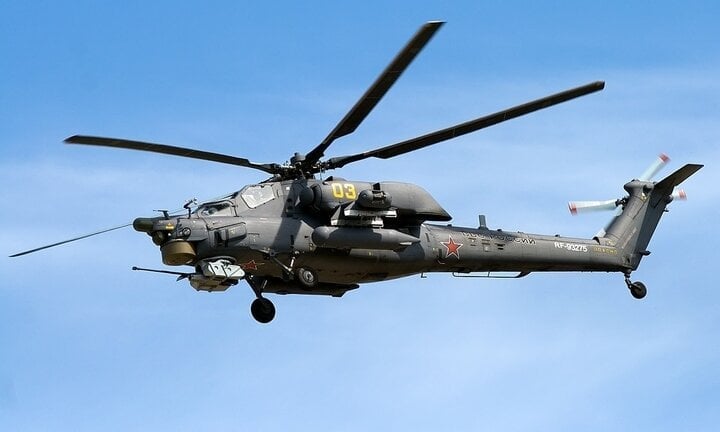
Russian Mi-28 helicopter.
Apache challenges
The loss of the Apache squadron and concerns about the operational capability of the remaining aircraft are significant, given that the U.S. is currently grappling with increasing security challenges across multiple battlefields. These include the Russia-Ukraine conflict, where U.S. and allied NATO personnel and contractors are playing an increasingly deep role on the ground, and in the Middle East, where land and naval engagements with local militias have continued regularly since October 2023.
The Korean Peninsula and the South China Sea region also add to the strain on U.S. capabilities, as the balance of power on both fronts increasingly turns against U.S. interests due to the rapid modernization of the Chinese and North Korean military forces.
The Apache also faced serious maintenance problems during combat deployments in Operation Desert Storm and during NATO's 1999 invasion of Yugoslavia, which resulted in the US losing 16 in combat.
For the next decade, no Western-made successor helicopter is expected to surpass the Apache in capabilities. And while China prepares to put its latest attack helicopter platform into service, only Russia remains a real rival to the American helicopter.
Source




























































































Comment (0)