According to Military, the Dark Eagle hypersonic missile, or Long-Range Hypersonic Weapon (LRHW), is a significant technological advancement in the U.S. military's arsenal.
The project was officially launched in 2018 with Lockheed Martin as the prime contractor, as part of a strategy to enhance long-range strike capabilities to maintain an advantage over strategic rivals.
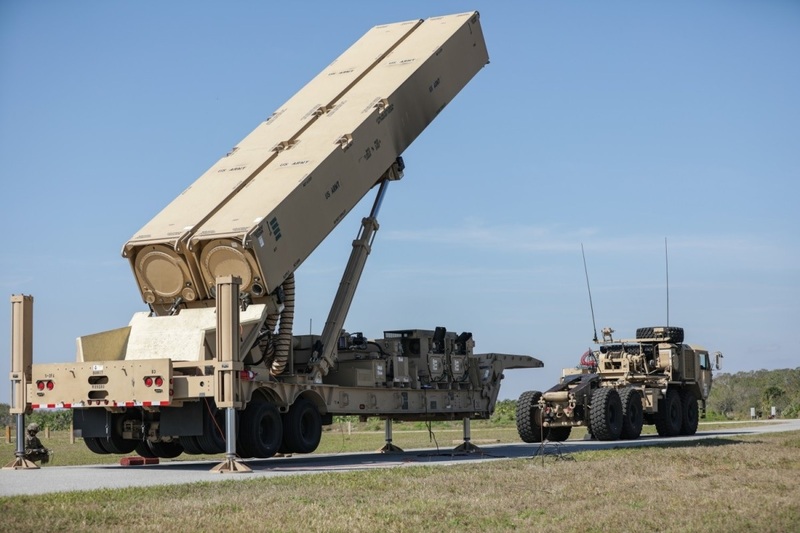
The mobile launch system and glider-controlled fuselage make the Dark Eagle both difficult to locate and difficult to intercept, enhancing its strategic deterrence value. Photo: Military.
The Dark Eagle was first deployed overseas in Australia as part of the Talisman Sabre exercise in July 2025. Although there were reports of successful testing in December 2024, the US Department of Defense has not officially confirmed the system is ready for combat deployment.
Structurally, the Dark Eagle is a ground-launched, non-nuclear missile system consisting of a two-stage solid-fuel propulsion system and a Common Hypersonic Glide Body (C-HGB). Upon launch, the booster stage propels the missile to supersonic speeds before separating, allowing the C-HGB to re-enter the atmosphere and glide toward its target. The C-HGB's shape is optimized for high-speed, unpowered glide, but it has the ability to adjust its trajectory throughout its flight, making its flight path unpredictable and difficult to intercept.

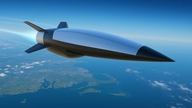
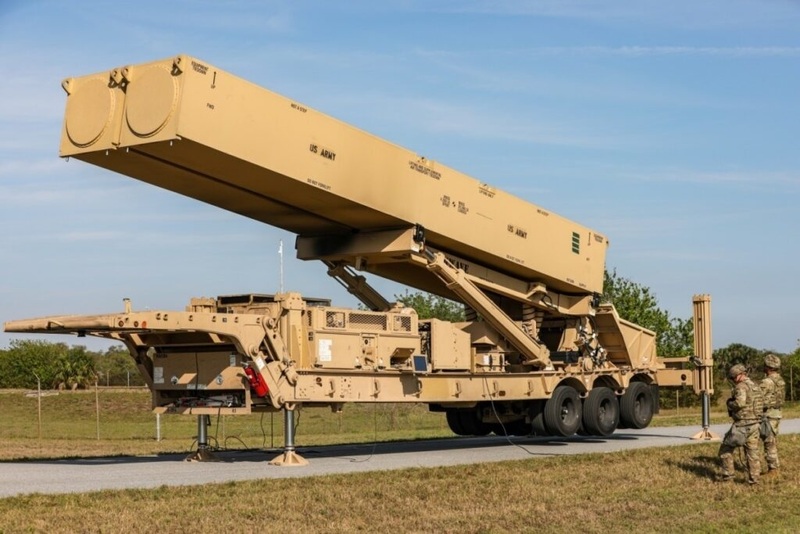
The Dark Eagle marks a step forward in long-range assault weapons. Photo: Military.
A key feature of the Dark Eagle is its mobile launch system, with missiles launched from an improved Transporter Erector Launcher (TEL) platform, typically based on the M870 towed vehicle and towed by a heavy-duty HEMTT tactical mobile truck. The mobile design allows for rapid deployment of launch forces, reducing the risk of being located and intercepted.
Each TEL has two launch tubes, allowing for consecutive launches, shortening reaction time and increasing the element of surprise. Its mobility also allows for deployment to forward bases or allied territories in strategic areas.
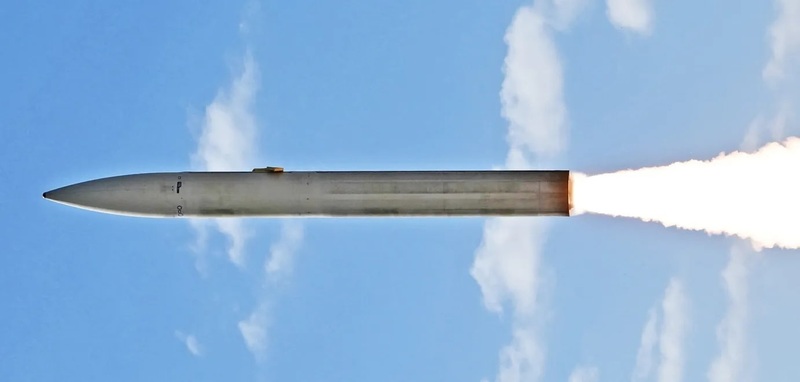
Speeds exceeding Mach 5-7, the ability to change direction while gliding, and a mobile launch platform make the Dark Eagle difficult to detect. Photo: Military.



In terms of performance, the Dark Eagle is designed for conventional attack missions with high accuracy and supersonic speed, with a reported operational range of 1,725 to 2,775 km depending on the configuration. A twin-stage propulsion system provides initial acceleration; after separation, the glide body uses its aerodynamic shape and re-entry angle to maintain lift and control trajectory, achieving speeds typically between Mach 5 and Mach 7 depending on the mission. Therefore, the Dark Eagle is capable of both deep penetration into enemy territory and is suitable for subnuclear warfare.
Source: https://congthuong.vn/dark-eagle-bong-ma-sieu-thanh-thach-thuc-moi-radar-hien-dai-429683.html