

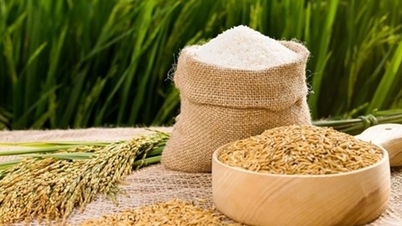
Recently, the domestic rice market has seen stable developments, with paddy and raw rice prices in key growing regions remaining at good levels, giving farmers confidence in production and high expectations for the upcoming autumn-winter crop.
According to an update on November 10, 2025, in the Mekong Delta region, the price of fresh OM 5451 paddy ranges from 5,300 to 5,500 VND/kg, OM 18 paddy is around 5,600 to 5,700 VND/kg, and IR 50404 paddy is at 5,100 to 5,300 VND/kg. The price of raw rice for export is 7,950 to 8,100 VND/kg for OM 18, around 8,500 to 8,600 VND/kg for OM 5451, and 9,500 to 9,700 VND/kg for finished IR 50404 rice. On the export market, Vietnamese 5% broken rice is traded at around 415 to 430 USD/ton, while 100% broken rice ranges from 314 to 317 USD/ton.
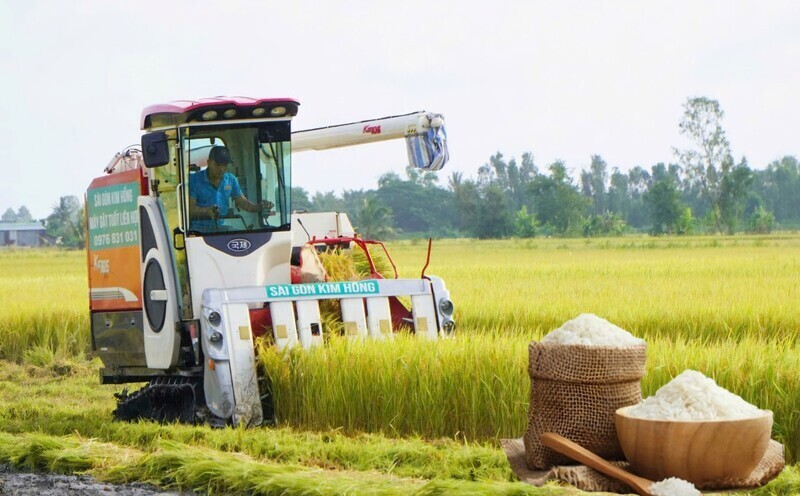
As the autumn-winter rice crop enters its planting season, the market is showing positive signs.
Recent developments in domestic rice prices clearly reflect a slow but steady recovery. After a sharp decline from the middle of the third quarter due to stagnant export demand, rice prices in the Mekong Delta remained stable throughout October and early November. Fluctuations around 5,100 - 5,800 VND/kg indicate that the market is gradually balancing supply and demand, eliminating the sudden price drops seen in the first half of the year.
The main factor contributing to stable prices is the rational regulation of domestic supply. Many localities have reduced the area planted with autumn-winter rice to avoid oversupply, while shifting to high-quality rice varieties for export. As a result, the raw rice market is not under significant pressure, even though harvest volumes in some areas such as Kien Giang, Soc Trang, and Can Tho have begun to increase.
Meanwhile, the rice export market is slowing down after peaking earlier in the year. The price of Vietnamese 5% broken white rice has fallen from over $520/ton at the beginning of the year to around $415-430/ton currently. The main reason is the abundant global supply as Thailand and India have increased exports again, while import demand from the Philippines, the Middle East, and Africa has temporarily decreased. This has forced Vietnamese businesses to adjust their procurement plans, keeping domestic prices stable to avoid inventory risks.
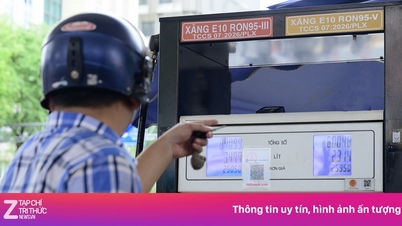
Another factor affecting the market is the continued high cost of inputs. Prices of agricultural supplies, fertilizers, and fuel have not cooled down, leaving farmers with thin profit margins. Although rice prices are stable, production costs account for a large proportion of expenses, meaning real profits have not improved significantly.
However, the outlook for the autumn-winter crop remains quite positive. Favorable weather, stable production forecasts, and a slight increase in domestic demand towards the end of the year are expected to keep rice prices at current levels or slightly higher. In particular, policies supporting procurement and stockpiling by state-owned and private enterprises will contribute to stabilizing output, preventing the market from experiencing a "bumper harvest, low prices" situation.
Overall, the rice market is entering a necessary stabilization phase before the autumn-winter cycle, with prices being maintained and farmers' sentiment becoming more optimistic. If factors related to exports, supply and demand regulation, and input costs are well controlled, it is highly likely that the fourth quarter of 2025 will be the time when the market regains sustainable upward momentum after several months of stagnation.
Against this backdrop, many localities are encouraging farmers to switch to producing high-quality rice varieties, increasing supply chain linkages between businesses and cooperatives to proactively manage consumption and mitigate risks when the market fluctuates. Investing in storage facilities, drying machines, and on-site processing is also considered a necessary solution to stabilize the output of agricultural products during the harvest season.
Despite numerous challenges, the stable price of rice during this period remains a positive sign for the entire industry. With good preparation in production and consumption, and timely support policies, the 2025 autumn-winter crop is expected to yield a bumper harvest and contribute to maintaining the position of Vietnamese rice in the international market.
Source: https://congthuong.vn/thi-truong-lua-gao-am-dan-tin-hieu-tot-cho-vu-thu-dong-cuoi-nam-429753.html
![[Photo] Admire the coral "masterpiece" amidst the million-year-old heritage of Dak Lak province.](https://vphoto.vietnam.vn/thumb/1200x675/vietnam/resource/IMAGE/2026/05/31/1780221235105_anh-man-hinh-2026-05-31-luc-16-53-27.png)
![[Photo] The General Secretary, President and his wife begin their state visit to the Philippines.](https://vphoto.vietnam.vn/thumb/1200x675/vietnam/resource/IMAGE/2026/05/31/1780230559452_anh-man-hinh-2026-05-31-luc-19-28-11.png)
![[Image] Hanoi Police officially crowned champions of V-League 2025/2026](https://vphoto.vietnam.vn/thumb/1200x675/vietnam/resource/IMAGE/2026/05/31/1780244769054_ndo_br_039d561b692be875b13a-jpg.webp)
![[Photo] Solemn bathing ceremony and Buddha procession in Hue](https://vphoto.vietnam.vn/thumb/1200x675/vietnam/resource/IMAGE/2026/05/31/1780228263543_1-jpg.webp)


















![[Video] Sunset at Lap An Lagoon – Where the sun sets over the fishing nets](https://vphoto.vietnam.vn/thumb/340x192/vietnam/resource/IMAGE/2026/05/31/1780192137701_beach-landscape-sea-water-nature-grass-745871-pxhere-com.jpeg)

































![[Photo] Admire the coral "masterpiece" amidst the million-year-old heritage of Dak Lak province.](https://vphoto.vietnam.vn/thumb/402x226/vietnam/resource/IMAGE/2026/05/31/1780221235105_anh-man-hinh-2026-05-31-luc-16-53-27.png)




























Comment (0)