

In this context, the development orientation of rental housing is seen as a significant shift in policy thinking, from viewing housing as an asset for accumulation to seeing it as an essential social welfare need.

The directive from General Secretary and President To Lam regarding the designation of rental housing as a "strategic pillar" is attracting attention from experts and real estate businesses. According to many experts, this is not simply a solution for the social housing segment but also reflects a shift in the approach to the housing market in Vietnam.
For many years, the real estate market has developed based on the "buy to own" mentality. Housing is not just a place to live but has gradually become a tool for speculation and asset accumulation. As a result, house prices have been continuously pushed up, while those with genuine needs are increasingly finding it difficult to access them.
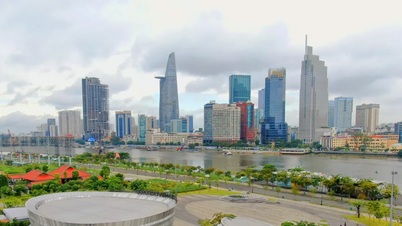
In major cities like Hanoi and Ho Chi Minh City, apartment prices have risen sharply in recent years. Many commercial apartment projects are priced at tens of millions of dong per square meter, far exceeding the income of the majority of workers. Even the so-called "affordable" segment has become scarce.
In this context, developing rental housing is seen as a way to help the market return to its true nature of serving housing needs. According to experts, when people have more options for long-term rentals at affordable costs, the pressure to own a home at all costs will decrease.
From a market perspective, the rental housing model also helps to curb speculation. A market dominated by the mentality of accumulating assets is likely to push real estate prices above their true value, creating prolonged financial pressure on people and distorting supply and demand. Conversely, if the rental market develops steadily, housing will return to its true role as a place to live instead of a tool for making profit.
The development orientation towards rental housing shows a shift in policy thinking from the goal of "ownership at all costs" to ensuring the right to stable living conditions that are affordable for the people.
In many developed countries, renting is a common trend. In Europe and some Asian economies , the rate of people renting is high, especially in large cities. Many social housing models are developed primarily for long-term rentals rather than outright sale as in Vietnam. This helps maintain a sustainable social housing fund while limiting speculation and excessive price increases.
Meanwhile, in Vietnam, social housing policies over the years have primarily focused on helping people buy homes. However, this model is revealing many shortcomings.
Low-income earners – the group most in need of support – often lack the financial means to buy a home, even with preferential loans. Conversely, a segment of the population with better economic conditions finds ways to circumvent policies to access affordable housing and then resell it for profit.
Lawyer Nguyen Van Dinh argues that this is a typical "mismatch" in social housing policy. Those who are eligible cannot afford to buy, while those who can afford to buy are not eligible.
According to Mr. Dinh, in many localities, low-income individuals have been registering to buy social housing on behalf of others to profit from the price difference. This distorts social welfare policies and leads to the loss of state support resources. Therefore, shifting the focus from "houses for sale" to "houses for living," specifically by strongly developing the social housing rental model, is considered a necessary adjustment.
"This approach is consistent with the spirit of the 2013 Constitution, which emphasizes the right to legal housing and the State's responsibility to create conditions for everyone to have housing, not necessarily to own a house," lawyer Nguyen Van Dinh commented.
Beyond its social welfare significance, the development of rental housing is also seen as a tool for regulating the real estate market. When the government proactively creates a fund of rental housing at reasonable prices, the pressure on the commercial housing segment will be reduced. This is especially important in the context of housing prices in many large cities rising much faster than people's incomes.
However, developing the rental housing model on a large scale is not easy. Mr. Nguyen Anh Que, a member of the Executive Board of the Vietnam Real Estate Association, believes that private businesses will only be truly interested in social housing for rent if there are sufficiently strong incentive mechanisms.
According to Mr. Que, due to the low profit margins and long payback periods, businesses find it difficult to achieve financial efficiency if they continue to borrow at commercial interest rates. If the interest rate is around 3% per year, businesses still struggle to balance their cash flow because rent alone is insufficient to cover capital costs.
Based on this reality, many experts believe that simply calling on businesses to participate out of a sense of social responsibility will hardly bring about significant change. To develop the rental housing market, the State needs to play a facilitating role.
This means the public sector must be more deeply involved, from land use planning and infrastructure investment to designing preferential financial and credit mechanisms. This is a low-profit but highly social welfare sector, so it cannot be entirely dependent on the market.
The National Assembly's issuance of Resolution 201/2025/QH15 and the Government's authorization of the establishment of the National Housing Fund are considered important steps towards realizing this direction. Experts expect that, if operated effectively, the fund will become a key financial tool for developing long-term rental housing at affordable prices for middle and low-income earners.
With housing prices remaining high, shifting from a "buy to own" mindset to a "rent to live in" mindset is not only a short-term solution to the housing problem but also a step towards restructuring the real estate market in a more sustainable direction.
Source: https://baotintuc.vn/bat-dong-san/tu-mua-de-so-huu-sang-thue-de-an-cu-20260527190941873.htm
![[Photo] The courage of new recruits of Brigade 144 on the training ground.](https://vphoto.vietnam.vn/thumb/1200x675/vietnam/resource/IMAGE/2026/05/27/1779881651341_anh-man-hinh-2026-05-27-luc-18-32-52.png)
![[Photo] The heat at the fireworks display site on the opening night of the Da Nang International Fireworks Festival 2026](https://vphoto.vietnam.vn/thumb/1200x675/vietnam/resource/IMAGE/2026/05/27/1779889741485_ndo_br_z7872039145157-fecaba5112f39e8352544099d7ef4738-5140-jpg.webp)























































![[Photo] The courage of new recruits of Brigade 144 on the training ground.](https://vphoto.vietnam.vn/thumb/402x226/vietnam/resource/IMAGE/2026/05/27/1779881651341_anh-man-hinh-2026-05-27-luc-18-32-52.png)




















Comment (0)