

Minister Tran Hong Minh stated that the implementation of the Lao Cai - Hanoi - Hai Phong railway project plays a crucial role, is of long-term strategic importance, and is of a very large scale, requiring complex technical and technological expertise.
Delegates offer suggestions.
On the afternoon of February 14th, the National Assembly held group discussions on the investment policy for the construction project of the Lao Cai - Hanoi - Hai Phong railway line; and the submission and verification report on the draft Resolution of the National Assembly on piloting some specific and special mechanisms and policies to develop the urban railway network system in Hanoi and Ho Chi Minh City.
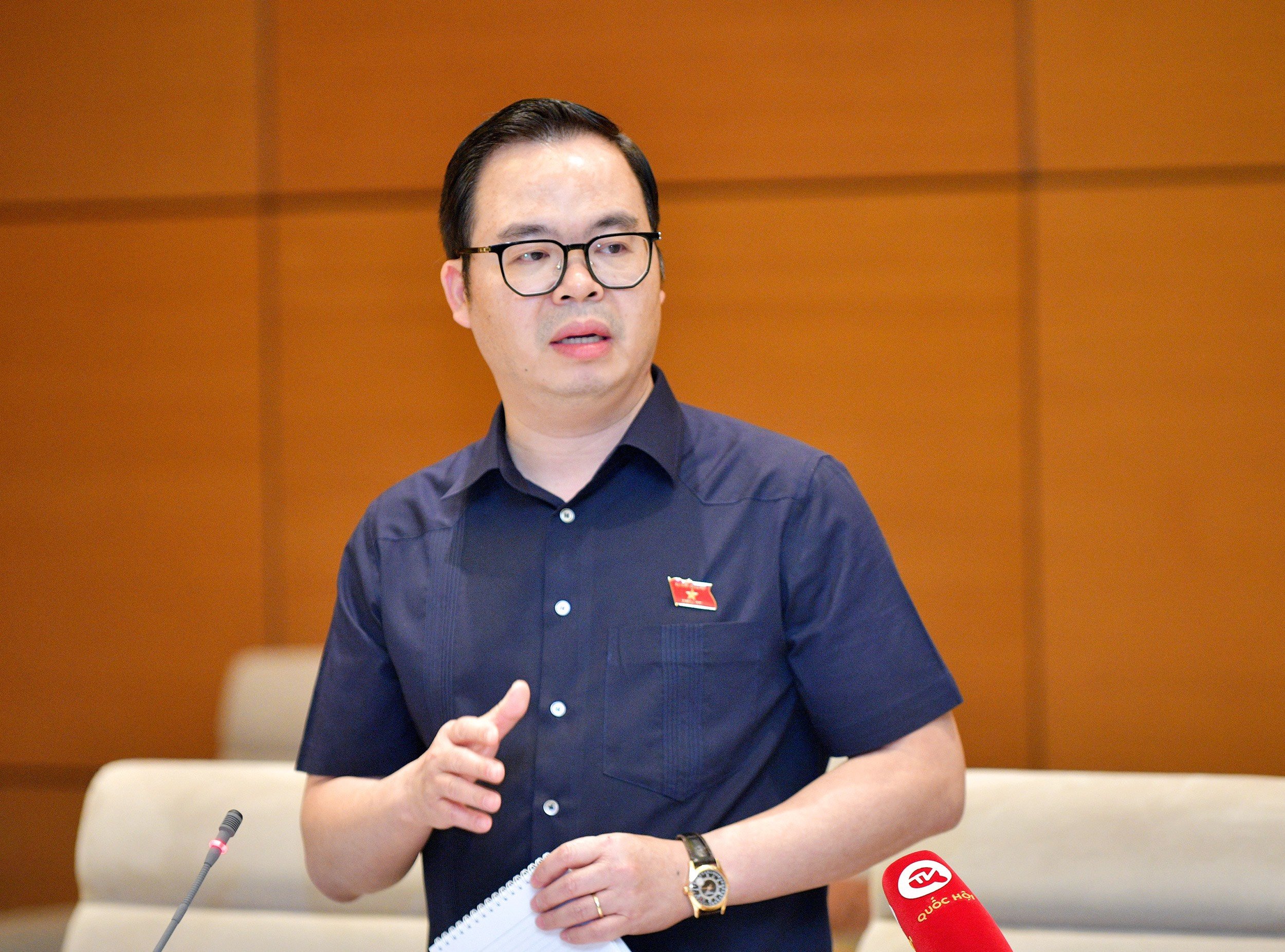
Delegate Tran Van Khai delivered his remarks during the discussion.
Contributing his opinion, delegate Tran Van Khai, Standing Member of the Committee on Science , Technology and Environment, analyzed in detail the feasibility of each policy in the proposal on the investment plan for the Lao Cai - Hanoi - Hai Phong railway and proposed solutions for implementation.
According to the delegates, regarding investment capital policies, the Government proposes using state budget funds combined with ODA loans and mobilizing social capital. Using ODA is reasonable due to low interest rates, but the potential for public debt and the conditions imposed by donors must be taken into account.
Furthermore, a drawback is that ODA loan negotiations can be lengthy, slowing down project progress. Not to mention, mobilizing private capital is difficult due to the low commercial viability of the railway line.
Therefore, delegates proposed considering BOT or PPP options with risk-sharing mechanisms to attract investors; and promoting public-private partnerships with logistics and port businesses to increase financial efficiency.
Regarding planning and infrastructure connectivity policies, the project is consistent with the national railway network master plan and has the potential to connect with China via Lao Cai and the Hai Phong seaport.
However, delegates argued that it is necessary to ensure synchronization with other railway lines; land acquisition may be difficult in densely populated areas.
Therefore, delegates proposed close integration with the North-South high-speed railway plan and international intermodal routes; clear compensation and resettlement policies; and accelerated land clearance progress.
Regarding technology policy and technical standards, the Government proposes adopting modern technology and international standards to ensure competitiveness. However, the drawback here is the high initial investment cost, which can put pressure on the budget. High technology requires highly skilled personnel to operate it, while training can take a long time.
Delegates suggested learning from the experiences of countries with advanced railway systems such as Japan and Germany, and implementing policies to train human resources right from the start of project implementation.
Regarding operational and exploitation policies, the government plans to phase investments into stages, reducing financial pressure and increasing exploitation efficiency.
Representative Khai analyzed that, according to that plan, maintenance and operation would require a professional management model to avoid losses. Therefore, it is necessary to build a management model where the enterprise operates independently, with state supervision.
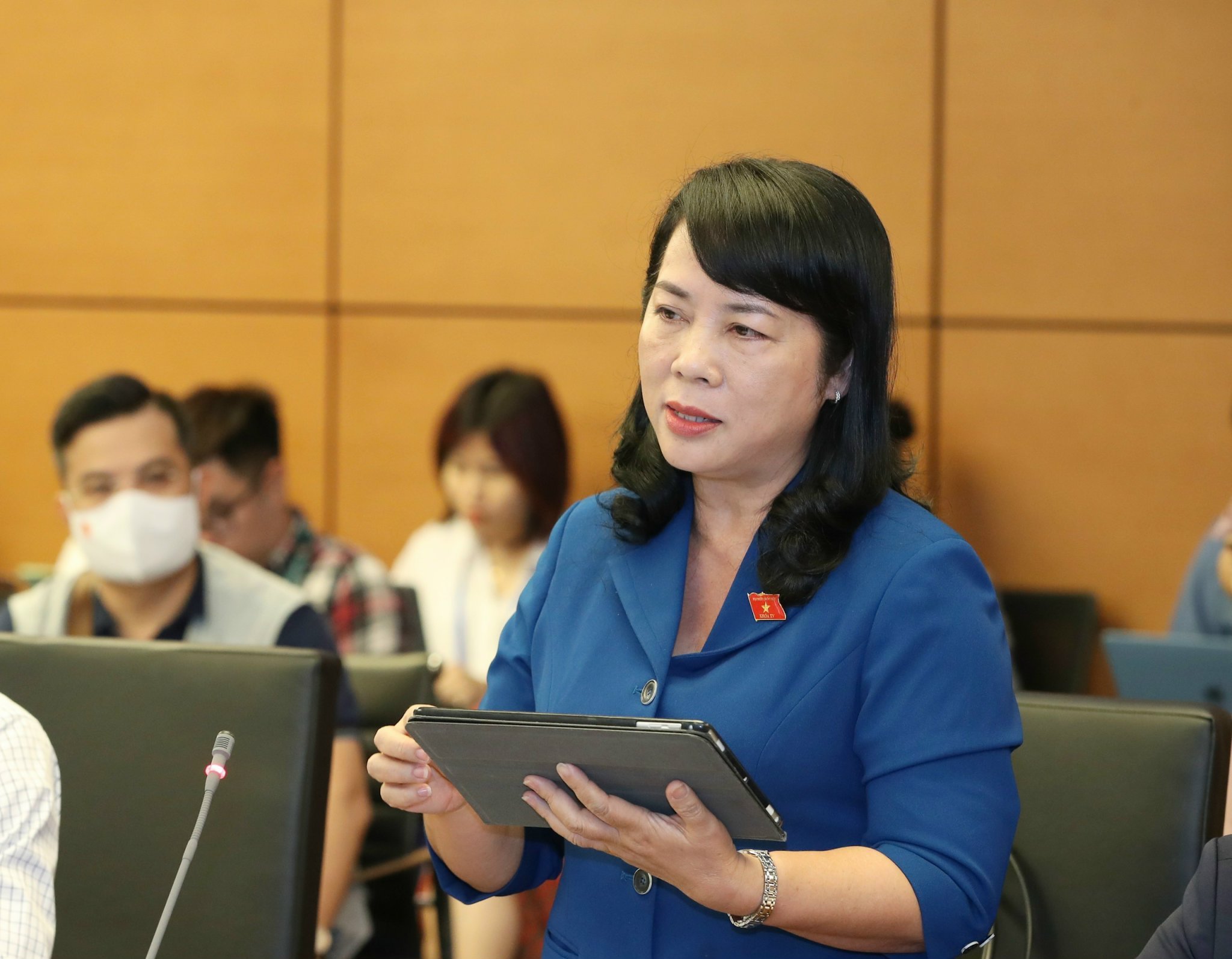
Delegate Tran Kim Yen, Ho Chi Minh City delegation
According to delegate Tran Kim Yen (Ho Chi Minh City), the project requires a very large amount of capital. Therefore, a thorough assessment of the financial plan as well as the impacts during the operation and exploitation of the project is necessary to minimize future risks.
Furthermore, with many large projects being launched, the government needs to further clarify the urgency of the project so that delegates can feel confident in voting to approve it.
Mobilize all resources for implementation.
Speaking at the group meeting, Minister of Transport Tran Hong Minh thanked and acknowledged the contributions of the delegates, and stated that they would fully incorporate and revise the document.
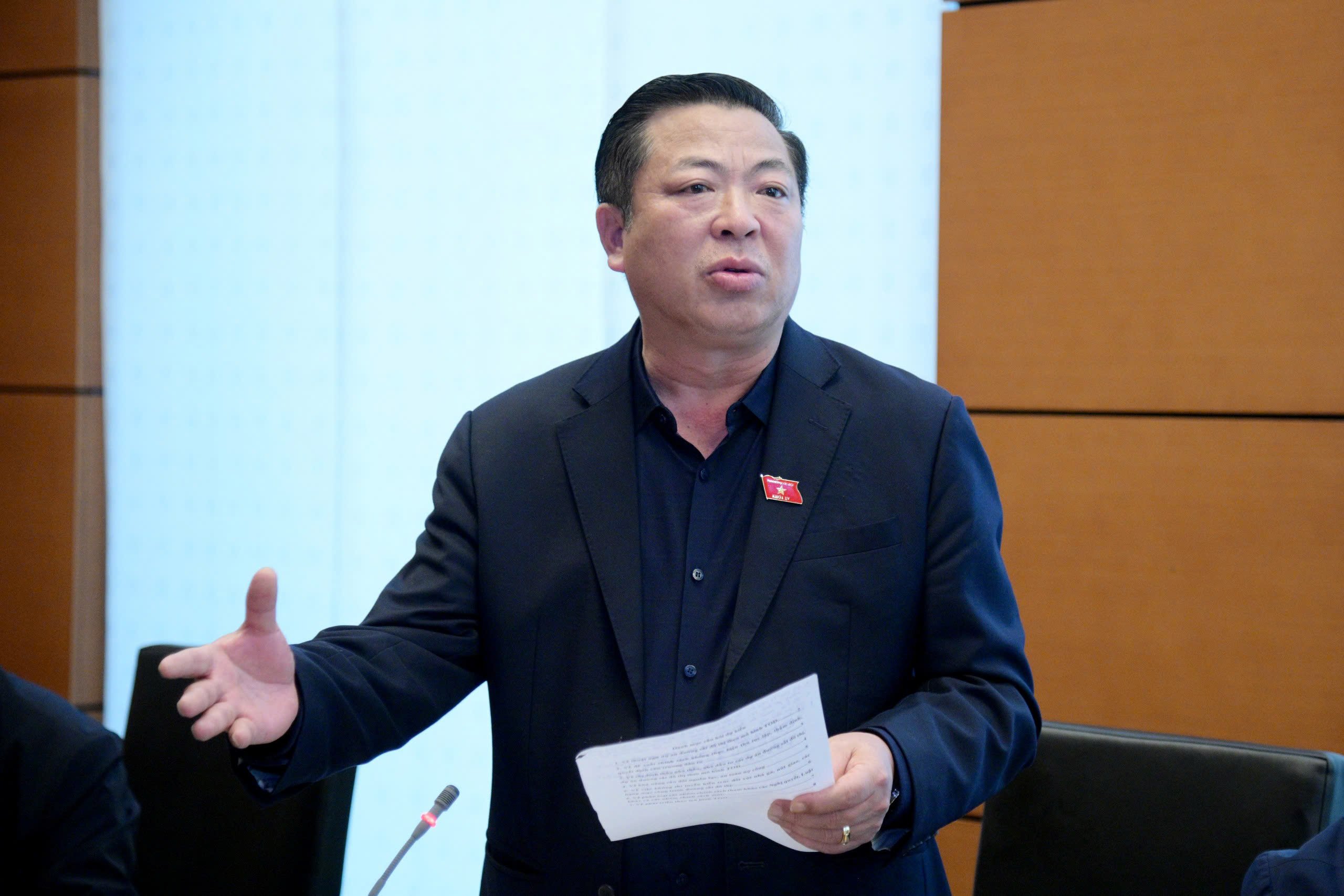
Minister of Transport Tran Hong Minh speaks at the group meeting on the afternoon of February 14th.
Minister Tran Hong Minh further shared that, in order to draft the proposal for investment in the Lao Cai - Hanoi - Hai Phong railway project and the draft Resolution of the National Assembly on piloting some specific mechanisms and policies to develop the urban railway network system in Hanoi and Ho Chi Minh City, the relevant departments made great efforts to complete them within a very tight timeframe.
"Throughout this period, the team has been working almost every day from 1 to 2 AM, which is very hard work. However, once assigned a task, everyone must strive, uphold a high sense of responsibility, and try their best to complete the assigned nhiệm vụ as well as possible," the Minister shared.
The Minister of Transport said that investing in the Lao Cai - Hanoi - Hai Phong railway project is necessary, not only to meet the country's development needs but also to strengthen international connectivity.
According to the National Master Plan, the Lao Cai - Hanoi - Hai Phong economic corridor has the second-highest demand for passenger and freight transport in the country, after the Eastern North-South economic corridor. At the same time, this corridor plays a strategic role between Vietnam and China.
The investment project is of crucial importance, has long-term strategic significance, is very large in scale, and requires complex technical expertise.
Therefore, to ensure the feasibility and effectiveness of the project, it is essential for the Government to propose to the National Assembly the application of certain specific mechanisms and policies.
Regarding the National Assembly's Resolution on special mechanisms and policies for developing the urban railway network in Hanoi and Ho Chi Minh City, the Minister stated that urban railways are the "backbone" of the urban public transport system.
Investing in urban rail development is an objective necessity and a crucial, fundamental solution for developing modern, sustainable cities, while protecting the environment and responding to climate change.
The purpose of drafting the National Assembly Resolution is to mobilize all legitimate resources, minimize the implementation time, and effectively utilize land resources.
At the same time, strong decentralization and delegation of power to the two cities will enable them to realize the resolutions and conclusions of the Central Committee and the Politburo.
According to the Government's proposal, the Lao Cai - Hanoi - Hai Phong railway project has a main line length of approximately 390.9 km and 3 branch lines totaling approximately 27.9 km. The starting point is at the rail junction across the border between the new Lao Cai station and Ha Khau Bac station (China), located in Lao Cai City; the end point is at the Lach Huyen terminal area, located in Hai Phong City.
The project passes through the territories of 9 provinces and cities including: Lao Cai, Yen Bai, Phu Tho, Vinh Phuc, Hanoi, Bac Ninh, Hung Yen, Hai Duong, and Hai Phong. The preliminary total investment is approximately 203,231 billion VND (approximately 8.369 billion USD).
Regarding funding, the Government proposes that the project's funding sources include the State budget (central and local), domestic capital, foreign capital (loan from the Chinese Government), and other legitimate sources.
In terms of investment scale, the project involves constructing a new electrified railway line with a 1,435mm gauge, for both passenger and freight transport.
Specifically, the main line section from the new Lao Cai station to the Nam Hai Phong station has a design speed of 160km/h, the section through the Hanoi railway hub has a design speed of 120km/h, and the connecting sections and branch lines have a design speed of 80km/h.
According to the planned schedule, the project's feasibility study will be prepared starting in 2025, with the goal of substantial completion by 2030.
To implement the project, the Government proposed applying 19 specific and special mechanisms and policies, of which 15/19 mechanisms and policies have already been approved by the National Assembly for application to the high-speed railway project on the North-South axis, and 4 new mechanisms and policies have been added.
Source: https://www.baogiaothong.vn/bo-truong-tran-hong-minh-tuyen-duong-sat-83-ty-usd-mang-tinh-chien-luoc-dai-han-192250214190033015.htm
![[Photo] Secretary of the National Assembly Party Committee, Chairman of the National Assembly presides over the meeting of the Standing Committee and Executive Committee of the National Assembly Party Committee.](https://vphoto.vietnam.vn/thumb/1200x675/vietnam/resource/IMAGE/2026/06/03/1780480353201_ndo_br_bnd-2585-jpg.webp)

![[Photo] General Secretary and President To Lam presides over a meeting with the Central Organizing Committee.](https://vphoto.vietnam.vn/thumb/1200x675/vietnam/resource/IMAGE/2026/06/03/1780482764658_a1-bnd-4741-3342-jpg.webp)




![[Photo] Reception to welcome General Secretary and President To Lam and his wife on their State visit to the Philippines](https://vphoto.vietnam.vn/thumb/402x226/vietnam/resource/IMAGE/2026/06/01/1780295488620_vna-potal-chieu-dai-chao-mung-tong-bi-thu-chu-tich-nuoc-to-lam-va-phu-nhan-tham-cap-nha-nuoc-toi-philippines-8798060-7855-jpg.webp)




















![[Photo] First session of the 14th Congress of the Vietnam Trade Union](https://vphoto.vietnam.vn/thumb/1200x675/vietnam/resource/IMAGE/2026/06/03/1780465947883_ndo_br_img-3852-jpg.webp)
















![[Video] Sunset at Lap An Lagoon – Where the sun sets over the fishing nets](https://vphoto.vietnam.vn/thumb/1200x675/vietnam/resource/IMAGE/2026/05/31/1780192137701_beach-landscape-sea-water-nature-grass-745871-pxhere-com.jpeg)























Comment (0)