

In Vietnam, digital transformation in the construction and urban development sector has been identified as one of the key pillars of the green, smart, and efficient development strategy. In this context, the construction industry in Ha Tinh province is proactively embracing this trend by applying many advanced technologies in design, construction, and project management.
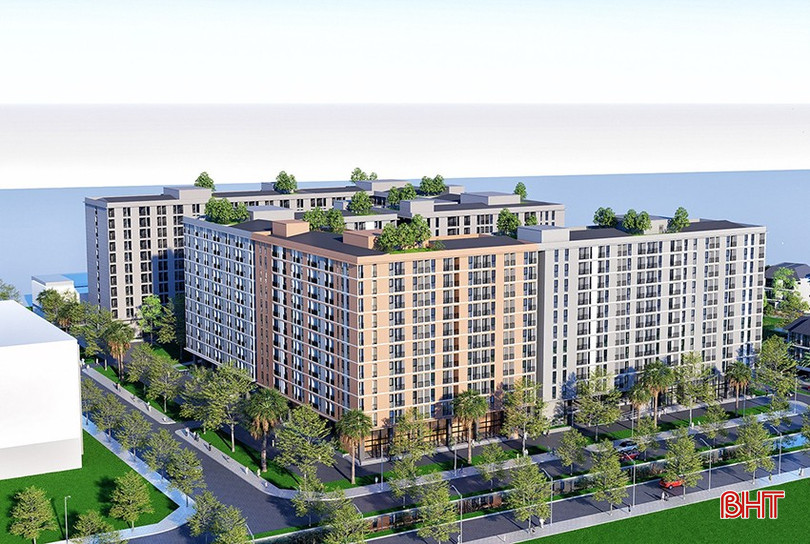
One of the leading technologies is BIM (Building Information Modeling). With its ability to integrate all data from design and construction to operation into a single information package, BIM enhances management efficiency, making it easier for stakeholders to monitor and control project progress, budget, and quality. Notably, the Government has issued Decision No. 258/QD-TTg, stipulating that from 2025, the application of BIM will become mandatory for projects of level II and above under new construction investment projects using public investment capital, non-public state investment capital, and public-private partnership investment, right from the preparation phase.
Currently, the pilot project for social housing in Thach Linh ward (now Thanh Sen ward), phase II, is one of the province's large-scale projects applying BIM technology. The project has a total floor area of over 46,200 m², comprising 3 twelve-story buildings with more than 500 apartments, 41 three-story commercial houses, along with a comprehensive system of transportation, green spaces, sports and recreation areas, parking lots, and technical infrastructure. The implementation of BIM technology provides the construction unit with an overall view and intuitive 3D simulations, enabling early detection of technical issues during the construction process.
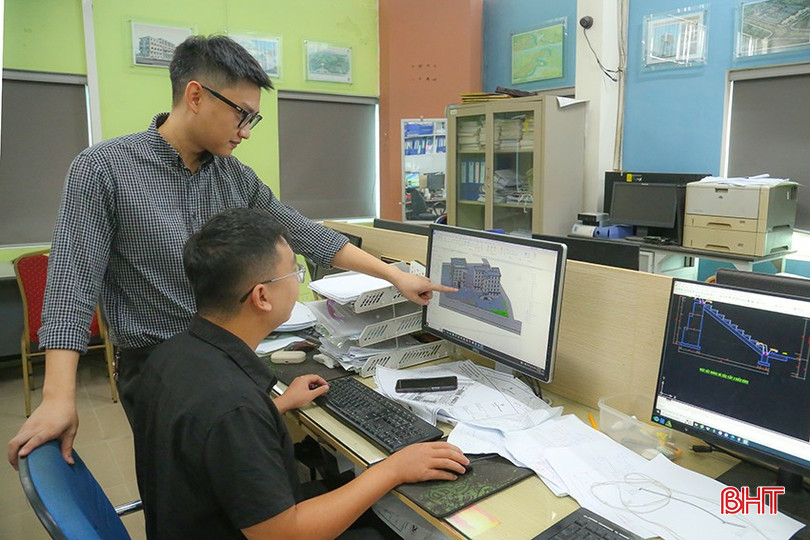
Mr. Pham Thai Binh, Director of the Ha Tinh Development Investment Fund, stated: “With the large scale of the project, digitizing all design and construction data has helped to visually simulate the project from the very beginning. Thanks to this technology, we can optimize the design, control costs, shorten timelines, and ensure the synchronization of infrastructure and amenities, bringing practical benefits to residents when they move in. In addition, BIM enhances the information exchange process between state management agencies in construction, investors, consulting firms, and construction contractors.”
Beyond just BIM, in recent years, artificial intelligence (AI) has also been a focus of attention for the construction industry in Ha Tinh province, and is being gradually applied in design and planning. AI has the ability to automate many processes, optimize solutions, predict risks, personalize customer experiences, and support the development of smart building models.
Mr. Nguyen Huy Binh, Deputy Director of the Institute of Planning, Architecture and Construction of Ha Tinh, shared: “In the past three years, new AI applications such as Stable Diffusion, SeaArt, ChatGPT… have significantly shortened the time for us in the process of finding design ideas and supporting visualization. In the future, AI technology in specialized design is expected not only to improve accuracy but also to suggest many optimal solutions, ensuring harmony between technical, aesthetic, and sustainable elements.”
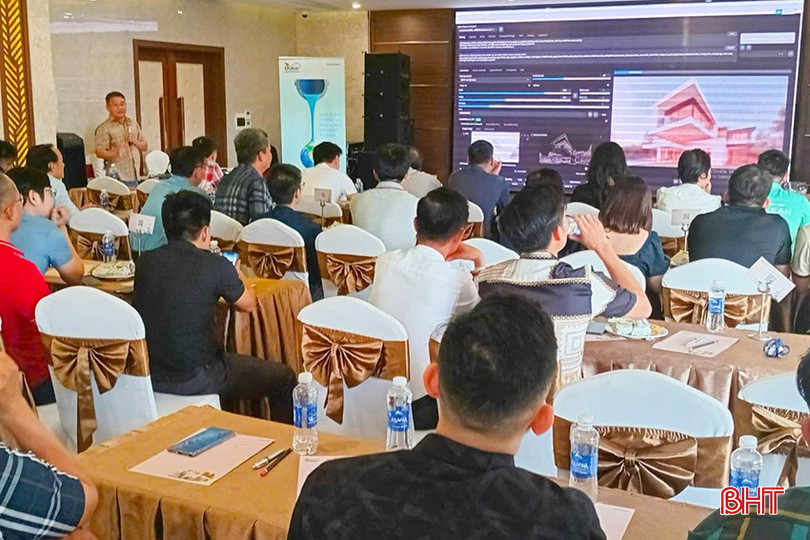
Notably, the application of AI in design was also discussed and shared at the recent Conference on AI in Architectural and Construction Design organized by the Ha Tinh Architects Association. At this conference, many experts and architects exchanged views on the trend of using AI to build intelligent design models and improve the quality and sustainability of future constructions.
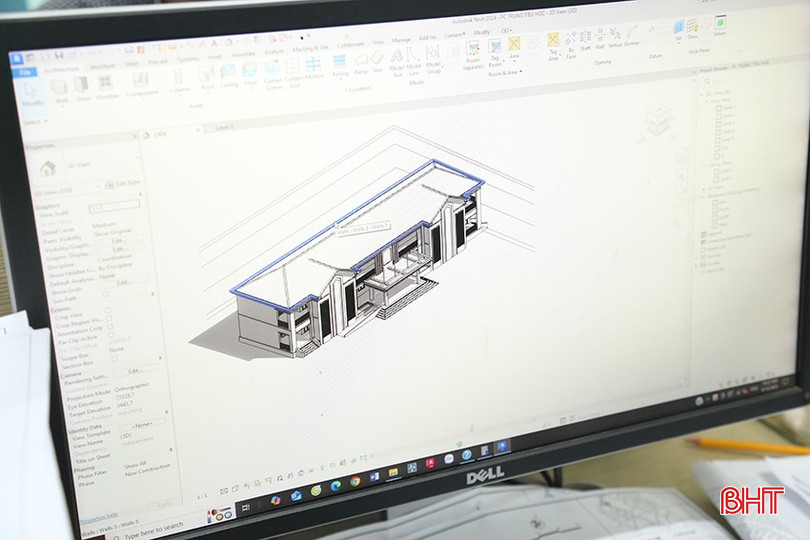
“However, to fully utilize the potential of AI, businesses and organizations need to focus on investing in data infrastructure, technology, and human resource development. AI will only truly be effective when provided with a large volume of accurate and standardized data. In reality, data in the construction industry in Ha Tinh is still scattered, lacks consistency, and is not fully digitized, which will create many obstacles in the application process,” Mr. Binh added.
Alongside innovations in design, the construction industry in Ha Tinh is also promoting the use of new, environmentally friendly materials. Materials such as lightweight concrete, aerated concrete steel frame houses, non-fired bricks, porous core bricks, carboncor (CA) materials, etc., are increasingly being widely applied in construction activities. These materials not only help increase durability and reduce the weight of structures but also contribute to the development of green and sustainable construction.
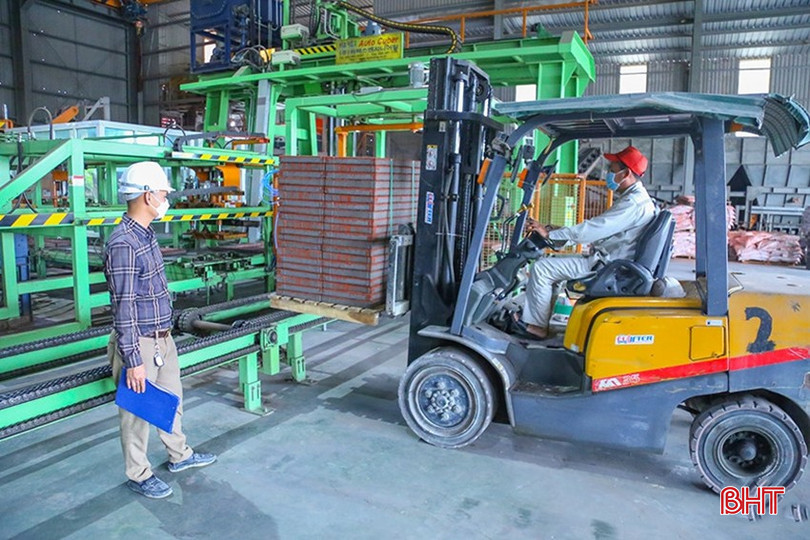
Mr. Nguyen Tien Dat - Director of SDA Architecture - Interior Design Joint Stock Company (Thanh Sen Ward) said: “Introducing new materials into construction has given businesses more design options, especially for modern, environmentally friendly interior spaces. Green materials not only enhance aesthetics but also reduce long-term maintenance costs. Importantly, the market and customers are gradually changing their mindset, readily accepting new solutions to replace traditional materials.”
It is evident that, from BIM and AI applications to green materials, the construction industry in Ha Tinh is gradually innovating and embracing modern technological trends. This is a suitable direction, contributing to bringing the province closer to its goal of building sustainable, smart, and environmentally friendly cities and structures.
Source: https://baohatinh.vn/ung-dung-cong-nghe-moi-trong-thiet-design-xay-dung-cong-trinh-o-ha-tinh-post295444.html
































































Comment (0)