

The tourism industry needs to quickly embrace, adopt, and develop products that utilize advanced technology in tourism activities.
According to expert analysis, the trend of proactive tourism is increasingly being chosen by many travelers. These travelers want to connect with suppliers themselves, experience things independently with guidance through technology, and use technology to connect, share information, and interact with destinations.

Therefore, the tourism industry needs to accelerate digital transformation to diversify tourism activities. Applications that serve as both experiential products and services supporting destination experiences can help tourists easily prepare for their trips, raise awareness about protecting destination values, connect, share, and spread positive actions and awareness of protecting local culture and tourism resources.
Digital transformation in tourism also acts as a catalyst for optimizing operational systems, improving management efficiency, and enhancing service quality.
One of the most effective applications of technology in tourism is audio guides (multilingual commentary).
Around the world , most famous museums and historical sites use audio guide technology instead of tour guides, such as the Louvre Museum in France, the Metropolitan Museum of Art in the USA, and the National Museum of London in the UK…

In Vietnam, the trend of applying Audio Guide technology to museums and historical sites has initially yielded many positive results. This product offers many outstanding advantages.
Not every visitor fully understands the historical, cultural, architectural, and artistic values of a site/destination. In such cases, an audio guide is very suitable and effective. Visitors can proactively listen to explanations according to their preferences, without being affected by the surrounding environment, even during peak hours.
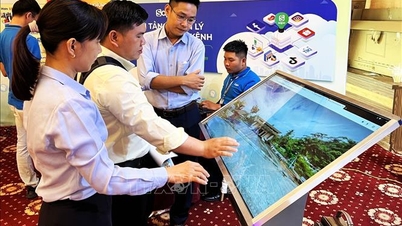
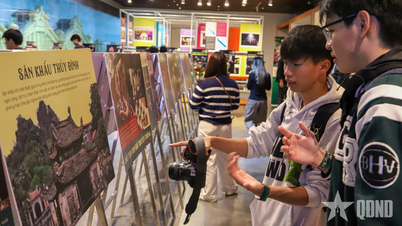
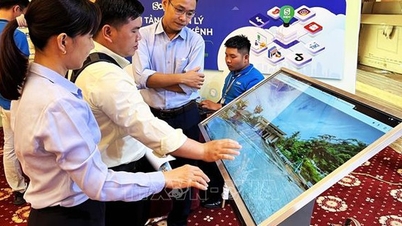
Advanced technological products such as 360-degree virtual reality tours, 360-degree websites, and interactive information screens showcasing destinations should be researched and applied by the tourism industry. These products help improve and enhance the quality and experience for visitors, bringing practical benefits. Effectively utilizing technology also contributes to enriching the value of heritage sites, aiming to harmoniously address the challenge of tourism development without conflicting with conservation.
Digital transformation in tourism aims to build and shape an ecosystem of applications serving management, operation, and the provision of technological services and amenities for tourists. The continued development of 3D digital data, e-books, and augmented reality (AR) models should be implemented soon by local tourism sectors. The next step is to apply AI technology to the management of tourism activities to bring convenience, diversify tourism services and products, and enhance the visitor experience.
Tourism can be considered one of the pioneering sectors in implementing digital transformation. However, for digital transformation in tourism to truly bring practical benefits and convenience to tourists, more investment is still needed.
Source

















![[VIMC's 40-day rapid rollout] VOSA accelerates the deployment of a comprehensive logistics solution for HODA.](https://vphoto.vietnam.vn/thumb/402x226/vietnam/resource/IMAGE/2025/12/23/1766473634002_vosa-23-12-25-2_upscayl_2x_remacri.jpeg)
























![[Photo] Closing Ceremony of the 15th Conference of the Central Committee of the 13th Party Congress](https://vphoto.vietnam.vn/thumb/402x226/vietnam/resource/IMAGE/2025/12/23/1766462841764_a1-bnd-3731-1647-jpg.webp)


























Comment (0)