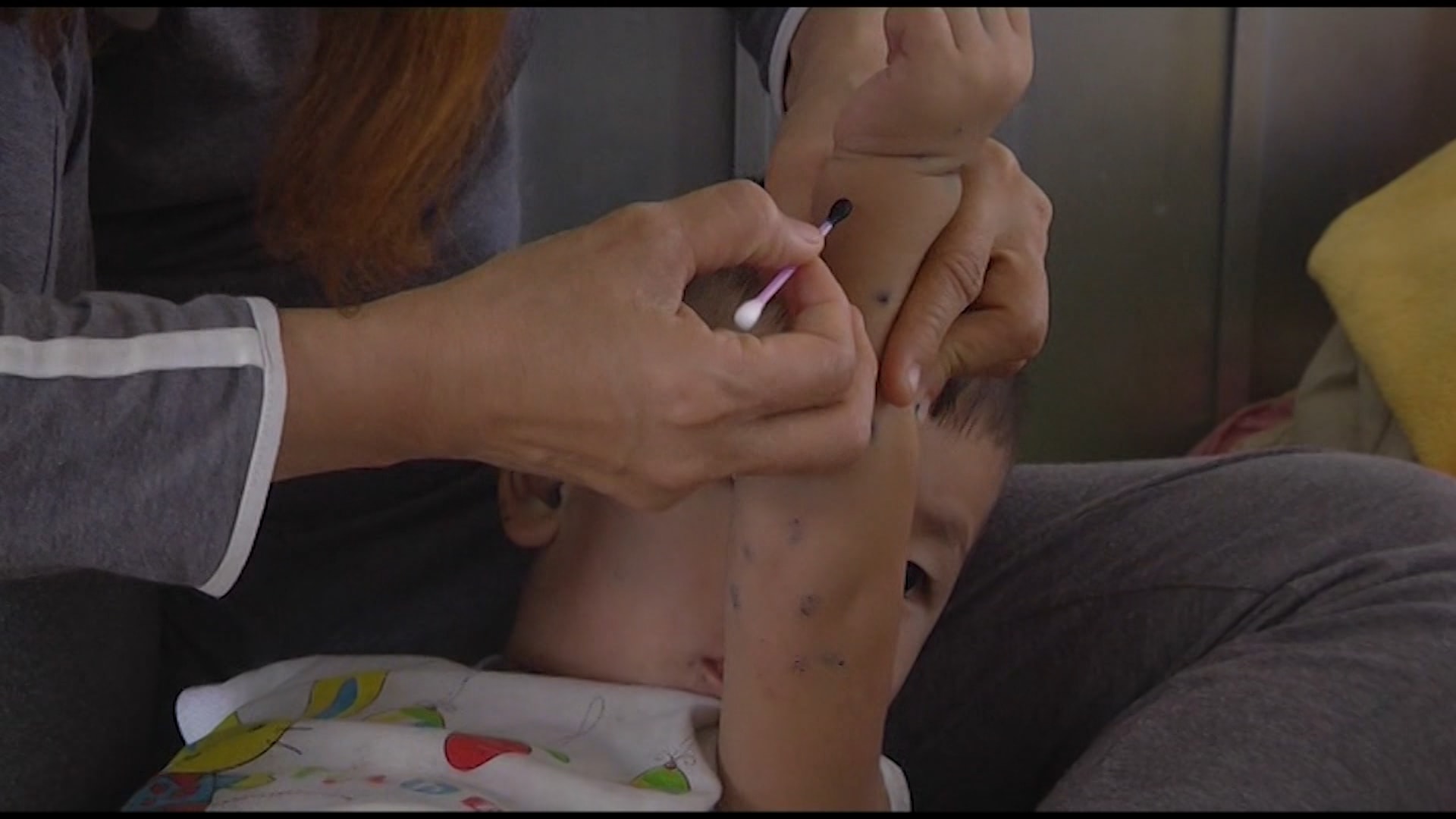
The number of hand, foot, and mouth disease cases is showing signs of increasing. Photo: CDC
Implement response plans.
From the beginning of 2026 to April 6th, the city recorded 588 cases of hand, foot, and mouth disease, a 1.6-fold increase compared to the same period in 2025. Notably, in the last 5 weeks, the number of cases has continuously increased, fluctuating between 50 and 86 cases per week.
The biggest concern right now is not just the number of cases, but the circulation of Enterovirus 71 (EV71) in some localities. EV71 is the culprit behind severe neurological complications, extremely rapid disease progression, and is the leading cause of death nationwide in recent times.
According to the head of the Department of Health , the unit has requested medical facilities to proactively review and prepare sufficient personnel, medicines, supplies, and equipment; and be ready to receive and treat patients.
At the same time, strengthen consultations between departments and hospitals to decide on timely and appropriate referrals; absolutely avoid delays that could lead to serious complications or death.
General and specialized hospitals specializing in obstetrics and pediatrics are strengthening their intensive care capabilities, ensuring on-site emergency care capacity, and coordinating closely with the preventive health system in epidemiological surveillance and sample collection for testing. Simultaneously, they are tightening infection control and hospital environmental hygiene to minimize cross-infection and prevent outbreaks at healthcare facilities…
Following the directives of the Department of Health, Da Nang Obstetrics and Pediatrics Hospital and Quang Nam Obstetrics and Pediatrics Hospital have proactively implemented measures to prevent and control hand, foot, and mouth disease.
In particular, attention should be paid to the plan for examining, admitting, and isolating patients, such as: receiving, screening, and classifying the severity of the disease right at the clinic; admitting and treating patients according to the diagnostic and treatment guidelines of the Ministry of Health ; ensuring sufficient supplies of medicines and medical equipment; and strengthening measures to prevent cross-infection within the hospital…
According to Dr. Ha Thi Kim Anh, Deputy Head of the Department of General Pediatrics and Infectious Diseases (Quang Nam Obstetrics and Pediatrics Hospital), in order to promptly respond and improve diagnostic and treatment capabilities, the hospital organized training on hand, foot, and mouth disease treatment for medical staff.
Simultaneously, ensure regular check-ups to detect signs of worsening condition, in order to promptly consult with the Intensive Care Unit for treatment of grade 2b hand, foot, and mouth disease. In addition, consult with higher-level hospitals in cases of severe hand, foot, and mouth disease from grade 3 and above; severe cases requiring intensive intervention will be transferred to higher-level hospitals for treatment.
Strengthen inspection and supervision in schools.
Alongside the work of admitting and treating patients, the city's health sector proactively deployed inspection teams to guide the prevention and control of hand, foot, and mouth disease in localities and schools. According to Dr. Nguyen Dai Vinh, Director of the City's Center for Disease Control (CDC), through on-site inspections at preschools, the unit noted that facilities proactively cleaned classrooms; maintained handwashing with soap for children; and intensified the dissemination of disease prevention and control measures to parents and students through various appropriate methods. In addition, the learning environment, such as the grounds, kitchen, and restrooms, was generally clean and well-ventilated.

City health officials inspect and provide guidance on hand, foot, and mouth disease prevention and control measures in schools. Photo: CDC
“Maintaining regular preventive measures is a key factor in effectively controlling the epidemic. Therefore, localities and educational institutions need to continue raising awareness among parents and students; strictly implement professional guidelines; and proactively detect and promptly handle suspected cases. In particular, coordination between the health and education sectors needs to be further strengthened to ensure the synchronized and effective implementation of disease prevention and control measures in the community,” said Dr. Nguyen Dai Vinh.
According to the head of the Hoa Vang Regional Health Center, immediately after recording two cases of hand, foot, and mouth disease at Binh Minh Kindergarten (Ba Na commune), health forces promptly deployed epidemiological investigations and reviewed cases with suspected symptoms. To date, no further suspected cases have been recorded in adjacent classrooms. To proactively control and prevent the spread of the disease in the school environment, the unit is coordinating with the Ba Na Commune Health Station to monitor and handle the small outbreak at Binh Minh Kindergarten; and simultaneously expanding inspections to several other kindergartens and daycare centers in the area.
To effectively prevent hand, foot, and mouth disease, the city's health department recommends that people adhere to the "three clean" principles: ensuring clean food and drink with cooked food, boiled water, and avoiding sharing personal items; maintaining cleanliness by wiping surfaces, toys, and floors with disinfectants; and keeping hands clean by washing hands frequently with soap for both children and caregivers.
This is closely linked to the "three timely actions," which include: promptly detecting children with symptoms such as mouth ulcers or blisters on the palms and soles of their feet; promptly isolating them by keeping them home from school for at least 10 days to prevent the spread of the disease; and promptly taking them to the emergency room if they show signs of worsening condition such as high fever that is difficult to bring down, excessive vomiting, or sudden jerking movements.
Classification of the severity of hand, foot, and mouth disease.
Grade 1 (mild): only mouth ulcers or skin lesions (monitor at home).
Grade 2a (requires medical attention): mild twitching, fever lasting more than 2 days or fever above 39°C, vomiting, lethargy.
Grade 2b (severe - requires hospitalization): frequent seizures, high fever that is difficult to bring down, rapid pulse, tremors, weakness and paralysis.
Stages 3 and 4 (very severe and extremely dangerous): very rapid/slow pulse, profuse sweating, increased blood pressure, difficulty breathing, coma, shock.
If a child shows symptoms of level 2a or higher, parents should quickly take the child to the nearest medical facility and absolutely not attempt self-treatment without a doctor's prescription.
Source: https://baodanang.vn/ung-pho-benh-tay-chan-mieng-3331495.html




![[Image] Nearly 125,000 Hanoi students completed the Literature exam for the 10th grade entrance exam.](https://vphoto.vietnam.vn/thumb/1200x675/vietnam/resource/IMAGE/2026/05/30/1780117233041_ndo_br_thiet-ke-chua-co-ten-2-png.webp)

































































































Comment (0)