

Sung A Senh, a 19-year-old Hmong man, was born and raised in Ngai Phong Cho village, Sin Cheng commune (Si Ma Cai district).

Like many families in the village, Sênh had a difficult life. To make a living, Sênh's parents worked as laborers in other provinces, only returning home once every few years. Sênh's older siblings had all started their own families and moved out. Before turning 10, Sênh lived alone in a small, dilapidated mud house perched precariously on the hillside, becoming independent in her daily life and studies.
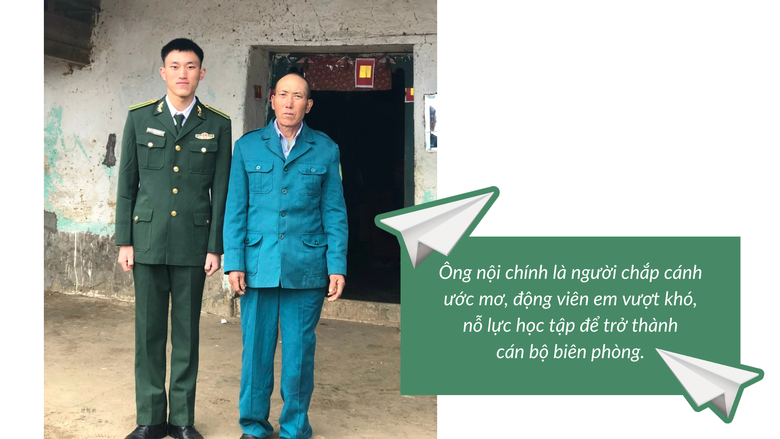
The meager amount of money his parents sent home was barely enough for Sênh to buy rice, school supplies, and tuition. As he got older, during summer breaks, Sênh and his friends would go to Lao Cai city to work part-time, earning money to cover some of their living expenses. And so, the small, dark-skinned boy Sênh silently endured scorching summers, torrential rains, and bitterly cold winters. His old house was dilapidated and couldn't provide complete shelter from the rain and sun. During those times, Sênh would sit in a corner, gazing at the sky through small holes in the roof, telling himself he would study hard to have a better life. With an old mobile phone given to him by a relative, and lacking money for mobile data, Sênh often went to his neighbor's house to use the internet and download necessary study materials. To this day, Sênh's family remains classified as a poor household.
Sênh's dream of becoming a border guard was nurtured by his grandfather's stories about the soldiers of Uncle Ho; by the times he witnessed officers and soldiers of the Si Ma Cai Border Guard Post coming to the village to help his grandparents and the villagers build roads, repair houses, harvest crops; and to disseminate legal information and educate students about revolutionary traditions. Because of his good academic performance, Sênh often participated with the school's teachers and staff in visiting and wishing the officers and soldiers of the Si Ma Cai Border Guard Post a happy New Year. Through conversations, Sênh gained a deeper understanding of the traditions and duties of the border guards. He was also impressed by the disciplined lifestyle, studies, and work of the officers and soldiers in the unit. His dream grew stronger every day; Sênh wanted to become a "green-uniformed" soldier to protect the border of his homeland and help his grandparents, parents, and fellow villagers have a better life.
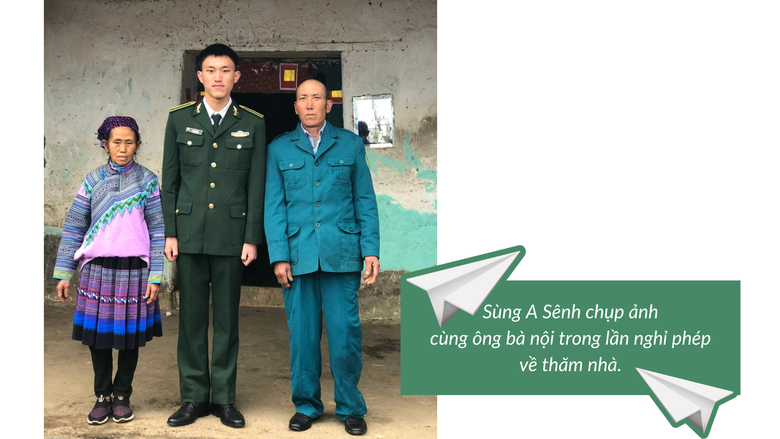
After graduating from high school, Sênh missed the Border Guard Academy entrance exam on her first attempt, falling short of her desired score. Not giving up on her dream, Sênh asked her family for permission to return to Phú Thọ , where she worked while simultaneously studying for the exam the following year. Sênh still remembers those days working overtime, returning to her rented room late at night, often waking up at 3 or 4 in the morning to study. Without the means to attend extra classes, Sênh primarily studied on her own and enrolled in online review courses to save money. For an entire year, her daily schedule was a constant repetition.

In recognition of her relentless efforts, on her second attempt, Sênh was accepted into the Vietnam Border Guard Academy. On her first day of school, after receiving her uniform and equipment, Sênh immediately put on her uniform and called her grandparents and parents via video call to share the good news. At that moment, the whole family cried, tears of emotion, joy, and pride.
In her new learning and training environment, Sênh inevitably felt a bit overwhelmed, especially with physical training exercises; however, she quickly adapted. In some aspects of her studies and training, she even received praise and encouragement from her teachers. In her free time, Sênh created social media accounts to introduce her family, hometown, and school, which were well-liked and shared by many young people, contributing to spreading encouragement and motivation for her peers to study hard.
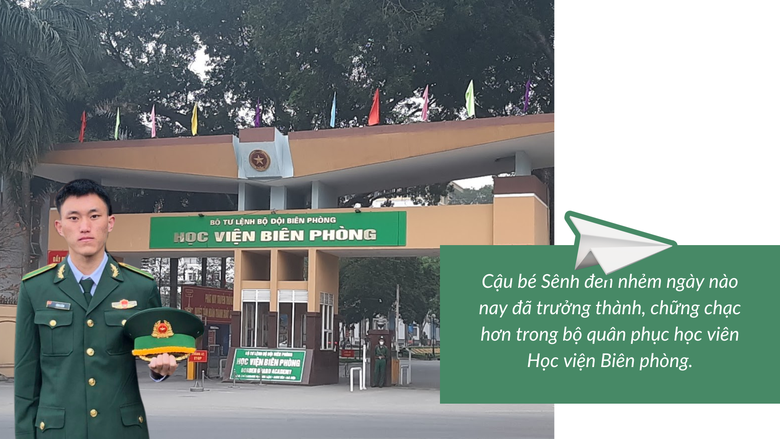
To achieve his dream of becoming a border guard, Sênh still has a long way to go, with many difficulties and challenges ahead. Sênh hopes that after graduation he will be assigned to work in Lao Cai. He believes that with his love for the green uniform and his own determination, that dream will soon come true, contributing to protecting the border of his homeland and conveying a message to encourage more and more young people to strive to overcome difficulties, pursue their dreams, and build their future.
Source
![[Photo] General Secretary and President To Lam presides over a working session with the Central Policy and Strategy Committee on the development of the materials industry.](https://vphoto.vietnam.vn/thumb/1200x675/vietnam/resource/IMAGE/2026/05/21/1779359935432_a3-bnd-3129-1412-jpg.webp)


![[Photo] National Assembly Chairman Tran Thanh Man working with the Standing Committee of the Law and Justice Committee](https://vphoto.vietnam.vn/thumb/1200x675/vietnam/resource/IMAGE/2026/05/21/1779378929214_ndo_br_1-4610-jpg.webp)



















































































Comment (0)