

How does the timing of vitamin supplementation affect absorption?
Vitamins are essential micronutrients for the body. However, not all vitamins should be taken at the same time of day. The effectiveness of vitamin supplementation depends not only on the dosage but also closely on:
- Time of use.
- The solubility properties of vitamins.
- The potential for interaction between micronutrients.
- The accompanying diet...
When is the best time to take water-soluble vitamins?
Water-soluble vitamins that should be taken in the morning include: Vitamin C; vitamins B1, B2, B6, B12; folic acid...
- B vitamins play a crucial role in energy metabolism and maintaining the function of the nervous system. Supplementing them during the day can help keep the body alert, support concentration, and improve learning and work performance.
- Vitamin C should also be taken during the day, preferably after meals, to reduce the risk of stomach irritation or discomfort. In some cases, the daily dose may need to be divided because the body only effectively absorbs a certain amount of vitamin C at a time.
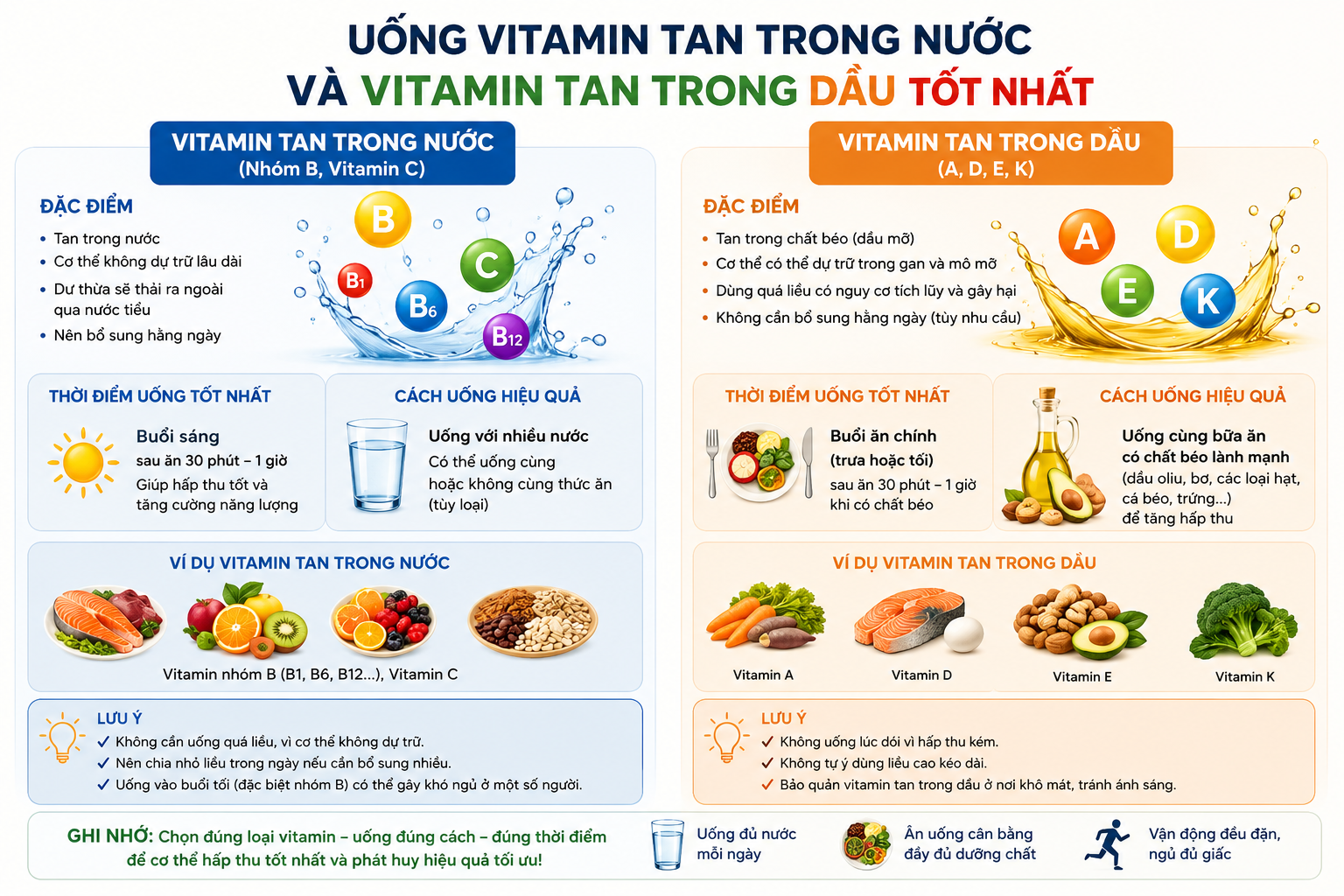
Each type of vitamin needs to be taken at a different time to maximize its effectiveness.
When to supplement with fat-soluble vitamins
Fat-soluble vitamins include: Vitamin A, vitamin D, vitamin E, vitamin K... This group of vitamins requires fat for better absorption. Therefore, the best time to supplement vitamins is during or immediately after a main meal containing healthy fats such as:
- Fatty fish
- Egg
- Nuts
- Avocado
- Olive oil

In particular, vitamin D is often recommended to be taken in the morning or at midday to align with the body's natural circadian rhythm. Some studies suggest that supplementing with vitamin D too late in the evening may slightly affect sleep in sensitive individuals.
Some principles to help optimize the effectiveness of vitamin supplementation.
In addition to choosing the right time, the following principles can also help improve the effectiveness of vitamin and mineral use:
- Do not combine multiple micronutrients arbitrarily without fully understanding their interactions.
- Follow the recommended dosage and avoid the "more is better" mentality.
- Maintain a balanced diet, as food remains the most natural and sustainable source of vitamins.
Should you take vitamin supplements every day?
Not everyone needs to take supplements daily because vitamin needs depend on:
- Age.
- Diet.
- Health status.
- The level of micronutrient deficiency...
In many cases, a varied and balanced diet remains the most important foundation for ensuring the body receives sufficient vitamins and minerals. If you intend to take vitamin supplements long-term, you should consult a doctor or nutritionist to avoid overuse. Abusing vitamins or using them incorrectly not only reduces their effectiveness but can also cause fatigue, digestive disorders, or micronutrient imbalances.
Understanding and applying the correct principles of micronutrient use will help the body maximize the benefits of vitamins while minimizing unwanted side effects. More importantly, supplementation should be integrated into an overall healthy diet and lifestyle to maintain long-term health.
Readers are invited to watch the video :
Source: https://suckhoedoisong.vn/uong-vitamin-vao-thoi-diem-nao-tot-nhat-16926052508424289.htm

![[Image] Nearly 125,000 Hanoi students completed the Literature exam for the 10th grade entrance exam.](https://vphoto.vietnam.vn/thumb/1200x675/vietnam/resource/IMAGE/2026/05/30/1780117233041_ndo_br_thiet-ke-chua-co-ten-2-png.webp)









































































































Comment (0)