


In the context of rapid digital transformation, digital banking applications have become the primary transaction channel for individuals and businesses. However, alongside this convenience comes the increased risk of high-tech fraud and scams with increasingly sophisticated methods, causing serious financial losses and eroding social trust.
According to information from the Payment Department of the State Bank of Vietnam, since the beginning of the year, the SIMO system has detected 592,000 payment account and e-wallet records with suspicious signs of fraud. The system has promptly warned customers and blocked hundreds of thousands of transactions, thereby protecting more than 2.57 trillion VND from risk.
Meanwhile, the Cyber Security and High-Tech Crime Prevention Department (A05 - Ministry of Public Security ) reported that in the first eight months of 2025 alone, the country recorded over 1,500 cases of online fraud and property theft, with total estimated losses exceeding 1,660 billion VND. Notably, the majority of these cases directly involved financial transactions and digital banking applications.

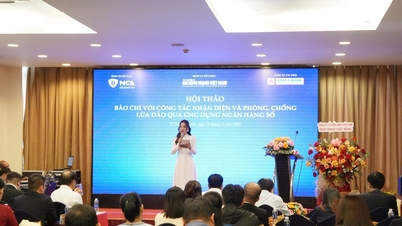
In his opening remarks at the workshop, Major General Le Minh Manh, Head of the Southern Branch (National Cyber Security Association), emphasized: “High-tech criminals do not directly attack the core systems of banks, but mainly exploit human factors – from customers' lack of vigilance to gaps in information security awareness. Fraud through digital banking applications is no longer an isolated phenomenon, but has become a non-traditional security challenge, directly impacting financial security, social order, and public trust.”
Major General Le Minh Manh believes that the press should not only be a channel for reporting events after they occur, but should also become a partner in early warning, propaganda, and community education , contributing to the formation of a "shield of awareness" for society.
Representatives from the State Bank of Vietnam - Region II (SBV) shared that the State Bank of Vietnam always considers system security and protection of the legitimate rights of financial service users as a consistent requirement throughout the digital transformation process of the banking industry.
Digital banking offers significant benefits to the economy and the people, but it is only truly effective when accompanied by security and trust. The State Bank of Vietnam has been issuing numerous regulations and standards to enhance the security of information systems, while also requiring credit institutions to strengthen measures to prevent and combat fraud and deception in electronic transactions.
Speaking at the conference, Dr. Dinh The Hien, a financial expert from the Institute of Applied Informatics and Economics, stated: “Currently, cybercriminals employ numerous methods to defraud people through digital banking applications in Vietnam, specifically: Fraud through fake banking apps (APKs containing malware) or individuals hiring others to open accounts to facilitate the transfer of fraudulent funds, bypassing domestic authorities. Furthermore, many perpetrators even carry out transnational fraud schemes and impersonate authorities to manipulate money transfers and seize victims' assets.”

According to Lawyer Le Ngo Trung of the Ho Chi Minh City Bar Association, the 2025 Cybersecurity Law dedicates a large portion of its provisions to sanctions for cybercrimes. In particular, the State will participate in the nationwide dissemination of cybersecurity knowledge, encouraging state agencies to cooperate with private organizations and individuals in implementing educational programs and raising awareness about cybersecurity.
According to lawyer Trung, the new law also includes many provisions on promoting the transfer, research, mastery, and development of cybersecurity technologies, products, and services to protect cybersecurity; promoting the application of new and advanced technologies related to cybersecurity; and organizing training, development, and optimization of the use of high-quality cybersecurity human resources…
Through discussions, experts agreed that identifying and preventing fraud through digital banking applications needs to be implemented synchronously across three pillars: Technology - Processes - People. The media plays a particularly important role as a crucial link connecting these pillars with society, acting as a risk prevention force in delivering warnings to the public quickly and effectively.
Source: https://baophapluat.vn/vai-role-of-journalism-in-the-work-of-combating-fraud-through-digital-banking-applications.html


![[Photo] Prime Minister Pham Minh Chinh attends the Conference on the Implementation of Tasks for 2026 of the Industry and Trade Sector](/_next/image?url=https%3A%2F%2Fvphoto.vietnam.vn%2Fthumb%2F1200x675%2Fvietnam%2Fresource%2FIMAGE%2F2025%2F12%2F19%2F1766159500458_ndo_br_shared31-jpg.webp&w=3840&q=75)


































































































Comment (0)