

In a volatile world marked by the explosion of the digital age and the challenges of non-traditional security, culture has become an "internal strength" and a "steel shield" protecting the ideological foundation of the Party.
The Party's strategic resolutions, especially Resolution 80-NQ/TW on the development of Vietnamese culture, have once again affirmed that culture is the most important foundation for firmly protecting the Party's ideological foundation from early on and from afar. When culture permeates all aspects of life, each citizen will naturally develop an "immune system" against distorted narratives, arousing the aspiration for a prosperous and happy nation.
Reporters from the Vietnam News Agency (VNA) have produced a series of four articles on the theme: “The Resolution on Culture – A ‘Steel Shield’ Protecting the Ideological Foundation of the Party,” contributing to affirming that culture is the natural “filter” for each individual against social issues; proposing solutions to combat “junk” cultural flows in cyberspace; building a culture of exemplary conduct and public service ethics for cadres and Party members, and unleashing intrinsic strength and aspirations for development.
At the 2021 National Culture Conference, General Secretary Nguyen Phu Trong emphasized the message: "Culture is the identity of the nation; as long as culture exists, the nation exists; when culture is lost, the nation is lost."
This is not just a call to action, but also a continuation of the spirit of the Central Committee's resolutions on building and developing Vietnamese culture and people. In particular, the recent major policies, most notably the orientation of cultural development linked to protecting the ideological foundation, have created a turning point in strategic thinking, considering culture as a front for protecting the Party from early on and from afar.
Identifying "strength"
Looking back at history, right from the Outline on Vietnamese Culture (1943), our Party identified culture as one of the three fronts ( political , economic, and cultural).
After more than 80 years, in response to the demands of the new era, Resolution No. 80-NQ/TW of the Politburo on the development of Vietnamese culture until 2030, with a vision to 2045, has marked a historic shift in thinking.
The resolution not only inherits the spirit of "As long as culture exists, the nation exists" from the 2021 National Cultural Conference, but also elevates culture to the "most important endogenous resource" - "soft power" - for building and protecting the Fatherland.
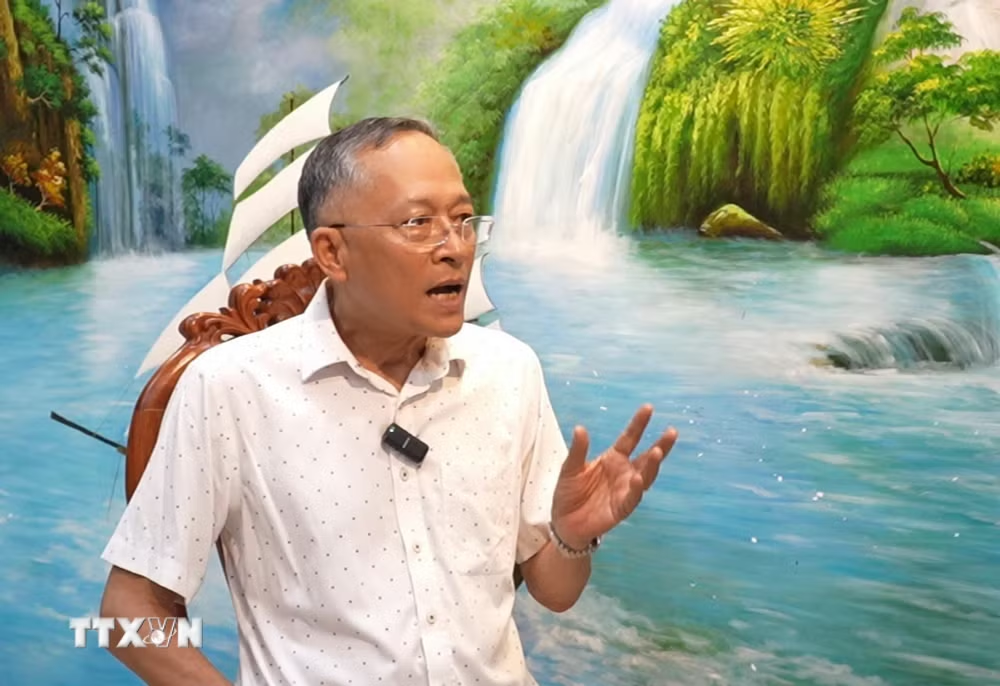
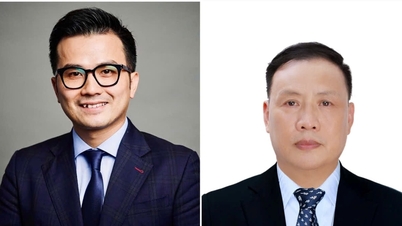
Dr. Nguyen Viet Hung, former Head of the Party Building Department at the Ho Chi Minh City Cadre Academy, stated that the Party has always considered culture as the spiritual foundation of society.
During the period of reform, we defined comprehensive reform, but culture must be placed on par with economics and politics. Cultural strength is the humanistic strength that helped our nation defeat powerful imperialist forces. The fact that Resolution 80 established culture as an endogenous resource to protect the Party from early on and from afar is a culmination of that practical experience.
Professor, Dr. Vo Van Sen, former Rector of the University of Social Sciences and Humanities, Vietnam National University Ho Chi Minh City, believes that Resolution 80 concretizes the steps to ensure that culture is no longer an abstract concept. We have previously defined culture as the spiritual foundation of society, but Resolution 80 delves deeper and addresses the issue more specifically. The Resolution clearly defines what needs to be done to promote culture in social development, in leadership, and especially in strengthening and developing the Party.
Dr. Vu Ngoc Hoa, Deputy Director of the Ho Chi Minh City Branch of the Academy of Public Administration and Management, emphasized that this is a major step forward in the Party's development thinking. When culture becomes an endogenous resource, it will create strength from within through people with integrity, ethics, and discipline. This is the foundation for protecting the Party early and from afar, because decline often begins with cultural deviations.
The key breakthrough is the realization that culture is no longer a passive "response," but has become the dominant force in shaping the value system of modern Vietnamese people.
Experts agree that implementing this Resolution is a fundamental solution to strengthen the Party's ideological foundation by establishing revolutionary ethics, discipline, and national pride as "weapons" against all manifestations of degradation, "self-evolution," and "self-transformation."
Protecting the Party starts from the "root" of the people's hearts.
Recent social surveys show that people's trust in the Party stems not only from GDP growth figures but primarily from the cultural behavior of cadres and Party members. Resolution 80-NQ/TW directly addresses this issue by identifying culture within the Party as the core element for spreading social culture.
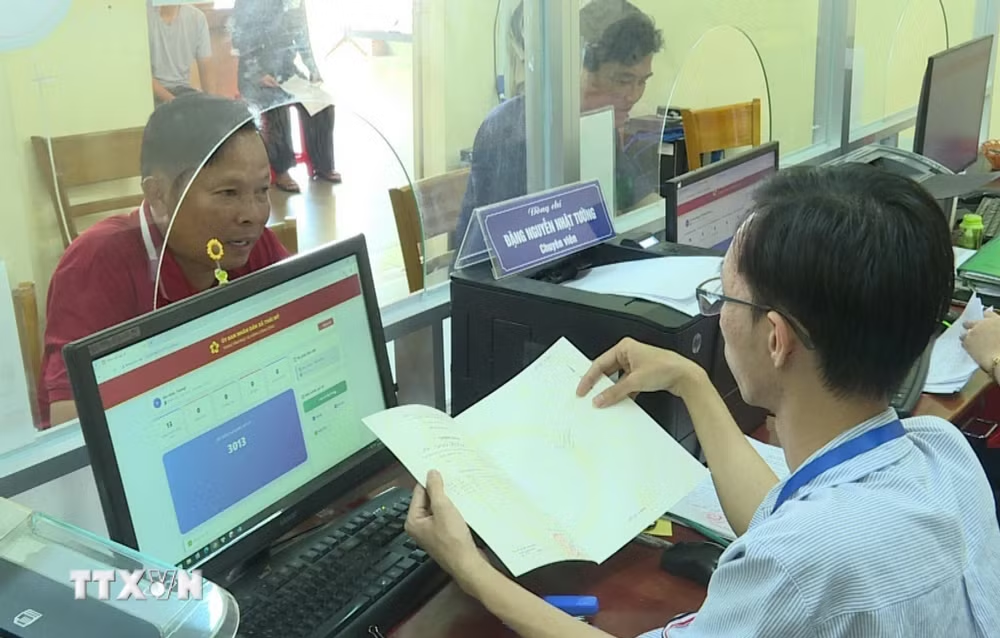
According to Dr. Vu Ngoc Hoa, Deputy Director of the Ho Chi Minh City Branch of the Academy of Public Administration and Management, in modern society, people are not only concerned with economic growth but also look at the integrity, closeness to the people, and consistency between words and actions of the officials. Just one unprofessional, bureaucratic, or indifferent act by a grassroots official can create loopholes for hostile forces to distort the image of the Party and the State.
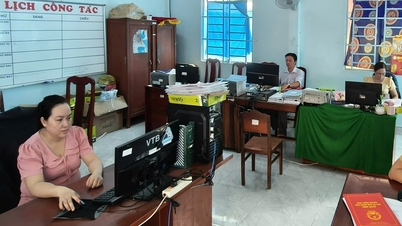
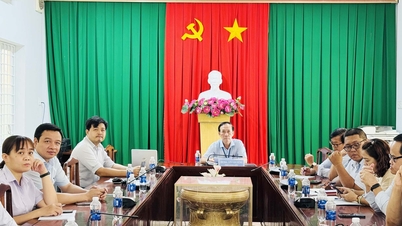
When implementing the two-tiered local government model in Ho Chi Minh City, the implementation of Resolution 80-NQ/TW at the grassroots level helps to form a new political way of life, where a culture of dialogue becomes a solid "bridge" between the Party's will and the people's aspirations.
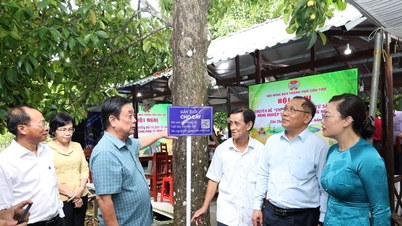
Mr. Le Van Minh, Secretary of the Dien Hong Ward Party Committee, shared: “We always believe in promoting the role of leaders in instilling the principle of ‘being close to the people.’ The culture of dialogue takes place not only at meetings but also through activities in the 38 neighborhoods. Leaders promptly meet and exchange ideas to understand the concerns and directly resolve the grievances of the people.”
Sharing the same viewpoint emphasizing directness in the "culture of dialogue" at the grassroots level, Mr. Huynh Gia Giang, Deputy Secretary of the Party Committee and Chairman of the People's Committee of Ban Co Ward, affirmed: "We are not afraid of dialogue. Through listening to opinions, whether sincere suggestions or harsh criticisms, the government will seriously consider them to find common ground. Dialogue is a two-way communication channel that helps convey the Party's policies to the people and listen to feedback from reality to find appropriate solutions, avoiding the situation where people's requests are escalated or passed on to higher levels."
To protect the Party from its very roots—the people's hearts—according to Professor Vo Van Sen, building a "culture of respect for officials" and a "culture of integrity" is an urgent requirement. This is the "iron armor" that protects cadres from temptation and ideological attacks by hostile forces.
The major corruption cases uncovered recently, while painful to witness, are also a necessary process of "cultural purification." Punishing corrupt officials is not only about enforcing the law, but also about restoring political and cultural order—a culture of integrity.
According to Dr. Vu Ngoc Hoa, building a "culture of respect for intellectuals" and a "culture of integrity" within the Party is currently of almost decisive importance in consolidating social trust. To protect the ideological foundation, it is essential to first build a team of cadres who are ethical, responsible, and have social prestige. If "respect for intellectuals" protects the Party with intellect, then "integrity" protects the Party with moral prestige.
According to experts, the cultural "immune system" operates on a self-filtering mechanism. As the level of public awareness and cultural aesthetics improves, people will naturally develop the capacity to "resist" reactionary cultural products.
Analyzing this mechanism in depth from a theoretical perspective, Professor Vo Van Sen, former Rector of the University of Social Sciences and Humanities, Vietnam National University Ho Chi Minh City, affirms that considering culture as the immune system of ideology is entirely accurate.
By promoting our culture, we can push back against uncultured and wrongdoings. Understanding the "critical link" of culture will create powerful momentum, similar to the success stories of Asian "dragons" like Japan and South Korea.
Dr. Nguyen Viet Hung, former Head of the Party Building Department at the Ho Chi Minh City Academy of Cadres, likened a nation or political regime to a living organism, in which culture is the intrinsic strength that determines its survival. In the current context, culture is the filter that helps us distinguish between truth and falsehood, right and wrong, fragrant flowers and exotic plants and toxic garbage. Integration without assimilation means that culture is the identity, the hallmark that allows Vietnam to affirm its position as a reliable and responsible partner in the international community.
To ensure this "filter" operates effectively in the digital age, Dr. Vo Ngoc Hoa, Deputy Director of the Ho Chi Minh City Branch of the Academy of Public Administration and Management, proposes a synchronized implementation across three aspects.
In education, it is necessary to cultivate cultural competence and digital skills so that individuals can self-verify and critically analyze information. In terms of policy, it is essential to create a healthy cultural environment and a positive digital content ecosystem. In terms of media, Vietnamese cultural values must be expressed in modern, engaging language to compete with misleading content.
Source: https://www.vietnamplus.vn/van-hoa-la-nen-tang-he-mien-dich-cua-tu-tuong-post1110361.vnp
![[Image] Hanoi's urban life under the challenge of a "scorching hot" environment](https://vphoto.vietnam.vn/thumb/1200x675/vietnam/resource/IMAGE/2026/05/25/1779706979265_nang-nong-t5-2026-minh-duy-7-4636-jpg.webp)























































Comment (0)