


According to Resolution 57/2022/QH15 of the National Assembly , the project is scheduled to be operational by the end of 2026. This is a major challenge, and the investor and contractors are currently racing against time to meet the deadline.
The construction site is bustling.
The Ho Chi Minh City Ring Road 3 project has a length of approximately 76.3 km and a total investment of VND 75,378 billion. The project is managed by the People's Committees of Ho Chi Minh City, Dong Nai, Binh Duong (now part of Ho Chi Minh City), and Long An (now Tay Ninh province). The project consists of 4 construction component projects (1, 3, 5, 7) and 4 land clearance component projects (2, 4, 6, 8).
In Ho Chi Minh City, the Ho Chi Minh City Investment and Construction Project Management Board for Transportation Works (Transportation Board - the investor) reported that the total value of construction work completed on the contract packages has reached approximately 76%. Specifically, the contract packages in the former Thu Duc district have reached about 83% completion; while the contract packages in the former Cu Chi, Hoc Mon, and Binh Chanh districts have reached about 68% completion.
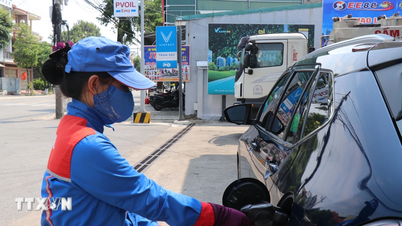
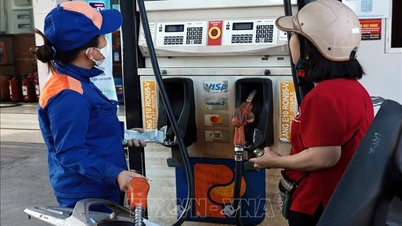
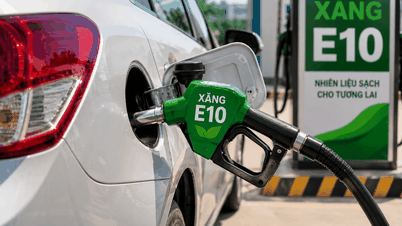
According to Mr. Le Ngoc Hung, Deputy Director of the Transportation Department, the biggest difficulty currently is the sudden increase in fuel prices, which has led to a rise in the price of sand and stone due to increased extraction and production costs. At the same time, the costs of transporting materials, operating equipment, and labor have also increased sharply, creating significant pressure on contractors.
In addition, the shortage of imported asphalt and asphalt concrete has directly affected the construction progress. The investor and contractors have regularly worked with quarry owners, especially stone quarries, to ensure timely allocation of materials according to the needs of each contract package.
At package XL6 in the northwestern area of Ho Chi Minh City (formerly Cu Chi district), spanning over 6 km, construction continues uninterrupted under hot weather conditions. Two sections of the Ring Road 3 project – the underpass on Provincial Road 15 and the overpass on Vo Van Bich Road – have been put into operation. Regarding the expressway section, many segments have reached approximately 90% completion and are now entering the asphalt paving phase.

In this XL6 contract package, Dai Phong Infrastructure Construction Joint Stock Company is responsible for constructing 1.8 km of the expressway and 2 km of the parallel road. The contractor is currently mobilizing approximately 50 vehicles to operate continuously on the construction site, focusing on laying asphalt concrete layers, with the asphalt paving expected to be completed by mid-June 2026.
Mr. Nguyen Van Nam, the site manager of Dai Phong Infrastructure Construction Joint Stock Company, said: "Recently, the high increase in material prices and input costs has caused considerable difficulties for the contractor. However, the contractor is still focusing its resources and efforts to ensure the project is completed on schedule according to the signed contract."
“It is expected that by the end of June, after completing the asphalt layer on the highway section, the contractor will move on to asphalt paving the parallel road section, and is currently completing the final layer of crushed stone. The contractor is striving to complete the asphalt paving before the rainy season to ensure the quality of the project,” Mr. Nguyen Van Nam shared.
Mr. Pham Van Cong, the supervisory consultant of Nhat Minh Company, said that the company always works alongside the contractor, braving the sun and rain to ensure progress, quality, safety, and environmental hygiene. Based on the actual progress and favorable weather conditions, the goal of completing the 2 km section of the expressway and parallel road by the end of June 2026 is feasible.
Overcoming obstacles to reach the finish line.
Given the unusually high fuel prices, the Ho Chi Minh City Department of Transport has repeatedly requested that relevant authorities promptly update and adjust construction material prices and the construction price index to reflect market realities. This would provide a basis for contractors to adjust prices and overcome difficulties amidst fluctuating material sources. The costs of these price adjustments would be covered by the project's contingency fund.

According to Mr. Le Ngoc Hung, Deputy Director of the Transport Department, if fuel prices gradually stabilize in May 2026, the capacity for mobilizing sand and stone materials and the supply of imported asphalt will improve, compensating for the slow production in the past period.
Currently, the investor and contractors are focusing all available resources to complete the entire project by the end of 2026, including auxiliary packages such as traffic safety, lighting systems, landscaping, intelligent transportation systems (ITS), automatic weighing stations, etc.
Overall, for the Ho Chi Minh City Ring Road 3 project, component projects 1, 3, and 7 are basically on schedule, while component project 5 (in the former Binh Duong province) is approximately 6.6% behind schedule. Despite difficulties in implementation, the component projects are generally on track with the overall progress as stipulated in the National Assembly Resolution.
According to the Ho Chi Minh City People's Committee, the construction packages of the component projects are currently in the final stages of completion to bring the entire project to a head in 2026. The total output of the entire Ring Road 3 project has reached approximately 74% of the total volume, with component project 1 reaching about 74%; component 3 reaching 69.1%; component 5 reaching 64.3%; and component 7 reaching approximately 92.3%.
According to the plan, by September 30th, the project aims to complete approximately 38.6 km of the main expressway, including 20.8 km from component 1; 5 km from component 3; 6.4 km from component 5 and 6.4 km from component 7. By the end of 2026, the entire main expressway, approximately 70.4 km long, along with a system of parallel and access roads totaling approximately 75 km, will be completed.

Currently, many items are being added to increase investment efficiency, such as: completing the Tan Van interchange in component project 1; adding a section of the Binh Goi bridge to component project 5; adding the Tan Binh resettlement area to serve component project 6; adding the interchange between Ring Road 3 and the Ho Chi Minh City - Trung Luong expressway and adjusting the scale of the parallel road in component project 7.
Along with the completion of phase one of the Ring Road 3 project, Ho Chi Minh City is also studying and proposing to upgrade the route from 4 to 8 lanes according to the complete plan, with a preliminary total investment of approximately 60,000 billion VND. Land clearance for the entire route has been carried out on a comprehensive scale from the beginning, so the upgrade will proceed more smoothly.
Upon completion, the Ring Road 3 will connect five important radial expressways: Ho Chi Minh City - Trung Luong Expressway, Ho Chi Minh City - Long Thanh - Dau Giay Expressway, Ben Luc - Long Thanh Expressway, Ho Chi Minh City - Moc Bai Expressway, and Ho Chi Minh City - Chon Thanh Expressway. The route will not only reduce traffic congestion in the central urban area but also enhance connectivity in the Southeast region, shorten freight transport times, and reduce logistics costs.
Source: https://baotintuc.vn/kinh-te/vanh-dai-3-tp-ho-chi-minh-nuoc-rut-ve-dich-cuoi-nam-20260519162326647.htm



![[Image] Nearly 125,000 Hanoi students completed the Literature exam for the 10th grade entrance exam.](https://vphoto.vietnam.vn/thumb/1200x675/vietnam/resource/IMAGE/2026/05/30/1780117233041_ndo_br_thiet-ke-chua-co-ten-2-png.webp)















![[Video] Sunset at Lap An Lagoon – Where the sun sets over the fishing nets](https://vphoto.vietnam.vn/thumb/800x450/vietnam/resource/IMAGE/2026/05/31/1780187239592_2222.jpeg)


















































































Comment (0)