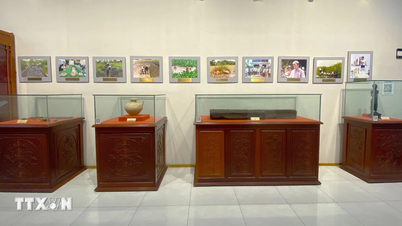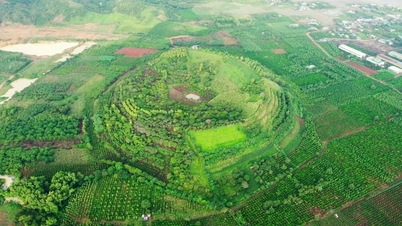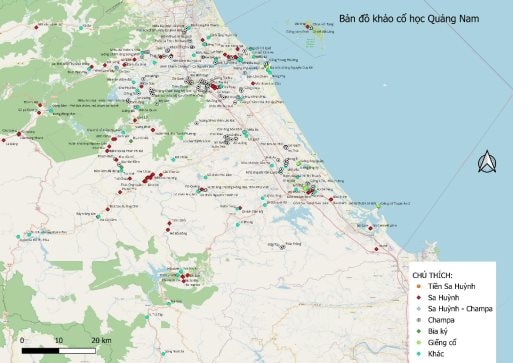
From 1976 to the present, the Quang Nam - Da Nang region has recorded over 100 sites containing Sa Huynh cultural relics. The majority of these burial jar sites and some ancient settlements, distributed from the plains to the high mountains, are concentrated in hilly areas and sand dunes along rivers and coastlines. Surveys, excavations, and research by archaeologists indicate that Quang Nam was a major center of the Sa Huynh culture.
Archaeological site at the headwaters of the Thu Bon River.
Sa Huynh cultural relics in Quang Nam are typically distributed in the Thu Bon River basin across diverse terrains. The majority of these sites are burial grounds, while residential sites have not been discovered in large numbers.
With its advantageous location, the Thu Bon River basin quickly attracted people to settle there. Especially since the advent of iron tools, the population density in the area has increased rapidly.
In the mountainous district of Nong Son, formerly Quang Nam province (now Nong Son and Que Phuoc communes in Da Nang city), surveys and excavations have uncovered a series of Sa Huynh cultural sites such as Binh Yen, Thach Bich, Go Chua, Vuon Dinh, Que Loc, Khe Se... Among the discovered sites, some have been excavated by archaeologists.
The results of the excavations, based on the quantity and types of artifacts, have contributed to clarifying the presence of the Sa Huynh culture in Nong Son and proving the rich history of this land, which was inhabited more than 2,000 years ago.
The first Sa Huynh cultural relic discovered in Nong Son was the Que Loc jar burial site (formerly located in Hamlet 7, Que Loc Commune, now Nong Son Commune, Da Nang City). Notably, this was also the first jar burial site of the Sa Huynh culture to be discovered in the Central Central mountainous region in 1975.
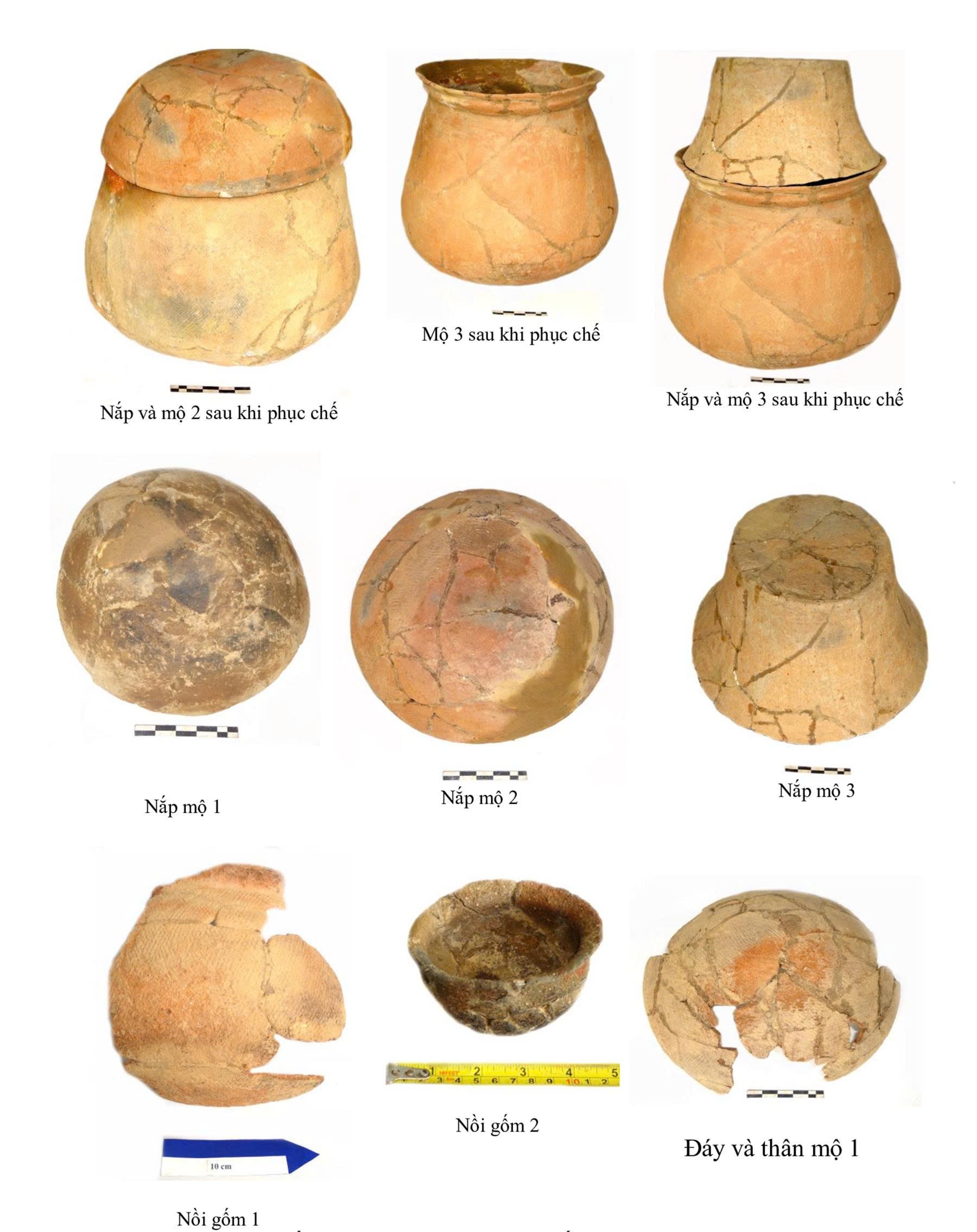
Based on the discovered artifacts, archaeologists believe that iron tools were highly developed during this period, but pottery was poor, with thick and coarse pottery. The burial method is similar to that at the Tam My jar burial site, suggesting likely reburial. In terms of age, the Que Loc jar burial site may belong to the peak period of the Iron Age, dating back to around the 2nd-3rd centuries BC.
The Binh Yen archaeological site (Binh Yen village, Ninh Phuoc commune, now part of Que Phuoc commune, Da Nang city) was discovered in September 1997 during an investigation and survey of the distribution of archaeological sites and the creation of a map of Sa Huynh culture archaeological sites throughout Quang Nam province.
Subsequently, the Center for Archaeological Research - Ho Chi Minh City Academy of Social Sciences , the Quang Nam Museum, and Dr. Mariko Yamagata (Showa University - Japan) conducted excavations at this site.
In the six excavated burial jars, numerous burial artifacts were discovered, including jewelry, iron objects, bronze objects, and pottery. Based on the excavation results, archaeologists believe the Binh Yen site dates back to approximately 2,000 to 2,100 BC, which was also the peak period of the metalworking center in central Vietnam.



In addition, at sites such as Thach Bich, Vuon Dinh, and Go Chua, the survey team, consisting of domestic and foreign archaeologists, conducted numerous excavations. The results yielded artifacts primarily belonging to the Sa Huynh culture period.
Alongside the archaeological sites that have been excavated and explored, in the Nong Son area, archaeologists, during their fieldwork, also discovered several other sites with traces of the Sa Huynh culture, including fragments of burial jars and some pieces of coarse pottery.
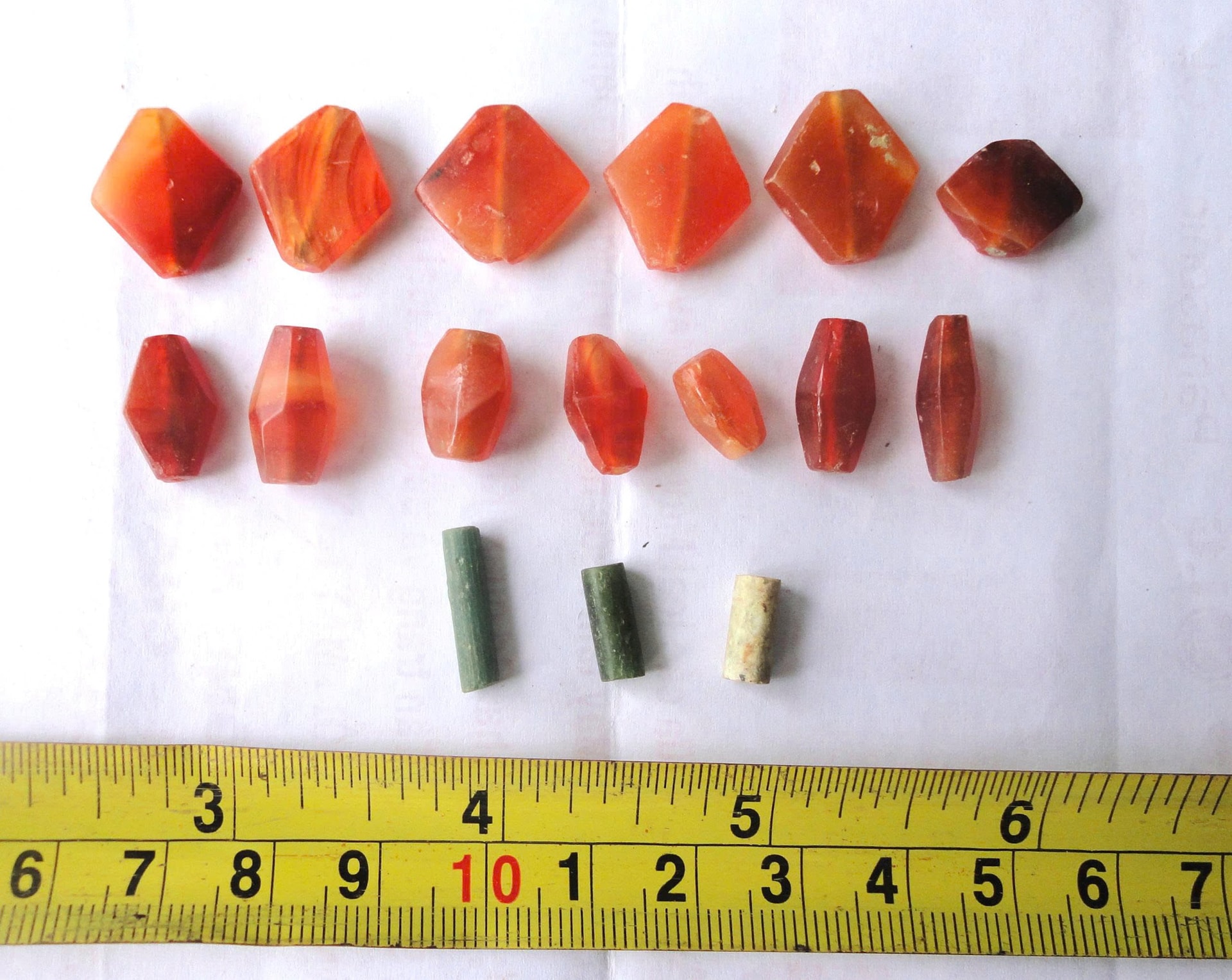
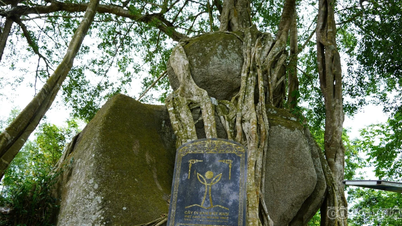
Remnants of the Sa Huynh culture in the highlands.
The Sa Huynh cultural sites and relics discovered in Nong Son have further confirmed the dense distribution of Sa Huynh cultural sites in the mountainous region of Quang Nam and along the Thu Bon River.
In particular, one of the most groundbreaking results of the recent archaeological survey program conducted by the Quang Nam Museum is the first-ever discovery of Sa Huynh cultural traces in high-altitude mountainous communes such as Tra My, Phuoc Hiep, and Song Kon.
Previously, the Sa Huynh culture was thought to be concentrated mainly in the coastal plains and inland mountainous areas along the Thu Bon River. However, new discoveries of burial jars, pottery fragments, and jewelry characteristic of the Sa Huynh culture along the upper reaches of the Truong, Tra, and Pa Con rivers have proven that, more than 2,000 years ago, the Sa Huynh people controlled a vast area, from the coast to the mountainous regions.
At Bai Dai (Tra My commune), local people recount that after each flood, they see fragments of pottery surfacing. Upon examining some of the collected pottery fragments, the team confirmed that these were indeed pieces of rough Sa Huynh pottery containers.
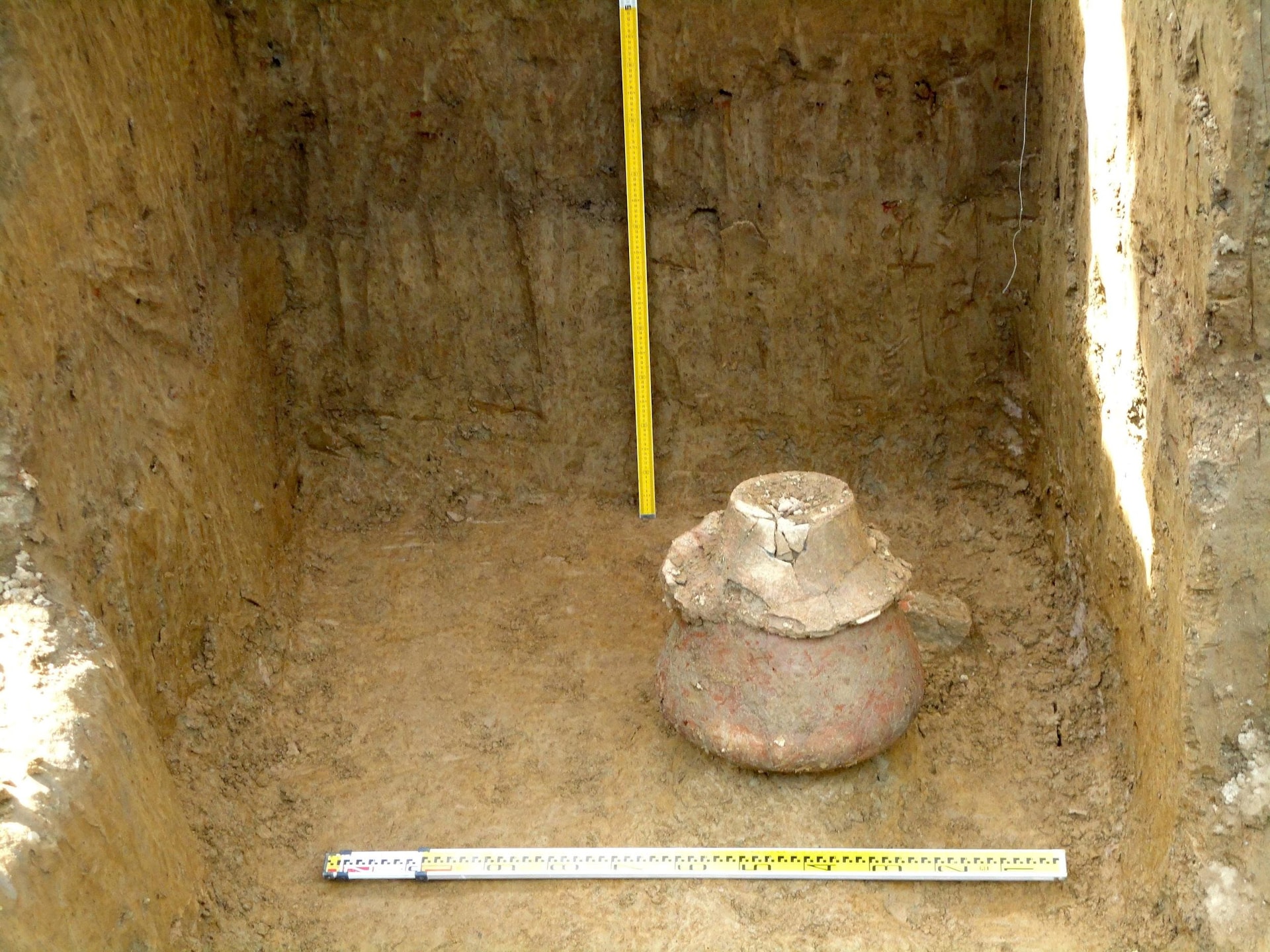
At a riverside alluvial plain in Phuoc Hiep commune, an area previously untouched by archaeological evidence, the team also discovered numerous fragments of Sa Huynh pottery and ceramic containers. These findings not only expand the distribution area but also raise interesting questions about the trade and cultural exchange between the inhabitants of the highlands and lowlands during the pre- and early historical periods.
Could it be that the precious products of the Truong Son mountain range, such as elephant tusks, rhinoceros horns, bird feathers, and fragrant woods, especially agarwood, which had long appeared in Chinese historical records, attracted the ancient Sa Huynh people to the remote mountainous areas of Quang Nam province?
The comprehensive investigation and survey reassessed the current state of the previously known Sa Huynh archaeological sites, leading to classifications based on the level of preservation and potential for future archaeological excavation.
Simultaneously, through the application of GIS technology and field surveys, researchers have established patterns regarding the distribution of Sa Huynh relics.



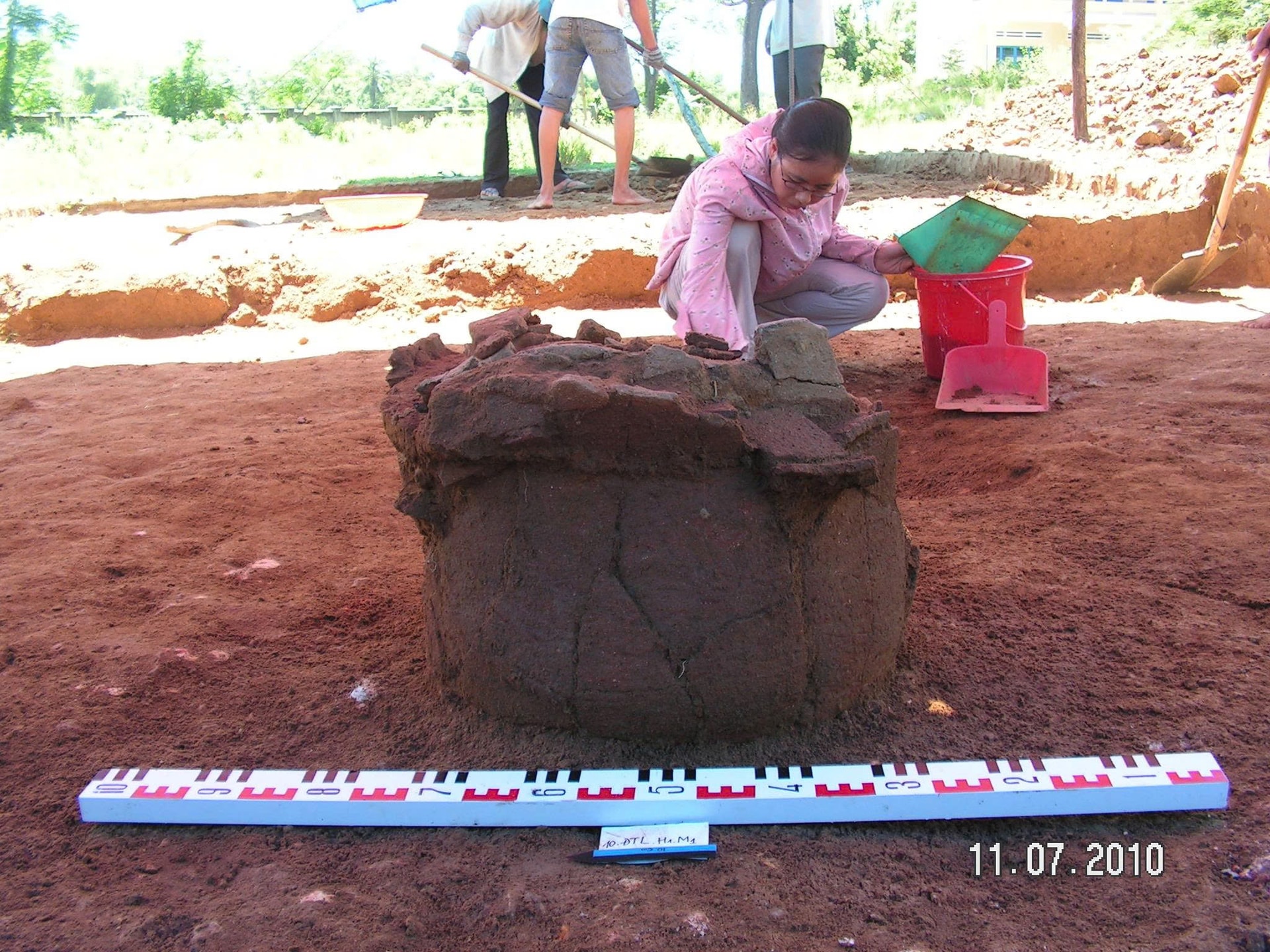
Accordingly, the ancient Sa Huynh people often concentrated in sand dunes and sandy areas at bends and curves of large rivers such as Thu Bon and Vu Gia. From there, several explorations and excavations have been carried out and have yielded impressive results.
At Thổ Chùa, Hiệp Đức commune (formerly Hiệp Hòa commune, Hiệp Đức district, Quảng Nam province), a burial site has been discovered with many burial jars, vases, and bronze artifacts; especially the glass beads wrapped and gilded, indicating that a prosperous Sa Huỳnh community once existed in this high mountain region.
At Lac Cau, Thang An commune (formerly Binh Duong commune, Thang Binh district, Quang Nam province), the first Sa Huynh cultural site discovered on the banks of the Truong Giang River, a burial site with jars was excavated in 2025, revealing more than 2,700 artifacts. This suggests that the tomb's occupants may have belonged to the ruling class and reflects a vast trade network extending beyond the region.
The discovery of a bronze mirror from the Western Han Dynasty (China) at the Binh Yen site also suggests that the Sa Huynh culture inhabitants in Quang Nam province, in addition to internal interactions within the Sa Huynh community in Central Vietnam, also extended their interactions with the Dong Son and Han cultures in the North; with the Pre-Oc Eo culture in the South; with Laos, Cambodia, and Thailand in the West and Northwest; and with the Philippines and Indonesia in the East Sea...
Source: https://baodanang.vn/ven-man-bi-an-van-hoa-sa-huynh-3301097.html





![[Image] National conference summarizing one year of operation of the overall organizational model of the political system, the three-tiered government model.](https://vphoto.vietnam.vn/thumb/1200x675/vietnam/resource/IMAGE/2026/07/01/1782882811691_ndo_br_1-jpg.webp)